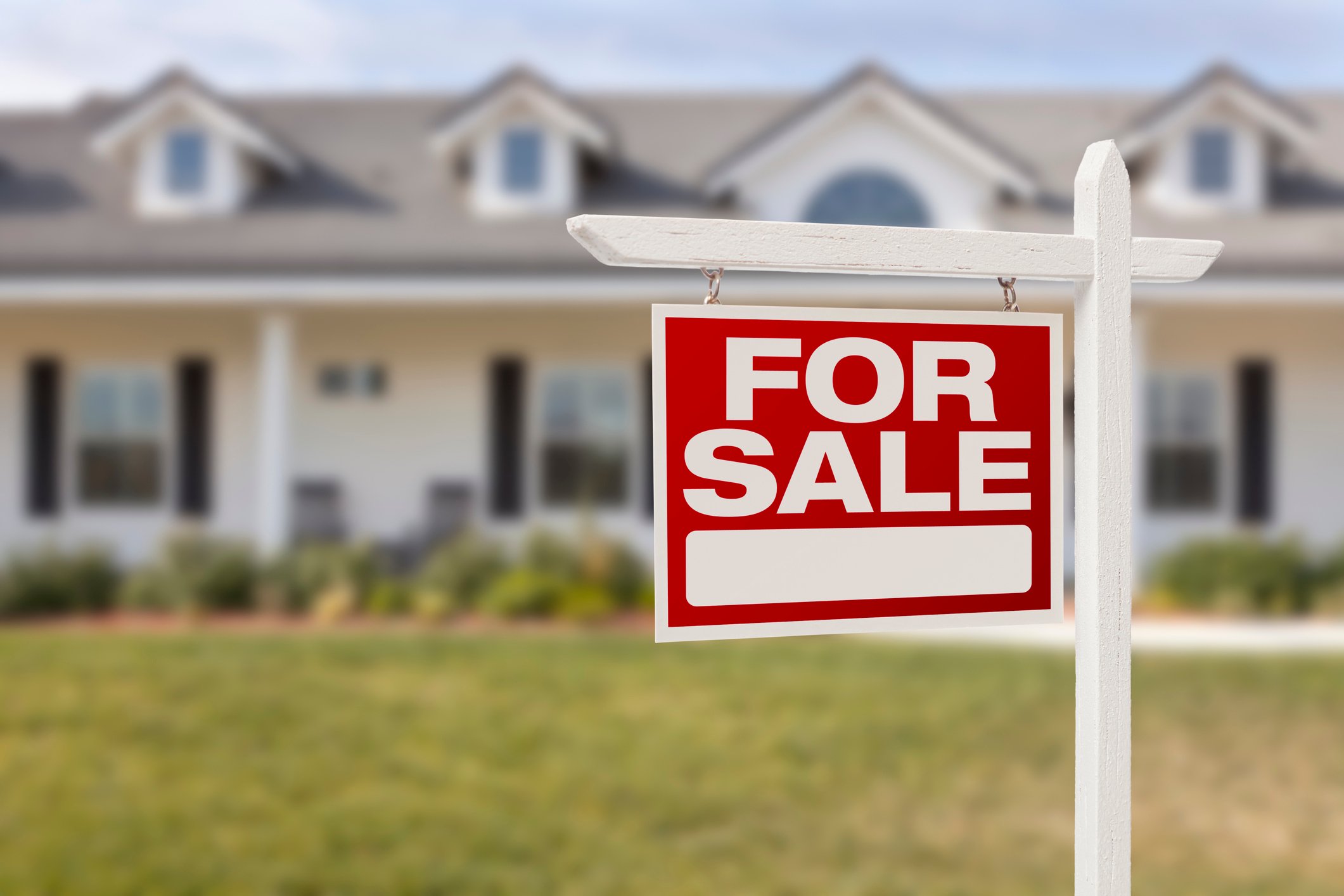
Institutional buyers have bought up a significant number of single-family homes across the country in recent years.
Now, President Trump says he wants to ban them from acquiring more single-family homes.
That policy could shake up local real estate markets, but exactly what it would mean for buyers might vary significantly across the country.
What a ban on institutional investors would mean for homebuyers
Trump’s move could disrupt real estate markets locally, but it’s unlikely to have a major impact on the national market.
That’s because the biggest institutional investors own a small proportion of the overall single-family housing market.
Estimates vary on exactly how many single-family homes institutional investors own. The GAO reports that, as of June 2022, the five largest investors owned about 300,000 homes. That figure is close to 2% of all single-family rental homes nationally.
Other estimates for how much of the single-family market is owned by institutional investors vary. A paper from the American Enterprise Institute (AEI) Housing Center from August 2025 found that the market share owned by single-family investors is less than 1%.
“Even at the height of the market in 2021, institutional investors were buying less than 7 or 8% of the homes in the U.S. and today that number is more like 5%. So banning them from buying homes is unlikely to impact housing prices much on a national level,” said Adam Wiener, President of Lower.
Banning institutional investors from buying more homes might, however, have an impact on the local level and particularly on entry-level homes that are sought after by first-time home buyers.
The concentration of homes owned by the largest institutional buyers isn’t evenly distributed. The largest investors hold significant shares of single-family homes in metropolitan statistical areas in the Sun Belt and the South. According to the Urban Institute, some of the MSAs with the highest shares of single-family rentals owned by institutional investors include:
● Atlanta-Sandy Springs-Alpharetta, Georgia - 28.6%
● Jacksonville, Florida - 24.2%
● Charlotte-Concorde-Gastonia, NC-SC - 20.1%
It’s worth noting that those measures show only the share of single-family rental properties. Those figures shrink to 10%, 8.5%, and 7.1% when represented as a share of all rental properties.
“Institutional buyers have focused on growing markets that have historically been bastions of affordability, and in particular they tend to purchase homes at lower price points because they generate better returns,” said John Berkowitz, President of Lower’s real estate division which operates the real estate listing site Movoto.com.
“Banning institutional buyers won’t have any impact on someone buying a 4 bedroom home in high-priced cities like LA, but could potentially move the needle for a first-time buyer looking to get started in Charlotte or Phoenix.”
Political points, and a double-edged sword
A deeper dive into the markets where institutions hold the largest shares of single-family homes hints at deeper reasons for Trump’s ban. Many of them are located in red states, even if the metros themselves aren’t deeply red.
Homebuyers have been struggling with housing affordability, and removing a buyer from the equation could have an impact on housing prices in some of those metropolitan statistical areas — even if institutional buyers own only a small slice of the overall market.
The fact that those MSAs are concentrated in the Sun Belt states of Texas, Florida, Georgia, and the Carolinas is of note, particularly with important statewide elections coming up. Florida, North Carolina, and Georgia all have U.S. Senate races coming up in 2026 — and all U.S. House seats in North Carolina are up for grabs.
Even if there isn’t a major impact on home prices, the conflict between Main Street and Wall Street is in full swing as part of America’s new K-shaped economy.
“It’s easy to blame the big guys. They make a convenient target and banning institutional purchases is a good way to try and show progress in what’s likely to be a contentious set of mid-term elections,” Wiener said.
If institutions stop buying, and ultimately start selling in markets where they hold a major share of single-family homes, local price corrections are a real possibility, even if the long-term impact on the market as a whole is minimal. “We saw during the 2008 financial crisis that banks were patient sellers with the homes they owned and didn’t dump them all on the market at once. We’ll see how this plays out with today’s institutional property owners and whether they have the same patience,” said Berkowitz.
Of course, betting on reduced housing prices to score points with the electorate is also a risky move for the homeowners who are leaning on their home equity and looking to trade-up to a new home or more and more commonly who are using that equity to refinance credit card debts and other high-interest expenses.
The Bottom Line
A ban on institutional investors will affect buyers differently across the country. In some markets, it might not have any effect. In some metropolitan areas where institutions hold a larger share of single-family homes, like Atlanta or Jacksonville, a ban might shake up the real estate market.
A ban on institutional investors buying new homes would ultimately have an effect on major metropolitan areas in states with key upcoming elections. Any reduction in home prices could both help buyers and hurt homeowners who want to lean on their equity.