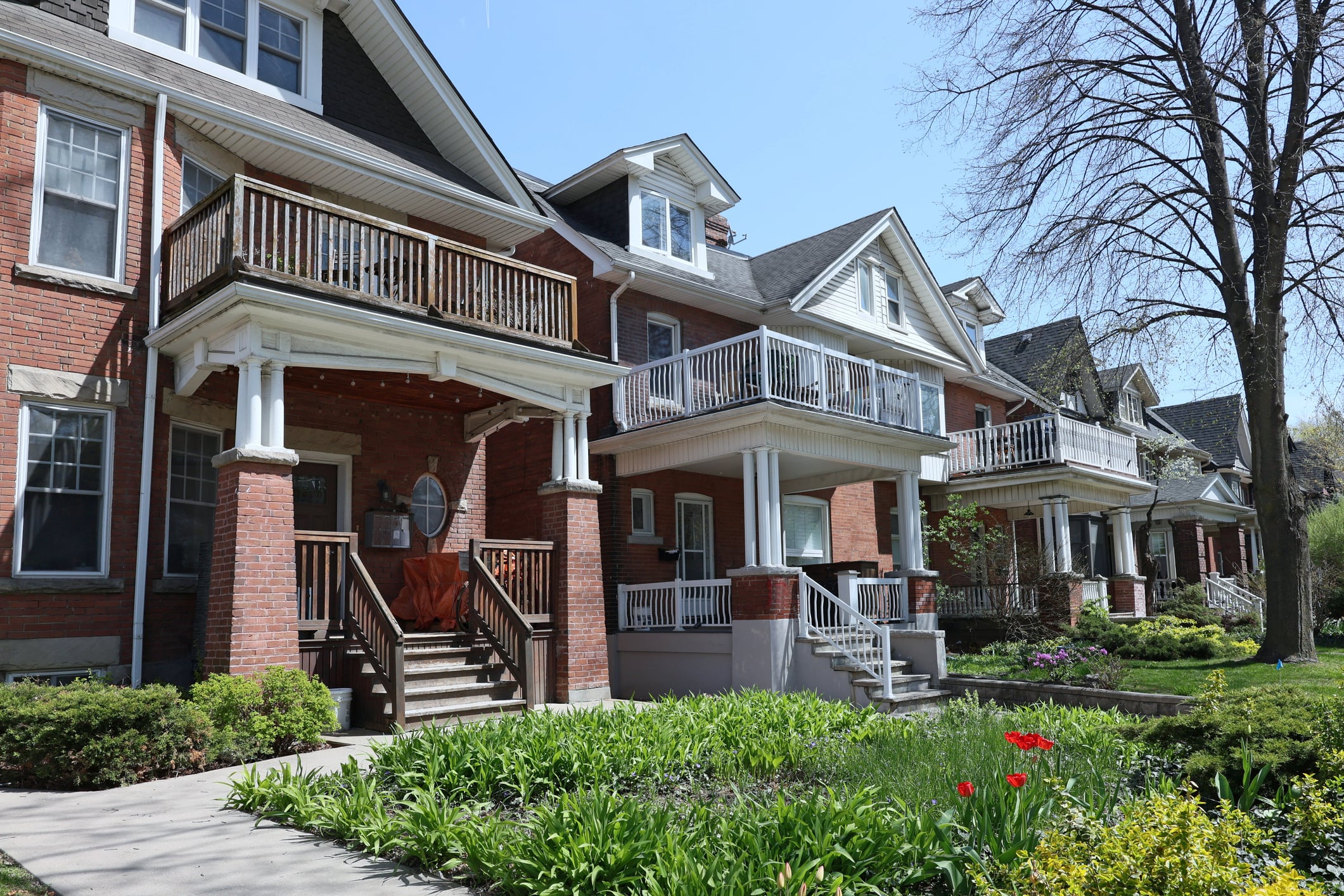
An FHA loan can offer a 3.5% minimum down payment and FHA credit standards that differ from conventional financing. You still have to meet requirements for credit, income, existing debts and the property itself.
Your exact qualification also depends on underwriting. FHA establishes program-level requirements, while individual FHA-approved lenders can apply stricter standards of their own.
FHA Loan Requirements Basics
| Requirement |
FHA Guideline |
| Credit score |
580 or higher for maximum financing. Scores from 500 to 579 are generally limited to 90% loan-to-value. |
| Minimum down payment |
3.5% with a qualifying credit score of at least 580. Generally 10% with a score from 500 to 579. |
| Debt-to-income ratio |
No single FHA maximum applies to every loan. Automated underwriting and manual underwriting use different standards. |
| Income |
Income used to qualify must meet FHA documentation and effective-income requirements. |
| Occupancy |
Generally must be your principal residence. |
| Property |
Must meet applicable FHA property acceptability requirements. |
| Mortgage insurance |
Most FHA forward mortgages require upfront and annual mortgage insurance premiums. |
FHA Loan Basics
An FHA loan is a mortgage insured by the Federal Housing Administration. The FHA does not lend you the money directly. You apply through an FHA-approved lender, and the FHA insures the mortgage against certain losses if the loan defaults.
FHA loans are available to first-time and repeat buyers. They can also be useful when comparing first-time homebuyer loan options, but you do not have to be buying your first home to qualify.
FHA and conventional mortgages use different rules for credit, down payments, mortgage insurance and property eligibility. Those differences are worth comparing when deciding between FHA and conventional loans.
You can use our FHA loan calculator to model possible payments.
FHA Loan Credit Score and Down Payment Requirements
FHA financing is one of several low-down-payment mortgage options. For a standard purchase, your minimum decision credit score affects the maximum percentage of the home's adjusted value that FHA will insure.
| Credit Score |
Maximum FHA Financing |
Typical Minimum Down Payment |
| 580 or higher |
96.5% loan-to-value |
3.5% |
| 500 to 579 |
90% loan-to-value |
10% |
| Below 500 |
Not eligible under FHA's standard minimum credit-score policy |
N/A |
These thresholds come from FHA policy. An individual lender can require a higher credit score or impose other standards beyond the FHA minimum. These lender-specific requirements are commonly called overlays.
A 580 score also does not guarantee approval. Your lender evaluates the full application, including your debts, income, assets, credit history and the property securing the mortgage.
Can You Use Gift Funds for an FHA Down Payment?
Yes. Eligible gift funds can be used toward the FHA minimum down payment when FHA's source and documentation requirements are met.
Under FHA rules, acceptable gift donors can include family members, an employer or labor union, a close friend with a clearly documented interest in you, a charitable organization or certain government agencies and public entities. A gift cannot carry an expectation that you will repay it.
Your lender must document the gift and its transfer. Down payment assistance provided through a qualifying government or assistance program also has to meet FHA requirements.
FHA Home Loan DTI Requirements
Your debt-to-income ratio, or DTI, compares qualifying monthly debt obligations with your gross monthly income. For example, $2,000 of qualifying monthly debt divided by $5,000 of gross monthly income produces a 40% DTI.
There is no single FHA maximum DTI that applies to every application. How your DTI is evaluated depends in part on whether the loan receives an automated underwriting recommendation or requires manual underwriting.
DTI With FHA Automated Underwriting
Most FHA loans are evaluated using an automated underwriting system that incorporates FHA's TOTAL Mortgage Scorecard. The system considers DTI along with other information in the application rather than applying the manual-underwriting ratio matrix to every borrower.
This is why describing 43% as the universal maximum FHA DTI can be misleading. An application above that level can receive an acceptable automated recommendation depending on the complete loan file and lender requirements.
DTI With FHA Manual Underwriting
FHA establishes specific maximum ratios for manually underwritten loans. For borrowers with a minimum decision credit score from 500 to 579, the standard maximum ratios are generally 31% for the housing payment and 43% for total monthly debts.
For borrowers with a score of at least 580, FHA's manual underwriting ratio framework allows higher ratios when specific compensating factors are documented:
| Minimum Decision Credit Score |
Maximum Housing / Total DTI |
General Requirement |
| 500 to 579 |
31% / 43% |
Compensating factors do not increase the standard limit. |
| 580 or higher |
31% / 43% |
No compensating factor required. |
| 580 or higher |
37% / 47% |
Requires one qualifying compensating factor. |
| 580 or higher |
40% / 50% |
Requires two qualifying compensating factors. |
FHA-defined compensating factors can include documented cash reserves, a minimal increase in your housing payment, qualifying residual income and, in some circumstances, additional income that is not being counted as effective income.
A lender can still apply stricter DTI requirements than the FHA maximums.
FHA Income and Employment Requirements
FHA does not establish one minimum annual salary you need to earn. Instead, your lender determines how much of your income qualifies as effective income and whether it supports the proposed mortgage payment and your other debts.
Income used to qualify must be documented and meet the applicable FHA requirements for that type of income. FHA rules address employment income as well as sources such as self-employment income, Social Security income, retirement income and qualifying rental income.
The underwriting process also looks at your employment and income history. A job change or variable income does not automatically make you ineligible, but the lender has to determine which income can be used under FHA guidelines.
FHA Property and Occupancy Requirements
FHA financing generally is intended for a principal residence rather than an investment property. At least one borrower must generally occupy the home within 60 days after signing the security instrument and intend to continue living there for at least one year.
FHA Appraisal and Property Standards
An FHA appraisal considers both the property's value and whether it satisfies applicable HUD property requirements. FHA's minimum property requirements for existing homes are intended to ensure the property is safe, sound and secure.
If the appraiser identifies a condition that does not meet FHA property requirements, repairs or an additional inspection can be required before the mortgage is eligible for FHA insurance.
An FHA appraisal is not the same as a home inspection. A separate home inspection can evaluate the property's condition in more detail for the buyer.
FHA Mortgage Insurance Requirements
Most FHA forward mortgages require two forms of mortgage insurance: an upfront mortgage insurance premium and an annual mortgage insurance premium that is generally collected through monthly payments.
For standard FHA purchase and refinance mortgages, the upfront mortgage insurance premium is currently 1.75% of the base loan amount. The annual premium rate depends on factors including the loan term, base loan amount and original loan-to-value ratio.
FHA mortgage insurance is referred to as MIP. Conventional mortgages may instead require private mortgage insurance, commonly called PMI.
2026 FHA Loan Limits
The amount you can finance with an FHA loan is also subject to the FHA loan limit where the property is located.
For 2026, the FHA loan-limit floor for a one-unit property is $541,287. The standard high-cost ceiling is $1,249,125. County limits can fall between those amounts based on local home prices.
Limits are higher for two- to four-unit properties. Alaska, Hawaii, Guam and the U.S. Virgin Islands also have special exception limits that can exceed the standard high-cost ceiling.
The Bottom Line
FHA loan requirements extend beyond a credit score and down payment. Your lender also reviews income, debts, assets and credit history, while the property must satisfy FHA eligibility and appraisal requirements.
The 580 credit score and 3.5% down payment combination is an FHA program threshold for maximum financing, not a guarantee of approval. Lenders can apply stricter standards, and automated underwriting evaluates the complete application.
Frequently Asked Questions
What Credit Score Do You Need for an FHA Loan?
FHA's standard minimum decision credit score is 500. A score of at least 580 is generally required for maximum financing with a 3.5% minimum down payment. Scores from 500 to 579 are generally limited to 90% loan-to-value, which typically requires at least 10% down on a purchase. Individual lenders may require higher scores.
What Is the Maximum DTI for an FHA Loan?
There is no universal FHA DTI maximum for every application. Manually underwritten loans use a specific ratio matrix. Borrowers with scores of at least 580 can qualify for ratios as high as 40% housing DTI and 50% total DTI when two FHA-defined compensating factors are documented. Automated underwriting evaluates DTI as part of the overall loan file.
Can My Entire FHA Down Payment Come From a Gift?
Eligible gift funds can cover some or all of the required cash investment when FHA donor, sourcing and documentation requirements are satisfied. The funds must be a genuine gift with no expectation of repayment.
Do You Have to Be a First-Time Buyer to Get an FHA Loan?
No. FHA loans are available to eligible repeat buyers as well as first-time buyers. The property generally must be your principal residence.
Does an FHA Loan Require Mortgage Insurance?
Most FHA forward mortgages require both an upfront mortgage insurance premium and an annual mortgage insurance premium. The annual premium is generally paid in monthly installments, while the upfront premium can typically be financed into the mortgage.
Does the Home Have to Pass an FHA Inspection?
The home generally needs an FHA appraisal, not a traditional home inspection. The appraiser evaluates the property's value and observes whether it meets applicable FHA property requirements. Certain conditions can require repairs or additional inspections before the loan can close.