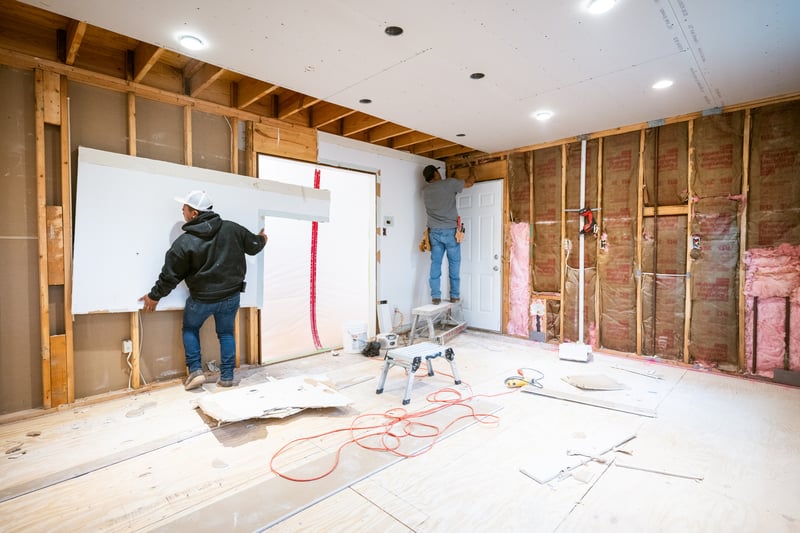
HomeStyle Renovation and FHA 203(k) loans both let you finance a home purchase or refinance and renovation costs with one mortgage. The difference is the rulebook behind the loan.
HomeStyle Renovation follows Fannie Mae conventional loan guidelines. Fannie Mae, a government-sponsored enterprise that buys mortgages from lenders and sets many conventional loan guidelines, says HomeStyle Renovation can be used to purchase a property or refinance an existing loan and include funds for repairs, remodeling, renovations or energy improvements.
FHA 203(k) follows FHA renovation-loan rules. HUD says Section 203(k) insures a single, long-term fixed- or adjustable-rate loan that covers the acquisition and rehabilitation of a property, with funds for rehabilitation held in escrow and released as work is completed.
There isn't a one-size-fits-all answer here. The key is whether your borrower profile, property type, renovation scope and timeline fit one program better than the other.
HomeStyle vs. FHA 203(k) Basics
| Feature |
HomeStyle Renovation |
FHA 203(k) |
| Loan Type |
Conventional renovation loan backed by Fannie Mae. |
FHA-insured renovation loan. |
| Main Use |
Purchase or refinance while financing repairs, remodeling or improvements. |
Purchase or refinance while financing rehabilitation work. |
| Property Types |
Can include primary residences, certain second homes, certain investment properties and other eligible property types. |
Best known for primary-residence renovation financing. |
| Renovation Limit |
Renovation costs are subject to Fannie Mae limits, including a 75% cap for many purchase and refinance scenarios. |
Limited 203(k) permits up to $75,000 in financed repairs. Standard 203(k) is used for larger or more complex projects. |
| Consultant |
Not the same as the FHA 203(k) consultant process. |
A HUD-approved 203(k) consultant is required for Standard 203(k) and optional for Limited 203(k). |
| Mortgage Insurance |
Conventional mortgage insurance depends on down payment, loan-to-value and program rules. |
FHA mortgage insurance applies. |
What Is A HomeStyle Renovation Loan?
A HomeStyle Renovation loan is a conventional mortgage that includes renovation funds in the loan amount. Instead of using one loan to buy or refinance the home and another source of cash for repairs, the renovation budget is built into the mortgage.
Fannie Mae says HomeStyle Renovation can be used for repairs, remodeling, renovations or energy improvements. The improvements generally need to be permanently affixed to the real property, although Fannie Mae allows certain appliances when they are part of an overall remodeling project.
HomeStyle is not limited to cosmetic repairs. It can cover larger projects, but the lender has to approve the scope, budget, contractors and after-renovation value.
The strongest fit is a borrower who qualifies for conventional financing and wants flexibility in the renovation plan. The weak fit is a borrower who needs FHA-style credit flexibility or who is choosing a project that the lender will not approve under Fannie Mae rules.
What Is An FHA 203(k) Loan?
An FHA 203(k) loan is an FHA-insured mortgage that combines home financing and rehabilitation costs into one loan.
HUD lists two main 203(k) paths: Limited 203(k) and Standard 203(k). Limited 203(k) permits borrowers to finance up to $75,000 into the mortgage to repair, improve or upgrade the home. Standard 203(k) is for major rehabilitation or repairs. =
The consultant requirement is a major dividing line. HUD says a lender selects a HUD-approved 203(k) consultant from the roster for Standard 203(k), while that step is optional for Limited 203(k).
FHA 203(k) is often a fit when the buyer wants FHA financing and the home needs repairs before it works as acceptable collateral. It is not a shortcut around FHA property rules. The final home still has to meet FHA requirements.
How The Two Loans Work
Both loans start with the same borrower problem: the home needs work, and the buyer or homeowner does not want to manage a separate renovation loan after closing.
With either option, the lender reviews the planned improvements, contractor documents and expected value after the work is complete. Renovation funds are not handed to the borrower at closing. They are held and released under the program’s draw or disbursement process.
The difference is control. HomeStyle follows conventional underwriting and Fannie Mae renovation rules. FHA 203(k) follows FHA underwriting, FHA property standards and the 203(k) repair process.
Property Eligibility Differences
HomeStyle Allows More Property Uses
HomeStyle Renovation has broader property flexibility. Fannie Mae says the security property can be a one- to four-unit principal residence, a one-unit second home, a one-unit investment property, a manufactured home or a unit in an eligible PUD, condo or co-op project. For condo and co-op units, the renovation work must be allowed under project rules and is limited to the unit interior, including certain attic fire-wall work. That makes HomeStyle the more natural comparison point for borrowers renovating a second home or an eligible investment property.
FHA 203(k) Centers On FHA-Eligible Homes
FHA 203(k) is tied to FHA financing. HUD describes the program as a way to insure a mortgage that covers the acquisition and rehabilitation of a property
For borrowers, the core limitation is simple: the home must fit FHA rules. A property that cannot meet FHA standards after repairs will not work just because the borrower uses a renovation loan.
Renovation Scope Differences
HomeStyle Can Cover A Wide Range Of Improvements
Fannie Mae says HomeStyle has no required improvements and no minimum dollar amount for renovations. It also says HomeStyle may not be used for complete tear-down and reconstruction of the dwelling.
That gives the borrower room to finance practical repairs, energy upgrades and larger remodeling projects. The improvement still has to make sense for the property, the appraisal and the lender’s review.
FHA 203(k) Splits Projects Into Limited And Standard
FHA 203(k) forces an early project decision. Limited 203(k) is for smaller repairs and improvements, up to $75,000. Standard 203(k) is for major rehabilitation or repairs.
That split matters before the offer is written. A borrower who chooses Limited 203(k) and later discovers structural work can lose time because the file may need to move into the Standard 203(k) process.
Renovation Cost Limits
HomeStyle Renovation does not use the same simple repair cap as Limited 203(k). Fannie Mae says renovation costs for HomeStyle purchase transactions cannot exceed 75% of the lesser of the purchase price plus renovation costs or the “as completed” appraised value. For refinance transactions, renovation costs cannot exceed 75% of the “as completed” appraised value. For manufactured homes, the cap is 50% of the “as completed” appraised value.
FHA 203(k) is simpler at the Limited level. HUD says Limited 203(k) permits up to $75,000 to repair, improve or upgrade the home. Standard 203(k) is used when the work is larger or more complex.
The cleaner rule does not make FHA 203(k) easier in every case. A $70,000 project can still fail if the work does not fit the Limited 203(k) structure or if the property cannot meet FHA standards.
Down Payment And Borrower Qualification
HomeStyle follows conventional underwriting. That means the borrower has to qualify under Fannie Mae and lender rules for credit, income, debt, reserves and loan-to-value.
FHA 203(k) follows FHA underwriting. FHA loans are often used by borrowers who need a lower down payment or more flexible credit standards than conventional financing, but the renovation structure still adds documentation. The lender has to approve the borrower and the repair plan.
The borrower with stronger conventional qualifications may prefer HomeStyle because it avoids FHA mortgage insurance. The borrower who needs FHA flexibility may prefer 203(k), even if the mortgage insurance cost is higher.
Mortgage Insurance Differences
HomeStyle uses conventional mortgage insurance rules. If the loan-to-value requires mortgage insurance, the borrower pays conventional mortgage insurance. If the borrower has enough equity or down payment to avoid it, there may be no monthly mortgage insurance.
FHA 203(k) uses FHA mortgage insurance. FHA loans include upfront mortgage insurance and annual mortgage insurance unless a specific FHA rule says otherwise.
This can change the long-term math. A borrower comparing the two should look past the down payment and compare the full monthly payment, including principal, interest, taxes, insurance and mortgage insurance.
Appraisal And After-Renovation Value
Both programs rely on the value of the home after the renovation is complete.
For HomeStyle, Fannie Mae’s loan-to-value calculation for a purchase uses the lesser of the “as completed” appraised value or the purchase price plus total renovation costs. For a refinance, it uses the “as completed” appraised value.
FHA 203(k) also depends on the home’s post-repair condition and value. The lender needs enough support for the loan amount, and the completed property has to meet FHA requirements.
This is where optimistic repair budgets fail. If the planned work costs $80,000 but adds only $30,000 of supported value, the borrower may need more cash, a smaller scope or a different property.
Contractor And Consultant Requirements
HomeStyle Contractor Review
HomeStyle requires the lender to approve and monitor the renovation process. Fannie Mae says lenders must keep documentation that supports the renovation work, including plans and specifications, the “as completed” appraisal, renovation contract, renovation loan agreement, certificate of completion and related documents.
Fannie Mae also allows a limited “do it yourself” option for renovations on one-unit properties, but not manufactured homes. DIY work cannot represent more than 10% of the “as completed” value, and the lender must approve the work in advance.
FHA 203(k) Consultant Rules
FHA 203(k) uses a more formal consultant structure for Standard 203(k). HUD says the lender selects a 203(k) HUD-approved consultant from the roster for Standard 203(k). The consultant visits the home, prepares a work write-up and cost estimate, and provides those materials to the lender. The consultant step is optional for Limited 203(k).
That extra oversight can slow the file, but it also gives larger repair projects more structure. For a home with serious defects, the Standard 203(k) process may be a better fit than trying to force the project into a simpler loan.
Renovation Timeline Differences
Fannie Mae gives HomeStyle borrowers a longer completion window than many buyers expect. Renovation work must be completed no later than 15 months from the loan closing date. In rare cases, Fannie Mae may allow limited remedies when a project exceeds that timeframe, but the baseline expectation is completion within 15 months.
HUD updated the 203(k) program in 2024. HUD said the maximum rehabilitation period would extend to nine months for Limited 203(k) and 12 months for Standard 203(k).
A longer timeline helps, but it does not fix a weak contractor plan. Renovation loans still need realistic bids, permits, inspections and backup plans for delays.
When HomeStyle May Be Better
HomeStyle may be the better fit when the borrower qualifies for conventional financing and wants more flexibility than FHA 203(k) allows.
It is especially worth comparing when the property is a one-unit second home, a one-unit investment property or another eligible non-FHA use case. FHA 203(k) is not designed for those same property goals.
HomeStyle can also fit a borrower trying to avoid FHA mortgage insurance. The tradeoff is that conventional approval may require stronger credit, income, reserves or equity than FHA approval.
When FHA 203(k) May Be Better
FHA 203(k) may be the better fit when the borrower wants FHA financing and the home needs repair money built into the mortgage.
The Limited 203(k) cap of $75,000 gives borrowers room for meaningful repairs without moving into the Standard 203(k) process. Standard 203(k) can handle larger or more complex repairs, with a HUD-approved consultant involved.
FHA 203(k) can also make sense when the property has problems that would stop a regular FHA loan but can be corrected through the renovation plan. The borrower still has to qualify, and the completed home still has to meet FHA standards.
HomeStyle vs. FHA 203(k): Example
Assume you are buying a $325,000 home that needs $50,000 of repairs.
With HomeStyle, the lender evaluates the purchase price, renovation budget and “as completed” appraised value under Fannie Mae rules. If the property and borrower qualify, the renovation funds are included in the conventional mortgage.
With FHA 203(k), the same $50,000 project may fit the Limited 203(k) cap because it is under $75,000. If the work is more complex than Limited 203(k) allows, the loan may need to move to Standard 203(k) with a HUD-approved consultant.
The project size alone does not decide the loan. The property type, borrower profile, mortgage insurance cost and repair scope decide whether HomeStyle or FHA 203(k) is the cleaner path.
Questions To Ask Before Choosing
What Type Of Property Are You Financing?
If the property is a primary residence, both programs may be worth comparing. If it is a second home or investment property, HomeStyle is the more likely comparison because Fannie Mae allows those eligible property uses under its rules.
How Large Is The Renovation Budget?
A smaller repair plan may fit Limited 203(k). A larger project may point toward Standard 203(k) or HomeStyle. For HomeStyle, the key limit is not a flat dollar cap. It is the renovation-cost cap tied to the “as completed” value and transaction type.
Does The Work Include Structural Repairs?
Structural work can change the loan path quickly. A project that sounds simple in a listing can become a Standard 203(k) file after inspection.
Do You Qualify More Strongly For Conventional Or FHA Financing?
The renovation loan does not erase borrower qualification. If your profile fits conventional rules, HomeStyle may offer a stronger long-term cost structure. If FHA approval is more realistic, FHA 203(k) may be the practical option.
Can The Contractor Meet The Program Timeline?
Renovation timelines matter as much as budgets. Before choosing the loan, ask the contractor whether the work can be completed within the program’s required window and whether permits could slow the project.
The Bottom Line
HomeStyle Renovation and FHA 203(k) loans both finance the home and renovation work in one mortgage. HomeStyle is the conventional option. FHA 203(k) is the FHA-insured option.
HomeStyle usually offers more property-type flexibility and can work for borrowers who qualify for conventional financing. FHA 203(k) can be more practical for borrowers using FHA financing or buying a primary residence that needs repairs before it meets property standards.
The better choice depends on the repair scope, property type, borrower qualifications, mortgage insurance cost and completion timeline. A strong renovation-loan fit starts with the project details, not just the lowest down payment.
Frequently Asked Questions
What Is The Main Difference Between HomeStyle And FHA 203(k)?
HomeStyle Renovation is a conventional renovation loan backed by Fannie Mae. FHA 203(k) is an FHA-insured renovation loan. Both can finance a purchase or refinance plus renovation costs, but they follow different eligibility rules.
Is HomeStyle Better Than FHA 203(k)?
HomeStyle can be better for borrowers who qualify for conventional financing, want broader property eligibility or want to avoid FHA mortgage insurance. FHA 203(k) can be better for borrowers who need FHA financing or are repairing a primary residence under FHA rules.
How Much Can You Finance With A Limited FHA 203(k)?
HUD says Limited 203(k) permits borrowers to finance up to $75,000 into the mortgage to repair, improve or upgrade the home.
Does HomeStyle Have A Renovation Limit?
Yes. Fannie Mae limits renovation costs based on transaction type and property type. For many purchase transactions, renovation costs cannot exceed 75% of the lesser of the purchase price plus renovation costs or the “as completed” appraised value. Manufactured homes have a 50% cap based on the “as completed” appraised value.
Can You Use HomeStyle For An Investment Property?
Fannie Mae allows HomeStyle Renovation for a one-unit investment property when the loan and property meet program requirements.Can You Use FHA 203(k) For A Second Home?
FHA 203(k) is not the usual path for second-home renovation financing. Borrowers comparing second-home renovation options should look more closely at conventional renovation financing, including HomeStyle, if the property and borrower qualify.
Does FHA 203(k) Require A Consultant?
Standard 203(k) requires a HUD-approved 203(k) consultant. HUD says the consultant step is optional for Limited 203(k).
Can You Do The Renovation Work Yourself With HomeStyle?
Fannie Mae allows a limited DIY option for one-unit properties, but not manufactured homes. DIY renovations cannot represent more than 10% of the “as completed” value, and the lender has to approve the work in advance.
Which Loan Is Better For Major Repairs?
Major repairs can fit either program, depending on the borrower and property. Standard FHA 203(k) is built for major rehabilitation or repairs and uses a HUD-approved consultant. HomeStyle can also finance broad renovation work, but the project has to fit Fannie Mae’s renovation-cost and property rules.
Which Loan Is Faster To Close?
Neither loan is as simple as a standard purchase mortgage. Both require contractor documents, renovation review and an appraisal based on the completed work. A smaller project with complete contractor bids is usually easier to process than a large project with unclear scope, regardless of loan type.




.jpg?quality=80&width=150)