Energy-efficient home projects can lower utility use, improve comfort and help you update older systems. The challenge is that many of these projects cost more upfront than a typical household repair.
If you have enough equity, a home equity loan or HELOC can help you finance larger upgrades, such as insulation, heat pumps, solar panels, windows or efficient appliances. The right option depends on the size of the project, whether the cost is fixed or phased, and how comfortably the payment fits into your budget.
| Energy-Efficient Project Financing Basics |
What To Know |
| Common projects |
Insulation, air sealing, heat pumps, solar panels, battery storage, smart thermostats, efficient appliances, windows, doors and water-saving fixtures |
| Best fit for a home equity loan |
A larger project with a known upfront cost and a fixed repayment timeline |
| Best fit for a HELOC |
A phased project where you want flexible access to funds over time |
| Main risk |
Your home secures the loan, so missed payments can put the home at risk |
| Potential cost offsets |
Lower utility bills, state or local rebates, utility programs and possible tax treatment depending on the project and current law |
How Home Equity Can Help Finance Energy-Efficient Projects
A home equity loan lets you borrow against the equity you’ve built in your home. You receive a lump sum and repay it with fixed monthly payments, usually at a fixed interest rate. That structure can work well when you have a contractor estimate and know how much the project will cost.
A HELOC works differently. It gives you access to a revolving credit line, which may be useful if you’re completing work in stages or are not sure exactly how much you’ll need. HELOCs often have variable rates, so your payment can change over time.
Both options are secured by your home equity. That can make them less expensive than unsecured borrowing in some cases, but it also adds risk. Before borrowing, compare the monthly payment with the expected savings and the useful life of the improvement.
Energy-Efficient Projects You Can Finance
Insulation And Air Sealing
Insulation and air sealing are often good starting points because they can reduce heating and cooling waste before you replace major equipment. According to ENERGY STAR, homeowners can save an average of 15% on heating and cooling costs, or 11% on total energy costs, by air sealing and adding insulation in areas such as attics, floors over crawl spaces and accessible basement rim joists.
These projects may cost less than solar panels or a full heating, ventilation and air conditioning replacement, but the exact cost depends on your home’s size, age and current condition.
Heat Pumps And HVAC Replacement
Heat pumps can provide both heating and cooling. The Department of Energy explains that heat pumps transfer heat rather than generate it directly, which can make them an energy-efficient alternative to furnaces and air conditioners in many homes.
A home equity loan may fit this kind of project when you are replacing an older system and have a clear contractor quote. A HELOC may fit better if the work includes multiple steps, such as electrical updates, ductwork changes or insulation improvements.
Solar Panels And Battery Storage
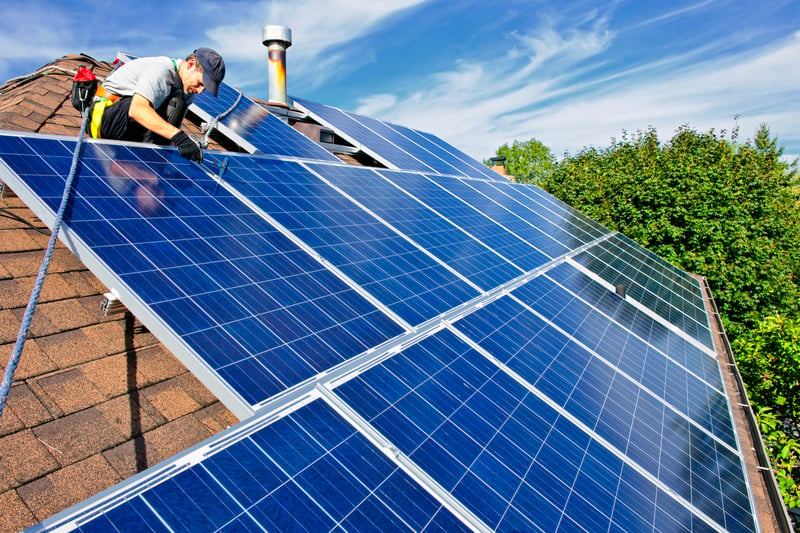
Solar panels and battery storage can be among the more expensive energy projects. Costs vary by system size, roof condition, electricity rates, permitting costs and local labor prices.
Solar may reduce your monthly electric bill, but the payback period depends on how much power your system produces, how much electricity you use, how your utility credits solar production and whether any state, local or utility incentives are available.
| Project |
Financing Consideration |
What To Check First |
| Solar panels |
Often a larger fixed-cost project that may fit a home equity loan |
System size, roof condition, utility rates, local incentives and contractor warranty |
| Solar plus battery storage |
Usually higher upfront cost and more variable savings |
Battery capacity, outage needs, time-of-use rates and incentive availability |
| Electrical panel upgrades |
May be needed before larger electrification projects |
Local code requirements, contractor scope and whether it is part of a larger improvement |
Smart Thermostats And Home Energy Controls
Smart thermostats can help reduce unnecessary heating and cooling use by adjusting temperatures based on occupancy, schedules and indoor or outdoor conditions. ENERGY STAR says certified smart thermostats are independently certified based on field data to deliver energy savings.
Because smart thermostats are usually lower-cost upgrades, they may not require home equity financing on their own. They may make more sense as part of a larger project, such as a heat pump installation, insulation work or a broader home energy upgrade.
Efficient Appliances, Lighting, Windows And Doors
Energy-efficient appliances, LED lighting, windows and doors can reduce energy use depending on what you’re replacing and how your household uses energy. ENERGY STAR-certified products are designed to meet efficiency standards for their category, but savings vary by product, climate and local utility rates.
A home equity loan may make sense if you are bundling several upgrades into one larger project. For smaller purchases, compare the total interest cost with other options, including paying cash, using a store promotion or taking an unsecured personal loan.
Water-Saving Fixtures
Energy-efficient projects are not limited to electricity or heating and cooling. WaterSense-labeled toilets, faucets and showerheads can reduce water use and may also lower the energy needed to heat water. The EPA’s WaterSense program identifies products that meet water-efficiency and performance criteria.
These upgrades are usually less expensive than HVAC or solar projects. They may be worth including if you are already financing a broader renovation.
Home Equity Loan vs. HELOC For Energy-Efficient Projects
A home equity loan is usually easier to budget for because you borrow once and repay the balance with fixed payments. That can work well for a defined project with one contractor, one bid and a clear completion timeline.
A HELOC may be more flexible if your project will happen in phases. For example, you might use a HELOC for an energy audit, insulation, electrical work and equipment replacement over several months. The trade-off is that HELOC rates are often variable, so your payment may rise if rates increase.
| Option |
May Work Best When |
Main Trade-Off |
| Home equity loan |
You know the project cost and want fixed payments |
Less flexible if the project cost changes |
| HELOC |
You need to draw money over time for a phased project |
Variable rates can make payments less predictable |
| Personal loan |
You do not want to use your home as collateral |
Rates may be higher than home equity financing |
| Cash |
The project is smaller and you have enough savings |
Reduces available cash for emergencies |
How To Estimate Whether Financing Makes Sense
Start with the full project cost, not just the monthly payment. Include equipment, labor, permits, electrical work, disposal, repairs and any related upgrades needed to complete the job.
Then compare that cost with expected savings, available incentives and how long you plan to stay in the home. A project with a long payback period may still be worthwhile if it improves comfort, reliability or resale appeal, but the financing cost should fit your budget even if the savings are lower than expected.
Before you borrow, ask contractors for itemized bids and confirm whether any rebates are applied upfront or paid after installation. A rebate that arrives later will not reduce the initial loan balance unless you use it to make an extra payment.
Tax Credits, Rebates And Incentives
Federal energy tax rules changed under the One Big Beautiful Bill Act. The IRS says several clean energy credits and deductions were modified or given termination dates under the law.
Do not assume a project qualifies for a federal tax credit based on older information. Before signing a contract, check current IRS guidance, state programs, local programs and utility rebates. The Database of State Incentives for Renewables & Efficiency can help you search for state, local and utility incentives by location.
Incentives can change the cost calculation, but they should not be treated as guaranteed unless you have confirmed eligibility, deadlines, documentation rules and whether funding is still available.
Can Home Equity Loan Interest Be Tax Deductible?
Home equity loan or HELOC interest may be deductible if the loan is secured by your main home or second home and the funds are used to buy, build or substantially improve the home securing the loan. The IRS says the deduction is subject to dollar limits and other requirements.
Energy-efficient improvements may qualify as substantial improvements in some cases, but tax treatment depends on the project, the property, how the loan proceeds are used and your broader tax situation. Keep contractor invoices, proof of payment and loan records, and ask a qualified tax professional before claiming a deduction.
The Bottom Line
Financing energy-efficient home projects with home equity can make sense when the improvement is substantial, the cost is clear and the payment fits your budget. Home equity loans can work well for one-time projects with fixed costs, while HELOCs may be better for phased upgrades.
Before borrowing, compare financing costs with expected utility savings, available incentives and how long you plan to stay in the home. The project should still be affordable even if savings, rebates or resale benefits are lower than expected.
Frequently Asked Questions
What Energy-Efficient Projects Can You Finance With A Home Equity Loan?
You can use a home equity loan for many energy-efficient home improvements, including insulation, air sealing, heat pumps, HVAC replacement, solar panels, battery storage, efficient appliances, windows, doors, smart thermostats and water-saving fixtures.
Is A Home Equity Loan A Good Way To Finance Energy-Efficient Projects?
It can be if the project has a clear upfront cost and the fixed monthly payment fits your budget. A home equity loan may be less useful for small upgrades or projects where the final cost is uncertain.
Is A HELOC Better Than A Home Equity Loan For Energy Improvements?
A HELOC may be better for phased projects because you can draw funds over time. A home equity loan may be better when you know the total cost and want a fixed payment schedule.
Can Energy-Efficient Home Improvements Lower My Utility Bills?
They can, but savings vary. Your results depend on the project, your home’s condition, local climate, utility rates, installation quality and how your household uses energy.
Do Energy-Efficient Projects Still Qualify For Federal Tax Credits?
Some federal energy tax credit rules changed under the One Big Beautiful Bill Act, and older information may no longer apply. Check current IRS guidance before assuming a project qualifies.
Can I Deduct Interest On A Home Equity Loan Used For Energy-Efficient Projects?
Possibly. The IRS says home equity loan or HELOC interest may be deductible when the funds are used to buy, build or substantially improve the home that secures the loan, subject to limits and other requirements. Ask a qualified tax professional how the rule applies to your situation.