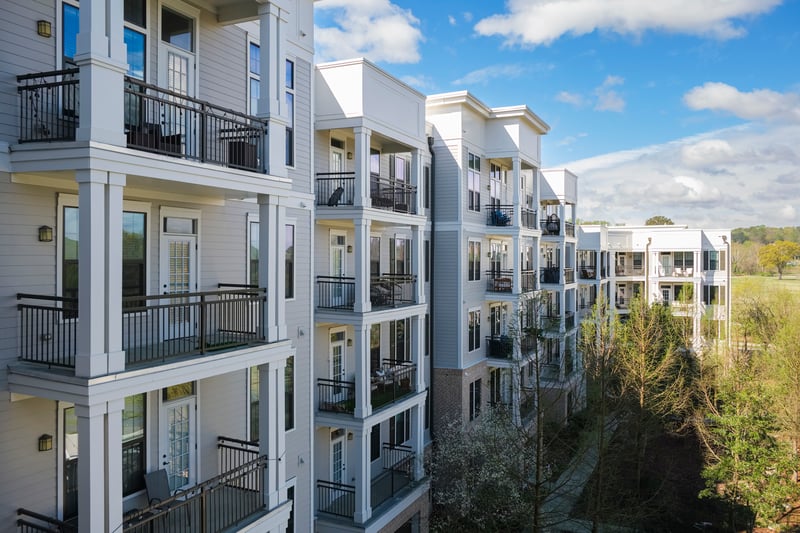
A non-warrantable condo is a unit in a condominium project that does not meet the project requirements for a standard mortgage backed by Fannie Mae, Freddie Mac or a government program.
The problem is often tied to the condominium project rather than the borrower or individual unit. Active litigation, critical repairs, inadequate insurance, weak association finances, excessive commercial space or concentrated ownership can prevent a lender from using standard financing.
A non-warrantable condo may still be financeable through a portfolio loan, non-QM loan or another lender-specific program. These options may require a larger down payment, more reserves or different rates and fees.
Non-Warrantable Condo Financing Basics
| Topic |
What to Know |
| Warrantable Condo |
The unit and project meet the requirements for the selected standard mortgage program |
| Non-Warrantable Condo |
The project fails one or more requirements for the selected agency or government-backed loan |
| Main Review |
Association finances, insurance, ownership, litigation, repairs, commercial space and project use |
| Possible Financing |
Portfolio, non-QM, specialized conventional or eligible FHA condo financing |
| Potential Tradeoffs |
Larger down payment, additional reserves, different pricing and a smaller lender selection |
| Resale Consideration |
Future buyers may also have fewer financing options while the project remains ineligible |
What Makes a Condo Non-Warrantable?
Condo eligibility is not determined through one universal checklist. Requirements vary by Fannie Mae, Freddie Mac, FHA, VA, the type of project review and the proposed transaction.
However, the following issues commonly affect whether a lender can use standard agency financing.
| Project Issue |
Current Fannie Mae Requirement or Concern |
| Commercial Space |
Nonresidential or commercial space generally cannot exceed 35% of the project’s total space |
| Single-Entity Ownership |
A single entity generally cannot own more than two units in a project with five to 20 units or more than 20% in a project with at least 21 units |
| Delinquent Assessments |
Delinquent regular or special assessments can make a project ineligible under the applicable review requirements |
| Replacement Reserves |
The association generally must provide adequate replacement reserves or an acceptable reserve study under the applicable review standards |
| Litigation |
Litigation affecting safety, structural soundness, habitability, functional use or project finances can make the project ineligible |
| Critical Repairs |
Projects with unaddressed critical repairs, significant deferred maintenance or evacuation orders can be ineligible |
| Insurance |
The project must meet applicable master property, liability, fidelity and flood insurance requirements |
| Hotel-Like Use |
Projects operated as hotels, motels, resorts or transient lodging are generally ineligible |
Meeting these thresholds does not automatically make a project warrantable. The lender must complete the applicable project review and verify all requirements for the selected loan.
Why Condo Financing Is Different
When you finance a detached single-family home, the lender primarily reviews your finances, the property’s condition, value and title.
A condo loan adds a review of the larger project because each unit owner shares financial and legal interests in common areas and association obligations.
The lender may need to evaluate:
- The condominium association’s budget
- Replacement reserves and reserve studies
- Master insurance policies
- Pending litigation
- Special assessments
- Structural and safety reports
- Deferred maintenance
- Unit ownership concentration
- Commercial or mixed-use space
- Rental and short-term-rental activity
- Whether the project operates like a hotel
A unit can be in good condition and still be difficult to finance because the association or project does not meet the applicable requirements.
Warrantable vs. Non-Warrantable Condos
| Feature |
Warrantable Condo |
Non-Warrantable Condo |
| Project Eligibility |
Meets the requirements for the selected standard mortgage program |
Fails one or more applicable project requirements |
| Financing Availability |
Broader selection of conventional or government-backed financing |
Smaller selection of portfolio, non-QM or specialized programs |
| Down Payment and Reserves |
Based on standard program and borrower requirements |
May require more equity and stronger reserves |
| Rates and Fees |
Standard program pricing may be available |
May carry different rates, fees or loan terms |
| Resale |
More prospective buyers may qualify for financing |
Financing limitations may reduce the potential buyer pool |
Commercial and Mixed-Use Space
A project can include some commercial or nonresidential space and remain eligible for Fannie Mae financing.
Under current Fannie Mae project requirements, commercial and nonresidential space generally cannot exceed 35% of the project’s total space.
The lender also evaluates whether the commercial use is compatible with the project’s residential character.
Mixed-use buildings with restaurants, offices, stores or other businesses on lower floors may exceed the permitted percentage or present additional insurance and project-use concerns.
Single-Entity Ownership
A project may be ineligible when one person, investor, corporation, partnership, developer or related group owns too many units.
Fannie Mae generally limits a single entity to:
- No more than two units in a project containing five to 20 units
- No more than 20% of the units in a project containing at least 21 units
Single-entity ownership differs from the broader percentage of units used as rentals or investment properties.
In 2026, Fannie Mae retired its separate 50% investment-property concentration limit for established projects reviewed under its Full Review process. The single-entity limits remain in place.
New and newly converted projects continue to have separate presale requirements.
HOA Delinquencies
High association delinquency can indicate that the HOA may have difficulty paying operating expenses, maintaining the building or funding repairs.
Project-review rules can limit the percentage of units that are significantly delinquent on regular assessments or special assessments.
Fannie Mae has used a 15% threshold for certain project reviews when measuring units that are at least 60 days delinquent. The precise test depends on the review process, project type and whether the delinquency involves regular or special assessments.
The lender may request:
- An association aging report
- A list of delinquent regular assessments
- A list of delinquent special assessments
- The total number of project units
- Information about collection efforts
Replacement Reserves and the HOA Budget
Replacement reserves help the association pay for major repairs and replacements without relying entirely on special assessments.
For loan applications submitted under current Fannie Mae requirements before Jan. 4, 2027, an HOA budget generally must allocate at least 10% of its assessment income to replacement reserves unless an acceptable reserve study supports another amount.
Under Fannie Mae Lender Letter LL-2026-03, the standard minimum reserve allocation is scheduled to increase to 15% for applicable loan applications dated on or after Jan. 4, 2027.
The lender may also review an association reserve study, including:
- The age and condition of major building components
- Estimated remaining useful life
- Projected repair and replacement costs
- Current reserve balances
- Planned reserve contributions
- Whether a special assessment is anticipated
A low monthly HOA fee does not necessarily indicate a financially healthy project. Low fees combined with weak reserves can lead to large assessments when major work is needed.
Critical Repairs and Deferred Maintenance
Fannie Mae and Freddie Mac project reviews address conditions that affect safety, structural soundness, habitability or the functional use of the project.
Potential warning signs include:
- Structural deficiencies
- Unsafe balconies or exterior components
- Foundation problems
- Water intrusion or extensive mold
- Fire-safety deficiencies
- Unresolved building-code violations
- An evacuation or condemnation order
- Repairs that require residents to leave the building
- Significant deferred maintenance that may lead to unsafe conditions
The lender may review engineering reports, inspection reports, reserve studies, board minutes, repair contracts and evidence that required work has been completed.
A project with critical repairs may remain ineligible until the work is substantially completed and documented under the applicable requirements.
Litigation
Pending litigation does not automatically make every condominium project ineligible.
The lender evaluates the nature of the dispute, the amount at risk, available insurance and the potential effect on the project.
Litigation can be disqualifying when it relates to:
- Safety or structural soundness
- Habitability
- The functional use of the project
- Title or unit marketability
- Significant association finances
- Major construction defects
Minor matters involving routine collections or limited disputes may receive different treatment when they do not create a material risk to the project.
Special Assessments
A special assessment is an additional charge imposed on unit owners beyond normal HOA dues.
The existence of an assessment does not automatically make the project non-warrantable. The lender evaluates:
- Why the assessment was imposed
- Whether it funds critical repairs
- The total amount
- How much remains unpaid
- The number of delinquent owners
- Whether the assessment is sufficient to complete the work
- Whether the borrower’s share must be paid before closing
An assessment associated with unresolved structural or safety problems can prevent standard financing even when the individual unit owner has paid their share.
Insurance Requirements
The condominium association generally must maintain master insurance that meets the requirements of the selected mortgage program.
The review may cover:
- Property insurance
- General liability insurance
- Flood insurance when required
- Fidelity or crime insurance
- Coverage limits
- Deductibles
- Coinsurance provisions
- Replacement-cost coverage
A project can become temporarily ineligible when coverage expires, the policy contains unacceptable exclusions or the deductible exceeds permitted limits.
Insurance requirements have become a significant condo-financing issue in markets where associations face rising premiums or difficulty obtaining adequate coverage.
Short-Term Rentals and Hotel-Like Operations
A condominium project may be ineligible when it is operated or managed like a hotel, motel, resort or transient lodging business.
Warning signs include:
- Mandatory rental pooling
- Daily or short-term occupancy as the project’s primary use
- Hotel-style registration or front-desk services
- Daily cleaning services
- Central key systems
- Restrictions requiring owners to make units available for rent
- Revenue-sharing agreements with a rental operator
- Blackout dates or limits on owner occupancy
Allowing some short-term rentals does not automatically make a project a condo hotel. The lender reviews the project’s documents, actual use, management and operating characteristics.
Owner Occupancy and Investor Concentration
Owner-occupancy requirements vary by mortgage investor, project type, review method and transaction.
A 50% owner-occupancy threshold should not be treated as a universal rule for every conventional condo mortgage.
Fannie Mae’s 2026 project-standard changes removed its 50% investment-property concentration limit for established projects reviewed through Full Review. Freddie Mac also updated aspects of its owner-occupancy treatment in 2026.
New projects, investment-property purchases, second homes and government-backed programs may still have separate owner-occupancy, presale or concentration requirements.
Financing Options for a Non-Warrantable Condo
Portfolio Loans
A portfolio mortgage is retained by the lender rather than sold under standard Fannie Mae or Freddie Mac requirements.
The lender can establish its own project standards, but it will still evaluate:
- Your credit and income
- Your debt-to-income ratio
- The down payment
- Your reserves
- The individual unit
- The specific reason the project is non-warrantable
A lender may accept one project issue while declining another. For example, it may consider elevated commercial space but decline a project with unresolved structural problems.
Non-QM Loans
A non-QM loan may accommodate some non-warrantable condominium projects or borrowers who do not meet standard agency underwriting requirements.
Possible differences can include:
- A larger down payment
- Higher reserve requirements
- Different income documentation
- Different rates and fees
- A prepayment penalty when legally permitted
- Restrictions based on the project defect
Non-QM does not mean the project receives no review. The lender still determines whether the condo presents an acceptable collateral and repayment risk.
FHA Condo Financing
An FHA loan may finance a condo unit when the unit and project meet HUD requirements.
The unit may be in:
- An FHA-approved condominium project
- An unapproved project that qualifies through FHA Single-Unit Approval
Under HUD’s Single-Unit Approval requirements, the unit must generally be in a completed project that is not currently FHA-approved, contains at least five units and is not a manufactured-home project.
The project and unit must meet applicable FHA requirements, including financial condition, insurance, owner occupancy and FHA concentration limits. Single-Unit Approval is not an exception that allows FHA to disregard significant project deficiencies.
Cash Purchase and Later Financing
A buyer may purchase the condo with cash and seek financing later.
This approach does not guarantee that refinancing will become available. The project may remain non-warrantable, and delayed-financing or cash-out rules can limit the future loan.
Consider the liquidity, opportunity cost and risk of holding the unit without reliable refinancing options.
How Much Down Payment Is Required?
There is no universal minimum down payment for a non-warrantable condo.
The required amount depends on:
- The lender and loan program
- Primary, second-home or investment occupancy
- The reason the project is non-warrantable
- Your credit and financial profile
- The number of financed properties
- The unit and project value
- Available reserves
A specialized lender may require substantially more equity than a standard conventional or FHA loan.
What to Review Before Making an Offer
Project review should begin before the financing contingency expires.
Request and review:
- The condominium questionnaire
- The current operating budget
- The most recent financial statements
- The reserve study
- Master insurance policies and certificates
- HOA meeting minutes
- Pending litigation disclosures
- Special-assessment notices
- Engineering and structural reports
- Inspection and code-enforcement records
- Rental and short-term-rental restrictions
- Ownership and investor-concentration information
- Commercial-space calculations
- Records of delinquent assessments
A condo questionnaire is generally completed by the association or management company and gives the lender information needed for its project review.
The questionnaire alone may not be enough. The lender can request supporting financial, legal, insurance or repair documents.
Questions to Ask the Lender
- Has the project already been reviewed?
- Which project issue prevents standard financing?
- Is the issue specific to Fannie Mae, Freddie Mac, FHA or the lender?
- Does the lender offer a portfolio or non-QM alternative?
- What down payment and reserves are required?
- Can the project issue be resolved before closing?
- How long will the project review take?
- Will the lender review the project before the appraisal or other major expenses?
- Could the same issue prevent a future refinance?
When a Non-Warrantable Condo May Still Make Sense
A non-warrantable condo may still fit when:
- The project issue is clearly identified and documented
- The issue does not involve unresolved safety or structural risk
- The association has a credible and funded correction plan
- The specialized financing fits your budget
- You have enough cash for the down payment and reserves
- You understand the potential resale limitations
- The purchase price reflects the financing and project risk
Proceed cautiously when documents are missing, the association cannot explain its finances or repairs, or the project has unresolved structural, litigation or insurance problems.
Can a Non-Warrantable Condo Become Warrantable?
A project can become eligible later when the disqualifying issue is resolved.
Examples include:
- Litigation is resolved
- Critical repairs are completed
- Insurance coverage is corrected
- Replacement reserves improve
- Delinquent assessments decline
- Single-entity ownership falls within the permitted limit
- Commercial space is reclassified or documented correctly
- Hotel-like operations end
Future eligibility is not guaranteed. Agency requirements can change, and the lender must complete a new project review when you refinance or sell to a financed buyer.
Refinancing and Resale Risks
A specialized mortgage may be refinanced into a standard loan if the project later becomes warrantable and you meet the new loan requirements.
While the project remains non-warrantable:
- Fewer lenders may offer refinancing
- Available rates and terms may be less favorable
- Future buyers may need specialized financing
- A buyer’s lender may identify a project issue that your original lender accepted
- The unit may take longer to sell
Include the likely future financing market in your purchase decision rather than evaluating only the current loan approval.
The Bottom Line
A non-warrantable condo is a unit in a project that does not meet the requirements for the selected standard mortgage program.
Common causes include unresolved litigation, critical repairs, weak reserves, delinquent assessments, inadequate insurance, excessive commercial space, concentrated ownership and hotel-like operations.
Portfolio, non-QM and eligible FHA condo programs may provide alternatives, but requirements vary and significant project risks can still prevent financing.
Review the association’s finances, insurance, litigation, repairs, assessments and project documents before your contract deadlines. The individual unit and the larger condominium project must both support the purchase.
Frequently Asked Questions
What Is a Non-Warrantable Condo?
A non-warrantable condo is a unit in a project that does not meet the eligibility requirements for the selected standard agency or government-backed mortgage program.
What Makes a Condo Non-Warrantable?
Common causes include critical repairs, significant litigation, inadequate insurance, weak reserves, delinquent HOA assessments, excessive commercial space, concentrated ownership or hotel-like operations.
Can You Finance a Non-Warrantable Condo?
Possibly. Portfolio, non-QM and other specialized lenders may finance some non-warrantable projects. Eligibility depends on the specific project issue, borrower profile and lender requirements.
Are Non-Warrantable Condo Loans More Expensive?
They may have different rates, fees, down-payment requirements or reserve standards because fewer lenders and investors accept the project risk.
How Much Commercial Space Can a Condo Project Have?
Under current Fannie Mae requirements, commercial or nonresidential space generally cannot exceed 35% of the project’s total space.
How Many Units Can One Owner Have in a Condo Project?
Fannie Mae generally permits a single entity to own no more than two units in a five- to 20-unit project or no more than 20% of the units in a project with at least 21 units.
Does a Condo Project Need 50% Owner Occupancy?
Not in every situation. Owner-occupancy requirements depend on the program, project type, review method and transaction. Fannie Mae retired its 50% investment-property concentration limit for established projects under Full Review in 2026.
How Much Must an HOA Put Into Reserves?
Under current Fannie Mae requirements, the association generally must allocate at least 10% of assessment income to replacement reserves unless an acceptable reserve study supports another amount. The standard minimum is scheduled to increase to 15% for applicable loan applications dated on or after Jan. 4, 2027.
Can a Non-Warrantable Condo Become Warrantable Later?
Yes. The project may become eligible after resolving the issue that caused it to fail review, such as completing critical repairs, correcting insurance, resolving litigation or improving association finances.
What Is a Condo Questionnaire?
A condo questionnaire is a form completed by the association or management company that provides project information about finances, insurance, litigation, ownership, assessments, rentals, commercial space and repairs.
Can You Use an FHA Loan for a Condo That Is Not FHA-Approved?
Possibly. A unit in an unapproved project may qualify through FHA Single-Unit Approval when the unit and project meet HUD’s requirements.
What Documents Should You Review Before Buying a Condo?
Review the condo questionnaire, budget, financial statements, reserve study, insurance, meeting minutes, litigation disclosures, special assessments, repair reports, rental rules and delinquency information.




.jpg?quality=80&width=150)