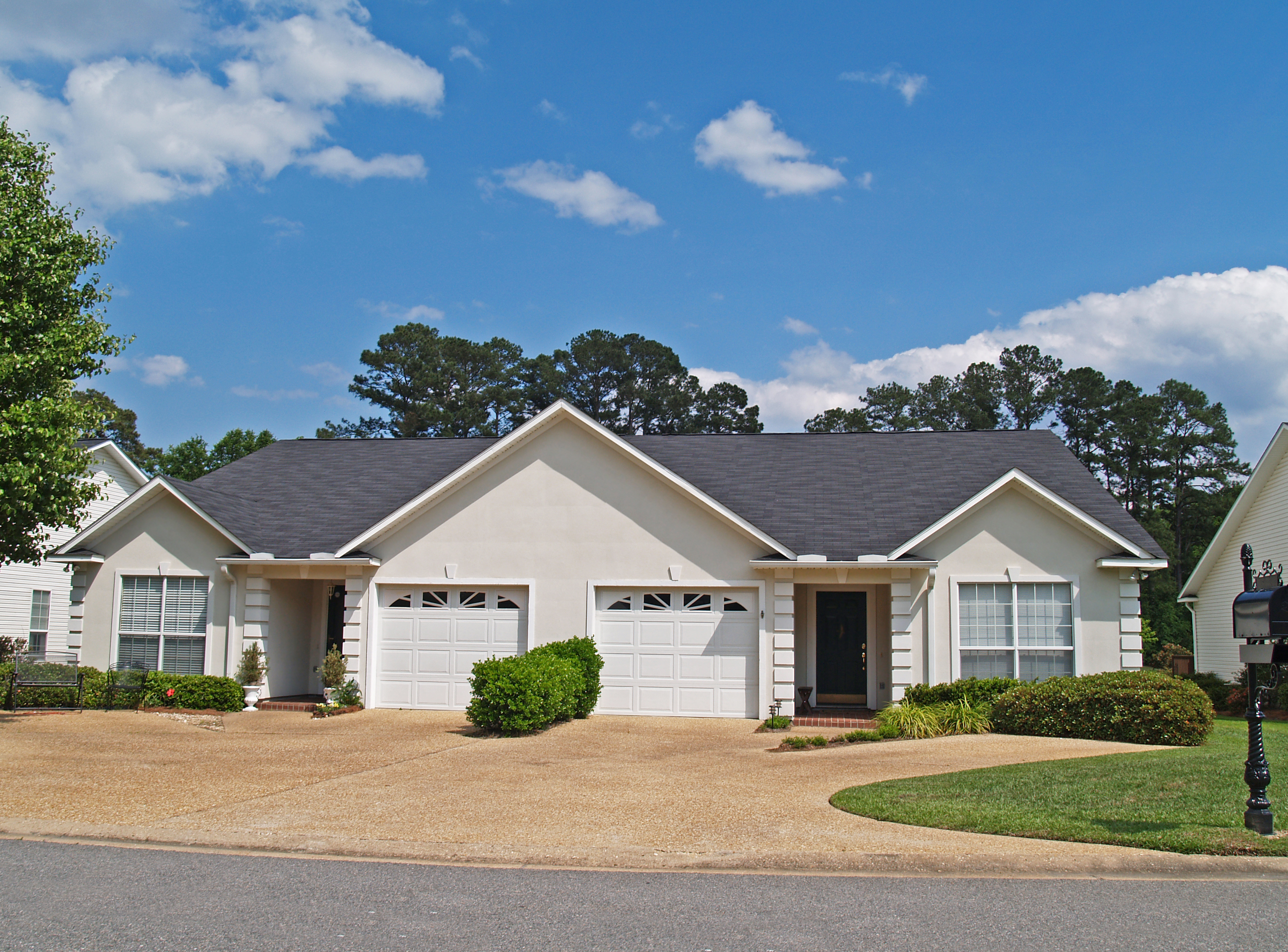
Our home affordability calculator uses your income, debts, down payment, mortgage rate and housing costs to estimate a price range, then shows how that payment fits with your debt-to-income ratio.
How to Use the Mortgage Affordability Calculator
Start by entering your gross annual income, required monthly debt payments, down payment and mortgage-rate assumption. The calculator uses those inputs with estimated housing costs to model a home price and the debt-to-income ratio, or DTI, associated with that payment.
After you get a result, change one input at a time. For example, keep your income and debts the same while testing a larger down payment or different mortgage rate. This makes it easier to see which variable has the greatest effect on the home price you can afford.
If you already have a target purchase price and want to focus on the payment instead, use the monthly payment calculator.
Home Affordability Calculator Basics
| Input or Result |
What It Means |
| Gross annual income |
Income before taxes and other deductions, used to calculate gross monthly income and DTI |
| Other monthly debt |
Qualifying recurring debt payments such as auto loans, student loans, personal loans and credit card minimums |
| Down payment |
The portion of the purchase price you plan to pay upfront rather than finance |
| Interest rate |
The mortgage rate used to estimate principal and interest |
| Full housing cost |
Estimated principal, interest, property taxes, homeowners insurance, mortgage insurance when applicable and HOA dues |
| Housing ratio |
Estimated monthly housing payment divided by gross monthly income |
| Total DTI |
Estimated housing payment plus other qualifying monthly debts divided by gross monthly income |
| Estimated home price |
The purchase price supported by the assumptions entered in the calculator |
How Much House Can You Afford?
The amount of house you can afford depends partly on how much of your income is available for housing after accounting for other debt payments.
The CFPB defines DTI as your monthly debt payments divided by your gross monthly income. Different mortgage products and lenders can use different DTI limits, so there is no single percentage that determines how much every buyer can borrow.
Suppose you earn $100,000 per year, or about $8,333 per month before taxes. If your estimated monthly housing payment is $2,300 and you have $500 in other qualifying monthly debt, your simplified total DTI would be about 33.6%.
| Example |
Amount |
| Gross monthly income |
About $8,333 |
| Estimated housing payment |
$2,300 |
| Other qualifying monthly debt |
$500 |
| Total qualifying monthly obligations |
$2,800 |
| Estimated total DTI |
About 33.6% |
If your other qualifying debt rises from $500 to $1,200, the same housing payment produces a simplified DTI of about 42%. The house did not get more expensive. Your existing debt reduced the amount of room available in the DTI calculation.
You can use the DTI calculator to look more closely at the relationship between income and monthly debt.
What Goes Into Your Monthly Housing Cost?
Principal and interest are only part of the cost of owning a home with a mortgage. A useful home affordability estimate also accounts for costs tied to the property and loan.
- Property taxes vary by location and property value.
- Homeowners insurance depends on the property, location and coverage.
- Mortgage insurance can apply depending on the loan type and loan-to-value ratio.
- HOA dues add another recurring housing expense when the property belongs to an association.
The CFPB explains that a total mortgage payment commonly includes principal, interest, taxes, homeowners insurance and mortgage insurance when applicable. HOA dues are generally a separate payment, but they still belong in your affordability budget.
This is why two homes with similar prices can have noticeably different monthly costs. Higher taxes, insurance or HOA dues leave less room for principal and interest within the same housing budget.
How DTI Affects Home Affordability
DTI helps explain why two buyers earning the same salary can receive different affordability estimates.
Consider two households earning $100,000 per year. One has little recurring debt. The other pays $700 per month toward an auto loan and student debt. If both are modeled using the same DTI assumption, the second household has $700 less room each month for housing.
Housing Ratio vs. Total DTI
The housing ratio compares your estimated housing payment with gross monthly income:
Housing ratio = monthly housing payment ÷ gross monthly income
Total DTI includes the housing payment plus other qualifying monthly debts:
Total DTI = (housing payment + other qualifying monthly debts) ÷ gross monthly income
The housing ratio shows how much gross income the home itself uses. Total DTI adds other debts to show how the proposed mortgage fits alongside existing obligations.
DTI Does Not Include Your Entire Household Budget
Mortgage DTI does not capture every expense competing for your income. Groceries, utilities, child care, transportation, health care, home maintenance and regular savings can still affect whether a mortgage payment feels manageable.
The CFPB recommends considering your other financial priorities rather than treating the maximum amount a lender will approve as the amount you should automatically spend.
How Down Payment Changes Home Affordability
A larger down payment reduces the amount you need to borrow. That lowers principal and interest for the same home price and can allow a higher purchase price to fit within the same monthly budget.
Down payment can also affect mortgage insurance. The CFPB notes that conventional buyers putting less than 20% down will likely need mortgage insurance, although the exact requirement depends on the mortgage.
The tradeoff is the cash required upfront. Increasing a down payment from 5% to 20% can materially reduce the mortgage balance while requiring substantially more money at closing.
Keep closing costs, reserves and emergency savings in the calculation rather than assuming every available dollar should go toward the down payment.
How Mortgage Rates Change Buying Power
A higher mortgage rate increases the principal-and-interest payment on the same loan amount. If your monthly housing budget stays fixed, the amount you can borrow generally has to decline.
A lower rate works in the opposite direction. Less of the payment goes toward interest, allowing the same monthly budget to support a larger mortgage balance.
Test several rate assumptions if your rate is not locked. This shows how sensitive your affordable home-price range is to a change in financing costs.
How Monthly Debt Reduces Home Affordability
Required monthly debts compete with the mortgage in the total-DTI calculation. These can include auto loans, student loans, credit card minimums, personal loans and other qualifying obligations.
The monthly payment generally matters more to DTI than the outstanding balance itself, although mortgage programs have specific rules for how different obligations are treated.
For example, eliminating a $500 required monthly payment can create more room in the DTI calculation than simply adding $500 to your down payment. The exact change in buying power depends on your mortgage rate and other assumptions.
Change the debt input in the calculator while holding everything else constant to see the effect.
Compare More Than One Home Affordability Scenario
A single calculator result can suggest more precision than the assumptions justify. Run several scenarios before settling on a target price.
For each scenario, compare the estimated home price, complete housing cost, down payment, housing ratio and total DTI. You can then change the mortgage rate, monthly debt or down payment individually to see what moves the result.
The calculator scenarios are planning comparisons rather than mortgage approval tiers. Actual underwriting depends on the mortgage program, your financial profile and lender requirements.
Home Affordability vs. Mortgage Qualification
A home affordability calculator estimates what a set of financial assumptions can support. It does not verify your income, assets, credit history or property information, and it does not produce a mortgage approval.
A lender evaluates those factors when deciding whether you qualify and how much you can borrow. The amount you qualify for can also be different from the amount you personally feel comfortable spending each month.
Cash is a separate constraint. A home can fit your monthly budget while still requiring more money than you have available for the down payment, closing costs and prepaid expenses. The cash-to-close calculator can help estimate that part of the purchase.
Home Affordability by Salary
If you are starting with your income rather than a home price, these salary-based scenarios show how different income levels can translate into buying power under stated mortgage assumptions:
These examples are useful for comparison, but your calculator result should use your own debts, down payment and realistic housing costs for the area where you plan to buy.
What a Home Affordability Calculator Cannot Predict
The calculator cannot know your final mortgage rate, exact property taxes, homeowners insurance premium, mortgage insurance cost or HOA dues before those figures are available.
It also cannot determine how much of your income you personally want to spend on housing. Two households with identical income and DTI can have very different child care expenses, savings goals, transportation costs and other priorities.
Homeownership costs also extend beyond the mortgage payment. Repairs, maintenance, utilities, moving expenses and emergency reserves belong in your broader budget even though they are not all part of mortgage DTI.
The Bottom Line
A home affordability calculator estimates how much house your income, debts, down payment, mortgage rate and housing costs can support. The home-price result is useful, but the payment and DTI behind that price provide more context about how the mortgage fits your finances.
Run several scenarios instead of treating the first result as a ceiling. Change the mortgage rate, down payment and monthly debts one at a time to see which variable has the greatest effect on your buying power, then compare the modeled payment with the rest of your household budget.
Frequently Asked Questions
How Much House Can I Afford?
Your estimated home-price range depends on your income, required monthly debts, down payment, mortgage rate and housing costs such as property taxes, homeowners insurance, mortgage insurance and HOA dues. A home affordability calculator can estimate the price supported by those assumptions, but mortgage approval requires underwriting.
How Does a Home Affordability Calculator Work?
The calculator uses your income, monthly debts, down payment, rate and estimated housing expenses to determine how much monthly housing cost fits the scenario, then estimates the home price that corresponds with that payment.
What Is DTI?
Debt-to-income ratio, or DTI, is your qualifying monthly debt payments divided by your gross monthly income. Mortgage programs and lenders use different DTI standards, so there is no universal cutoff that applies to every mortgage.
Should I Use Gross Income or Take-Home Pay?
Use gross income for a mortgage DTI calculation because DTI uses qualifying income before taxes and other deductions. Take-home pay is still useful when deciding how the mortgage fits your personal household budget.
What Monthly Debts Should I Include?
Include qualifying recurring debts such as auto loan payments, student loan payments, credit card minimums and personal loans. Everyday living costs such as groceries and utilities are generally outside mortgage DTI, but you should still account for them in your personal budget.
Does a Larger Down Payment Increase How Much House I Can Afford?
It can. A larger down payment lowers the amount you need to finance, which reduces principal and interest for the same purchase price. It can also affect mortgage insurance and loan pricing.
How Do Mortgage Rates Affect Home Affordability?
A higher mortgage rate increases the payment required for a given loan amount. If your monthly housing budget stays the same, a higher rate generally reduces the home price that budget can support.
Does the Calculator Show How Much Mortgage I Will Be Approved For?
No. The calculator provides an affordability estimate based on the information and assumptions entered. Mortgage approval also requires verification of income, credit, assets, property information and the requirements of the selected loan program.
Should I Buy the Most Expensive House the Calculator Shows?
Not necessarily. The highest modeled price is an estimate based on the calculator assumptions. Compare the resulting payment with your take-home income, savings goals, maintenance costs and other expenses before deciding what purchase price fits your budget.




.jpg?quality=80&width=150)




















.jpg?quality=80&width=800)
















































































































.jpg?quality=80&width=800)

.jpg?quality=80&width=800)
















.jpg?quality=80&width=800)













.jpg?quality=80&width=800)

































.jpg?quality=80&width=800)