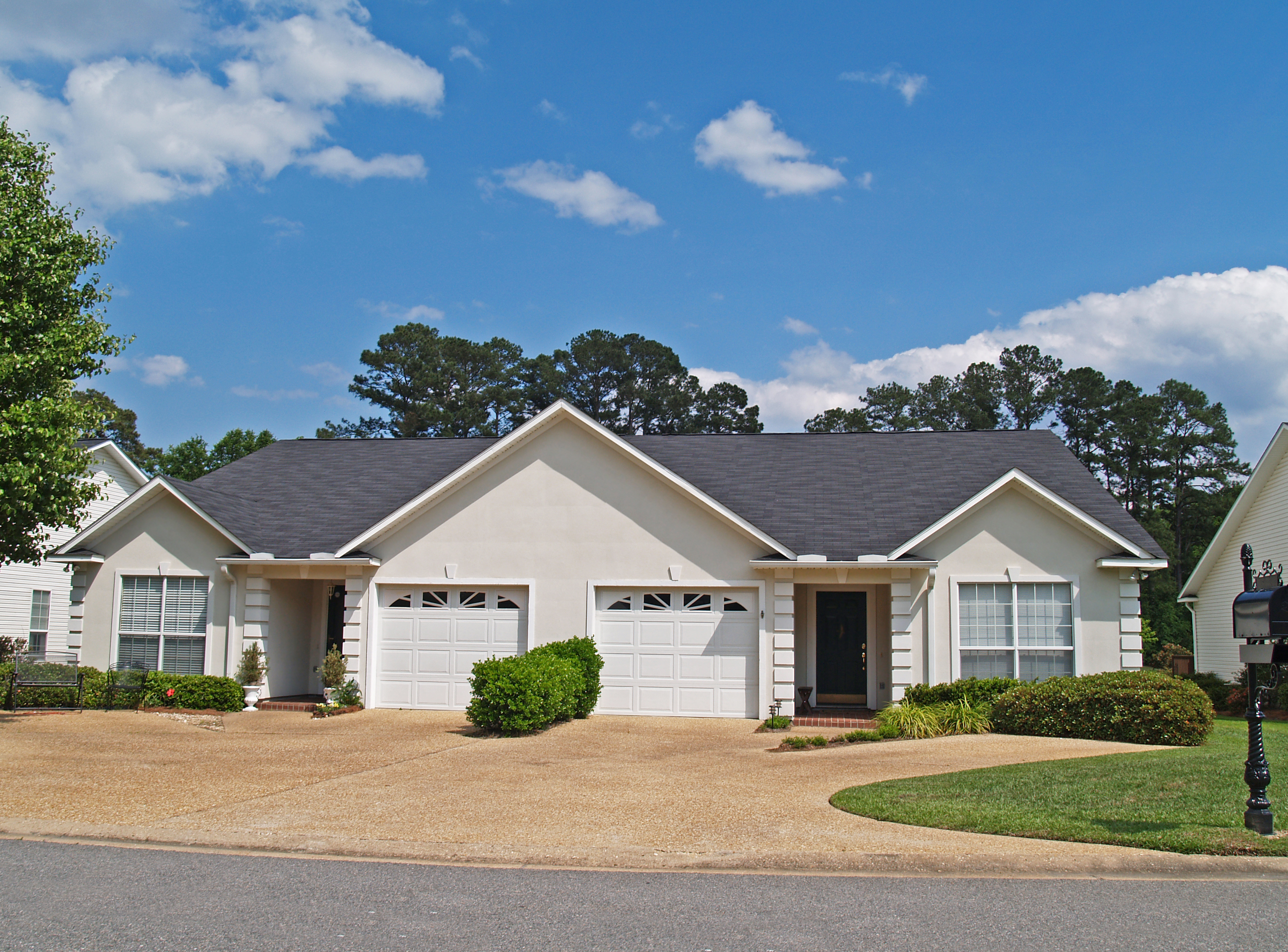
With a $300,000 salary, a good starting range is about $955,000 to $1.17 million.
The lower end uses 10% down. The upper end uses 25% down and has no monthly PMI cost.
This is the first salary in the series where the upper end clearly moves beyond the 2026 baseline conforming loan limit in most counties, even with 20% down. The home’s location and the amount you put down will affect both the monthly payment and the type of mortgage you need.
These numbers are meant to give you a starting point, not a loan offer or approval. They assume one borrower’s gross salary, no second income, no HOA dues and no other monthly debt unless noted.
$300,000 Salary Home Affordability Basics
| Annual gross salary |
$300,000 |
| Gross monthly income |
$25,000 |
| 28% housing benchmark |
$7,000 |
| 36% total-debt benchmark |
$9,000 |
| Estimated home-price range |
$955,000 to $1,170,000 |
| Rate and term |
6.55% fixed for 30 years |
| Taxes and insurance |
1.10% property tax and 0.35% homeowners insurance annually |
| Mortgage insurance |
0.50% annual PMI assumption below 20% down |
| HOA dues |
$0 included |
| Other monthly debt |
$0 included |
The 6.55% example rate matches the average 30-year fixed mortgage rate published by Freddie Mac for July 16, 2026. Rates change frequently, and an individual quote depends on the loan program, credit profile, property, points and market conditions.
Use our home affordability calculator to plug in your own income, debts, rate, down payment, taxes, insurance and HOA dues.
How Much House Can a $300,000 Salary Afford?
A $300,000 salary can put a home around $955,000 within reach with 10% down. With a larger down payment, the range can move above $1.1 million, although the mortgage may be jumbo in a standard-limit county.
At this price level, small percentage differences become large dollar amounts. A 1% property-tax difference on a $1 million home equals about $833 per month, before insurance or association dues.
Cash to close can also be substantial. Beyond the down payment, buyers should plan for title and lender charges, prepaid interest, escrow deposits and any reserve requirement tied to the loan.
The 28/36 Rule Applied to a $300,000 Salary
Debt-to-income ratio, or DTI, compares your required monthly debt payments with your gross monthly income. The Consumer Financial Protection Bureau notes that the limit can vary by lender and loan type.
The 28/36 rule is a simple budgeting guide:
- Front-end ratio: Aim to keep the full housing payment near 28% of gross monthly income.
- Back-end ratio: Aim to keep housing plus other required monthly debts near 36% of gross monthly income.
A CFPB worksheet uses 36% or less for total homeowner debt and 28% to 35% for mortgage debt. These are useful guideposts, not hard approval limits.
For a $300,000 salary, the math is:
- Gross monthly income: $25,000
- 28% housing benchmark: $7,000
- 36% total-debt benchmark: $9,000
The $2,000 gap between the two benchmarks can absorb significant monthly debt. It should not be treated as automatically spendable, since private school, child care, travel and aggressive retirement savings are generally absent from mortgage DTI.
Our conventional mortgage DTI guide explains why the actual limit can be different from the simple 28/36 rule.
How Much House Can a $300,000 Salary Buy by Down Payment?
The down payment determines whether a seven-figure purchase stays conforming or becomes jumbo. The table holds the monthly housing budget at $7,000 and uses the 6.55% example rate.
| Down Payment |
Estimated Home Price |
Down Payment Amount |
Estimated Loan Amount |
Estimated Monthly Housing Cost |
Assumed Monthly PMI |
| 10% |
$955,000 |
$95,500 |
$859,500 |
$6,973 |
$358 |
| 15% |
$1,005,000 |
$150,750 |
$854,250 |
$6,998 |
$356 |
| 20% |
$1,110,000 |
$222,000 |
$888,000 |
$6,983 |
$0 |
| 25% |
$1,170,000 |
$292,500 |
$877,500 |
$6,989 |
$0 |
The tables use PMI equal to 0.50% of the loan amount per year when the down payment is below 20%. Your actual PMI cost will depend on your credit, down payment, property type and insurer pricing.
At the upper end, 20% down still produces a loan above the 2026 baseline conforming limit, although it may remain conforming in a designated high-cost county. The 25% scenario can change that result depending on the final price.
A larger down payment can increase the supported home price, but it also commits more cash to the purchase. Keep enough funds for closing costs, repairs, moving and reserves.
How Interest Rates Change Buying Power on a $300,000 Salary
The table below uses 20% down and a $7,000 monthly housing budget. On a loan near $800,000 or $900,000, a one-point rate change has a much larger dollar effect than it does on a typical starter-home mortgage.
| Interest Rate |
Down Payment |
Estimated Home Price |
Estimated Loan Amount |
Estimated Monthly Housing Cost |
| 5.5% |
20% |
$1,215,000 |
$972,000 |
$6,987 |
| 6.5% |
20% |
$1,115,000 |
$892,000 |
$6,985 |
| 7.5% |
20% |
$1,025,000 |
$820,000 |
$6,972 |
| 8.5% |
20% |
$950,000 |
$760,000 |
$6,992 |
The comparison also affects loan classification. A lower rate may support a higher price, but the larger resulting balance can cross the conforming limit unless the down payment rises with it.
How Car Loans, Student Loans and Credit Cards Shrink the Budget
A $300,000 salary provides a $2,000 cushion between the 28% housing benchmark and the 36% total-debt benchmark. Large auto, student loan or business-related personal obligations can still reduce the housing amount once they exceed that cushion.
The table uses 20% down and shows how larger monthly debt payments change the price range.
| Monthly Debt Scenario |
Monthly Non-Housing Debt |
Housing Payment Available Under 28/36 |
Estimated Home Price |
| No recurring monthly debt |
$0 |
$7,000 |
$1,110,000 |
| $1,000 in combined monthly debt payments |
$1,000 |
$7,000 |
$1,110,000 |
| $2,000 in combined monthly debt payments |
$2,000 |
$7,000 |
$1,110,000 |
| $3,000 in combined monthly debt payments |
$3,000 |
$6,000 |
$950,000 |
| $4,000 in combined monthly debt payments |
$4,000 |
$5,000 |
$790,000 |
Student loan treatment can vary by loan program and payment status. The mortgage approval with student loan debt guide explains how the payment used in underwriting can affect qualification.
DTI does not normally include groceries, utilities, fuel, child care, health care, subscriptions or routine savings. Those costs still belong in a personal affordability calculation.
What a $1,000,000 Home Could Cost on a $300,000 Salary
The $1 million example uses 20% down and includes $2,500 in monthly debt. The $800,000 loan remains below the 2026 baseline conforming limit, which distinguishes it from some higher-priced scenarios in the article.
| Home price |
$1,000,000 |
| Down payment |
20% or $200,000 |
| Estimated loan amount |
$800,000 |
| Principal and interest |
$5,083 |
| Property taxes |
$917 |
| Homeowners insurance |
$292 |
| Private mortgage insurance |
$0 |
| Estimated total housing payment |
$6,291 |
| Other required monthly debts |
$2,500 |
| Front-end DTI |
25.2% |
| Back-end DTI |
35.2% |
The calculation includes these non-housing debts:
- $1,000 auto payment: $1,000
- $750 student loan payment: $750
- $250 credit card minimums: $250
- $500 in other required debts: $500
The housing payment stays below 28% of gross income, while the other debts bring the total closer to 36%. This example leaves some room below the full $7,000 monthly housing target.
Loan Types That Could Change Your Buying Options
For a $300,000 salary, the central financing decision is usually conforming versus jumbo. Down payment, reserve requirements and county loan limits matter more than minimum-down-payment marketing at this price level.
Conventional Loans
A conventional loan can remain conforming when the loan amount is at or below the county limit. Fannie Mae and Freddie Mac are government-sponsored enterprises that purchase qualifying conventional mortgages. A down payment below 20% can require private mortgage insurance, and low-down-payment availability narrows when the loan amount approaches or exceeds conforming limits.
FHA Loans
FHA loans require a minimum borrower investment of 3.5%, but county loan limits can make FHA financing unavailable for much of this article’s price range. HUD set the 2026 one-unit FHA floor at $541,287 and the high-cost ceiling at $1,249,125. The applicable county limit, upfront mortgage insurance and annual mortgage insurance all affect the final structure. HUD’s 2026 FHA loan limit announcement provides the national limits.
VA Loans
Eligible veterans, service members and certain surviving spouses can use a VA-backed loan. The VA home loan program does not require a down payment in many full-entitlement purchase scenarios and does not require monthly PMI. A funding fee can apply unless the borrower is exempt, and approval still requires sufficient income, residual income and acceptable credit.
USDA Loans
A USDA loan can provide 100% financing for eligible low- and moderate-income households buying a primary residence in an eligible rural area. Household income and property location limits apply. A household with at least $300,000 in annual income will exceed the USDA cap in many areas, so this option is less likely to apply.
Our first-time homebuyer loan options guide compares low-down-payment choices. Down payment assistance can reduce cash needed at closing, but a grant or second mortgage does not automatically increase the monthly payment that fits your income.
Could a $300,000 Salary Require a Jumbo Loan?
It depends on the loan amount and county. The 2026 baseline conforming loan limit for a one-unit property is $832,750 in most of the U.S. The one-unit ceiling in designated high-cost areas is $1,249,125.
A home price above $832,750 does not automatically require a jumbo loan. A large enough down payment can keep the mortgage balance at or below the applicable county limit. A mortgage above that limit is generally a jumbo loan, and the lender or investor sets its own credit, debt-to-income, down payment and reserve standards. The jumbo loan requirements guide explains those differences.
The Bottom Line
A $300,000 salary can work for a home around $955,000 with 10% down or up to about $1.17 million with 25% down. Near the top of that range, a jumbo loan is likely in most counties.
High income creates room in the payment calculation, but it does not make a seven-figure home inexpensive to carry. Taxes, insurance, association dues, reserves and household spending goals should set the final ceiling.
FAQ
How Much House Can I Afford on $300,000 a Year?
Based on the numbers in this article, about $955,000 to $1,170,000. The lower end reflects a smaller down payment, while the upper end reflects a larger down payment. Debts, local taxes, insurance and association dues can reduce the estimate.
What Mortgage Can I Get on a $300,000 Salary?
With 20% down and no other monthly debt, the numbers come out to about $1,110,000 for the home price and $888,000 for the mortgage. Your actual number will depend on your credit, debts, down payment, property costs and loan program.
Is $300,000 Enough to Buy a House?
Yes. At this income, the bigger issue is usually not whether you can buy, but how much you want to put down and whether the loan will be conforming or jumbo.




.jpg?quality=80&width=150)





















.jpg?quality=80&width=800)






































































































.jpg?quality=80&width=800)

.jpg?quality=80&width=800)













.jpg?quality=80&width=800)













.jpg?quality=80&width=800)

































.jpg?quality=80&width=800)