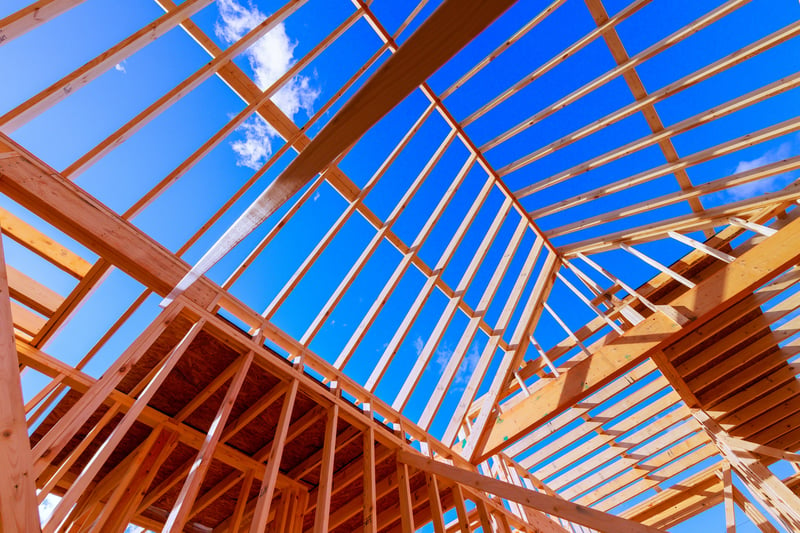
Building a home usually takes a different type of financing than buying an existing one. A construction-to-permanent loan can help by financing the construction phase first, then converting into a long-term mortgage once the home is finished.
This structure can reduce the need to apply for separate loans, but it also adds extra steps. The lender needs to review your finances and the construction project. That may include the builder, plans, budget, land, permits, appraisal and draw schedule.
Construction-to-permanent loans can be offered through conventional, FHA, VA, USDA or lender-specific programs, depending on the lender and your eligibility.
Construction-To-Permanent Loan Basics
| Category |
What It Means |
| Main Purpose |
Finances the construction of a new home and then converts to permanent mortgage financing. |
| Common Loan Structures |
One-time close or two-time close. |
| Construction Phase |
Funds are usually released in draws as work is completed. |
| Permanent Phase |
The loan becomes a standard mortgage after the home is complete and required conditions are met. |
| Common Requirements |
Credit, income, assets, appraisal, construction contract, plans, specifications, budget and builder review. |
| Best Fit |
Borrowers who want to build a new home and finance the construction and long-term mortgage together. |
What Is A Construction-To-Permanent Loan?
A construction-to-permanent loan is a mortgage that starts as short-term construction financing and later becomes a long-term home loan. During construction, the lender releases money in stages as the builder completes approved work. After the home is finished, the loan converts to permanent mortgage financing.
The permanent mortgage may be a fixed-rate or adjustable-rate loan, depending on the program and lender. The loan may be used to finance the construction of a new primary home, and some programs may also allow land costs to be included if the land is part of the same transaction.
The exact rules depend on the loan program. Conventional construction-to-permanent loans generally follow Fannie Mae or Freddie Mac requirements when the lender intends to sell the loan to one of those government-sponsored enterprises. Fannie Mae says construction-to-permanent financing converts interim construction financing used to construct a new residence into a long-term mortgage, and it supports both single-closing and two-closing transactions.
How Construction-To-Permanent Loans Work
1. You Apply For The Loan
The lender reviews your credit, income, debt-to-income ratio, assets and overall ability to repay. Debt-to-income ratio, often called DTI, compares your monthly debt payments with your gross monthly income.
For covered consumer mortgages, lenders must make a reasonable, good-faith determination that you can repay the loan before making it, according to the CFPB’s ability-to-repay rule.
2. The Lender Reviews The Construction Project
A construction-to-permanent loan is not based only on your finances. The lender also needs to understand what is being built, how much it will cost and whether the project can be completed as planned.
You may need to provide building plans, specifications, a construction contract, cost estimates, a timeline, builder information, permits and proof of land ownership or a purchase agreement for the lot.
3. The Home Is Appraised Before It Is Built
The lender typically orders an appraisal based on the proposed home, plans and specifications. The appraiser estimates the property’s value as completed.
This is different from buying an existing home because the final property does not exist yet. The lender is evaluating both the current land and the expected completed home.
4. The Loan Closes
With a one-time close construction-to-permanent loan, you close once before construction starts. That closing covers the construction phase and the permanent mortgage conversion.
With a two-time close structure, you close once on the construction loan and then close again on the permanent mortgage after the home is complete. Freddie Mac says construction-to-permanent mortgages may be structured as one-time close or two-time close transactions.
5. Funds Are Released Through Draws
Construction funds are usually not paid out all at once. Instead, the lender releases money in draws as the builder reaches specific milestones.
A draw schedule helps control when funds are released. The lender may require inspections before each draw to confirm that the work has been completed.
6. The Loan Converts To Permanent Financing
After construction is complete, the lender verifies that required conditions have been met. That may include final inspections, completion documents, title updates, insurance documentation and any required appraisal updates.
Once the loan converts, you begin making payments under the permanent mortgage terms. Depending on the loan structure, your payment may change when the loan moves from the construction phase to the permanent phase.
One-Time Close vs. Two-Time Close Construction Loans
One-Time Close Construction-To-Permanent Loan
A one-time close loan combines the construction loan and permanent mortgage into one closing. This can reduce duplicate paperwork and closing costs because you do not need a second mortgage closing after construction.
The trade-off is that you generally need to qualify for the permanent mortgage upfront. If construction costs rise, the project changes or your financial situation changes, the lender may need additional review.
Two-Time Close Construction Loan
A two-time close loan uses separate closings. First, you close on a short-term construction loan. After the home is complete, you close on a new permanent mortgage that pays off the construction loan.
This structure may offer more flexibility if the final loan terms or project details are not locked in at the beginning. However, it can also mean two rounds of closing costs, two underwriting reviews and more interest rate uncertainty before the permanent mortgage is finalized.
One-Time Close vs. Two-Time Close Basics
| Feature |
One-Time Close |
Two-Time Close |
| Number Of Closings |
One closing before construction starts. |
One closing for construction financing and another for the permanent mortgage. |
| Permanent Financing |
Set up at the beginning and converts after construction. |
Arranged after construction or near completion. |
| Closing Costs |
May reduce duplicate closing costs. |
May involve closing costs for both loans. |
| Rate Risk |
Permanent loan terms may be set earlier, depending on the lender. |
Permanent mortgage rate may depend on market conditions after construction. |
| Potential Fit |
Borrowers who want one process from construction to permanent financing. |
Borrowers who want more separation between the construction loan and final mortgage. |
Common Construction-To-Permanent Loan Requirements
Credit And Income
You need to qualify for the mortgage based on the lender’s credit and income requirements. The lender may review pay stubs, W-2s, tax returns, 1099s, bank statements, asset statements and other documentation based on your income type.
If the loan follows conventional guidelines, the lender must evaluate your file under the applicable Fannie Mae or Freddie Mac requirements. If it is FHA, VA, USDA or another program, the lender follows that program’s eligibility rules.
Down Payment Or Equity
Construction-to-permanent loans often require a down payment or existing equity in the land. The required amount depends on the loan program, lender, property type, appraised value, construction budget and your financial profile.
If you already own the land, the lender may consider some or all of your land equity when calculating the loan. Rules for land value, lot payoff and eligible costs vary by program.
Builder Approval
The lender usually reviews the builder before approving the loan. The builder may need to provide licensing information, insurance, references, financial details, a construction contract and a project budget.
Some lenders require you to use a licensed general contractor rather than acting as your own builder. Owner-builder rules are lender-specific and may be more restrictive.
Plans, Specifications And Budget
You should expect to provide detailed plans and specifications for the home. The lender needs these documents to order the appraisal, review the project and create a draw schedule.
A clear construction budget is also important. Cost overruns can create problems if the approved loan amount does not cover the final build cost.
Appraisal And Property Review
The appraisal is usually based on the home’s expected value after construction. The appraiser reviews the plans, specifications, land and comparable sales to estimate the completed value.
The lender may also review zoning, permits, title, flood-zone status, utilities, access and property eligibility. Rural, manufactured, modular or unique properties may have additional requirements.
Construction Timeline
The loan may require construction to be completed within a specific period. The timeline depends on the lender and loan program.
Delays can affect the loan if they extend beyond the approved construction period. Weather, permitting issues, material shortages, builder delays and design changes can all affect the schedule.
Conventional vs. FHA vs. VA vs. USDA Construction-To-Permanent Loans
Construction-to-permanent loans can be offered through several mortgage programs, but availability depends heavily on the lender. A loan program may allow construction-to-permanent financing, but not every lender that offers that program will offer construction loans.
The main differences come down to eligibility. Conventional construction-to-permanent loans are generally built around credit, income, down payment, property and project requirements. FHA, VA and USDA options may offer government-backed paths for eligible borrowers, but they also come with program-specific rules for occupancy, property type, borrower eligibility and lender participation.
| Loan Type |
Potential Fit |
Key Limits To Understand |
| Conventional Construction-To-Permanent Loan |
Borrowers who can meet conventional credit, income, asset, property and down payment requirements. |
May require stronger credit, more cash reserves or a larger down payment than some government-backed options. Lender overlays can also apply. |
| FHA Construction-To-Permanent Loan |
Borrowers building a primary residence who may need FHA’s more flexible credit or down payment framework. |
Not every FHA lender offers construction financing. The borrower, builder, property and construction process must meet FHA requirements. |
| VA Construction-To-Permanent Loan |
Eligible service members, veterans and surviving spouses who want to build a primary residence using VA-backed financing. |
Requires VA eligibility and a lender that offers VA construction lending. Builder, appraisal, property and occupancy requirements still apply. |
| USDA Single-Close Construction-To-Permanent Loan |
Eligible borrowers building in qualifying rural areas under USDA’s Single Family Housing Guaranteed Loan Program. |
USDA location, income, occupancy, property, lender and builder requirements apply. Some property types are not eligible. |
Conventional Construction-To-Permanent Loans
Conventional construction-to-permanent loans may follow Fannie Mae or Freddie Mac guidelines. Fannie Mae supports construction-to-permanent financing through single-closing and two-closing transactions, while Freddie Mac says construction-to-permanent mortgages may be structured as one-time close or two-time close transactions.
A conventional option may fit if you have strong credit, stable income, documented assets and enough funds or land equity to meet the lender’s requirements. Conventional loans can also be useful if you do not meet FHA, VA or USDA eligibility rules.
FHA Construction-To-Permanent Loans
FHA construction-to-permanent financing may be available if you are building a primary residence and can meet FHA requirements. FHA can be useful for borrowers who need a government-backed loan option, but construction financing adds extra review for the builder, plans, property and completion process.
Availability can be a practical issue. Not every FHA lender offers construction-to-permanent loans, even if the lender offers standard FHA purchase loans. FHA loans must meet HUD requirements for the borrower, property, construction process and final FHA insurance endorsement.
VA Construction-To-Permanent Loans
VA construction-to-permanent financing may be available to eligible service members, veterans and surviving spouses who are building a primary residence. The VA has issued guidance for construction/permanent home loans, including procedures for lenders that originate these loans.
A VA construction-to-permanent loan can be useful for eligible borrowers, but it may be harder to find than a standard VA purchase loan. The lender must offer VA construction financing, and the project must meet VA requirements for the builder, appraisal, property and final completion.
USDA Single-Close Construction-To-Permanent Loans
USDA Rural Development offers single-close construction-to-permanent financing through its Single Family Housing Guaranteed Loan Program for eligible borrowers, properties, lenders and builders.
This option may fit if you are building an eligible primary residence in a qualifying rural area and meet USDA income and property rules. USDA construction-to-permanent financing has program-specific limits, so you need to confirm the property, builder and project structure before relying on this option.
Construction-To-Permanent Loan Pros And Cons
Potential Pros
- You can finance construction and long-term mortgage needs through one structure.
- A one-time close loan may reduce duplicate closing costs and paperwork.
- The loan can help pay builders through scheduled draws instead of requiring you to pay the full construction cost upfront.
- Some programs may allow land purchase or land payoff to be included.
- You may have more control over the home’s design than you would when buying an existing property.
Potential Cons
- The approval process is usually more complex than a standard purchase mortgage.
- You may need detailed plans, a fixed construction budget and an approved builder.
- Construction delays or cost overruns can create financing issues.
- Not every lender offers construction-to-permanent loans.
- The lender may require more cash reserves, inspections and documentation.
What Costs Can A Construction-To-Permanent Loan Cover?
Eligible costs depend on the lender and loan program. A construction-to-permanent loan may be able to cover the land purchase, construction labor, materials, permits, architectural plans, inspections, contingency reserves, interest during construction and closing costs.
Not every cost is automatically eligible. Luxury upgrades, change orders, detached structures, landscaping, furniture or appliances may be limited or treated differently by the lender. Ask how the lender defines eligible construction costs before finalizing your plans.
What Can Go Wrong During Construction?
The most common risks are delays, budget increases, builder issues, appraisal problems and changes to your financial profile.
If costs rise after closing, you may need to cover the difference out of pocket. If construction takes longer than expected, the loan may need an extension. If your income, credit or employment changes before conversion, the lender may need to review whether you still qualify, depending on the loan structure and program rules.
Change orders can also create problems. Even a small design change can affect cost, timing, permits or appraisal assumptions. Keep written records and get lender approval before making major changes to the project.
How To Prepare Before Applying
Review Your Budget Early
Estimate the full cost of building, including land, site work, permits, utility connections, design fees, materials, labor, inspections, contingency funds and closing costs.
Construction budgets can move quickly. A realistic cushion can help reduce the chance that a cost increase disrupts the loan.
Choose A Qualified Builder
Your builder matters to the lender. Before applying, ask the builder for licensing, insurance, references, a proposed timeline, a construction contract and a detailed cost breakdown.
A lender may reject a builder who does not meet its requirements, even if you want to work with that builder.
Get Plans And Specifications In Order
The lender and appraiser need detailed plans and specifications to evaluate the future home. Incomplete plans can delay underwriting and make the appraisal less reliable.
Clear plans can also reduce confusion once construction begins.
Avoid Major Financial Changes
Avoid taking on new debt, changing jobs, moving large sums without documentation or making major purchases before closing. These changes can affect approval.
Construction financing can take longer than a standard home purchase, so keep your finances stable through closing and conversion.
The Bottom Line
A construction-to-permanent loan can help you finance a new home build and long-term mortgage through one lending path. During construction, funds are released in stages. After the home is complete, the loan converts into permanent mortgage financing.
The main advantage is convenience, especially with a one-time close structure. The main trade-off is complexity. You need to qualify as a borrower, and the construction project must also satisfy the lender’s requirements.
Before choosing a construction-to-permanent loan, compare the loan structure, program type, builder requirements, draw process, rate terms, closing costs, contingency rules and what happens if construction is delayed or costs increase.
Frequently Asked Questions
What Is A Construction-To-Permanent Loan?
A construction-to-permanent loan finances the construction of a new home and then converts into a long-term mortgage after the home is complete. It can be structured as a one-time close or two-time close loan.
Is A Construction-To-Permanent Loan The Same As A Construction Loan?
Not exactly. A standalone construction loan is usually short-term financing that must be paid off or refinanced after construction. A construction-to-permanent loan includes a path to permanent mortgage financing after the home is finished.
What Is A One-Time Close Construction Loan?
A one-time close construction loan combines construction financing and permanent mortgage financing into one closing. You close before construction begins, and the loan later converts to permanent financing after the home is completed.
What Is A Two-Time Close Construction Loan?
A two-time close construction loan uses two separate closings. You close first on the construction loan, then close again on the permanent mortgage after construction is complete.
Which Construction-To-Permanent Loan Type Is Best?
The best option depends on your eligibility, location, credit, income, down payment, military service history and construction plans. Conventional loans may fit borrowers with stronger credit and more assets. FHA may fit borrowers who need a government-backed loan option. VA may fit eligible service members, veterans and surviving spouses. USDA may fit eligible borrowers building in qualifying rural areas.
Can You Use A Construction-To-Permanent Loan To Buy Land?
Some construction-to-permanent loans may allow the land purchase to be included if the land and construction are part of the same transaction. If you already own the land, the lender may consider land equity, depending on the loan program.
Do Construction-To-Permanent Loans Require A Down Payment?
Usually, yes. The required down payment depends on the lender, loan program, property type, land equity, appraised value, construction cost and your financial profile.
Can You Get A USDA Construction-To-Permanent Loan?
Yes, USDA Rural Development offers single-close construction-to-permanent financing through its Single Family Housing Guaranteed Loan Program for eligible borrowers, properties, lenders and builders. USDA eligibility rules still apply, including location, income, occupancy and property requirements.
Can You Get A VA Construction-To-Permanent Loan?
VA construction-to-permanent financing may be available to eligible service members, veterans and surviving spouses through lenders that offer VA construction lending. The borrower, builder, property and construction process must meet VA requirements.
Can You Get An FHA Construction-To-Permanent Loan?
FHA construction-to-permanent financing may be available through lenders that offer it, but not every FHA lender provides construction loans. The borrower, property, builder and construction process must meet FHA requirements.
What Happens If Construction Costs Go Over Budget?
You may need to pay the difference, request approval for a loan change or use contingency funds if allowed by the loan program. Cost overruns can delay construction and affect final loan approval, so it is important to understand the lender’s rules before closing.
Can You Act As Your Own Builder?
Some lenders may allow owner-builder arrangements, but many require a licensed general contractor. Owner-builder rules are lender-specific and may be more restrictive than standard builder requirements.




.jpg?quality=80&width=150)