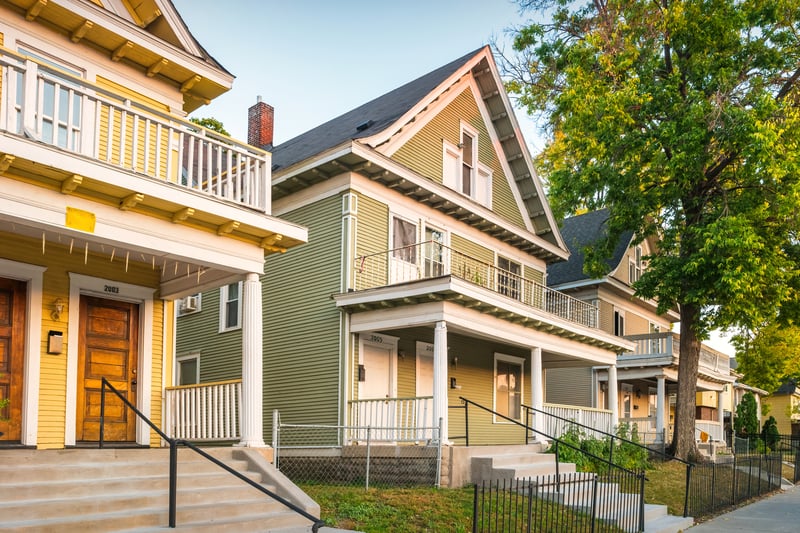
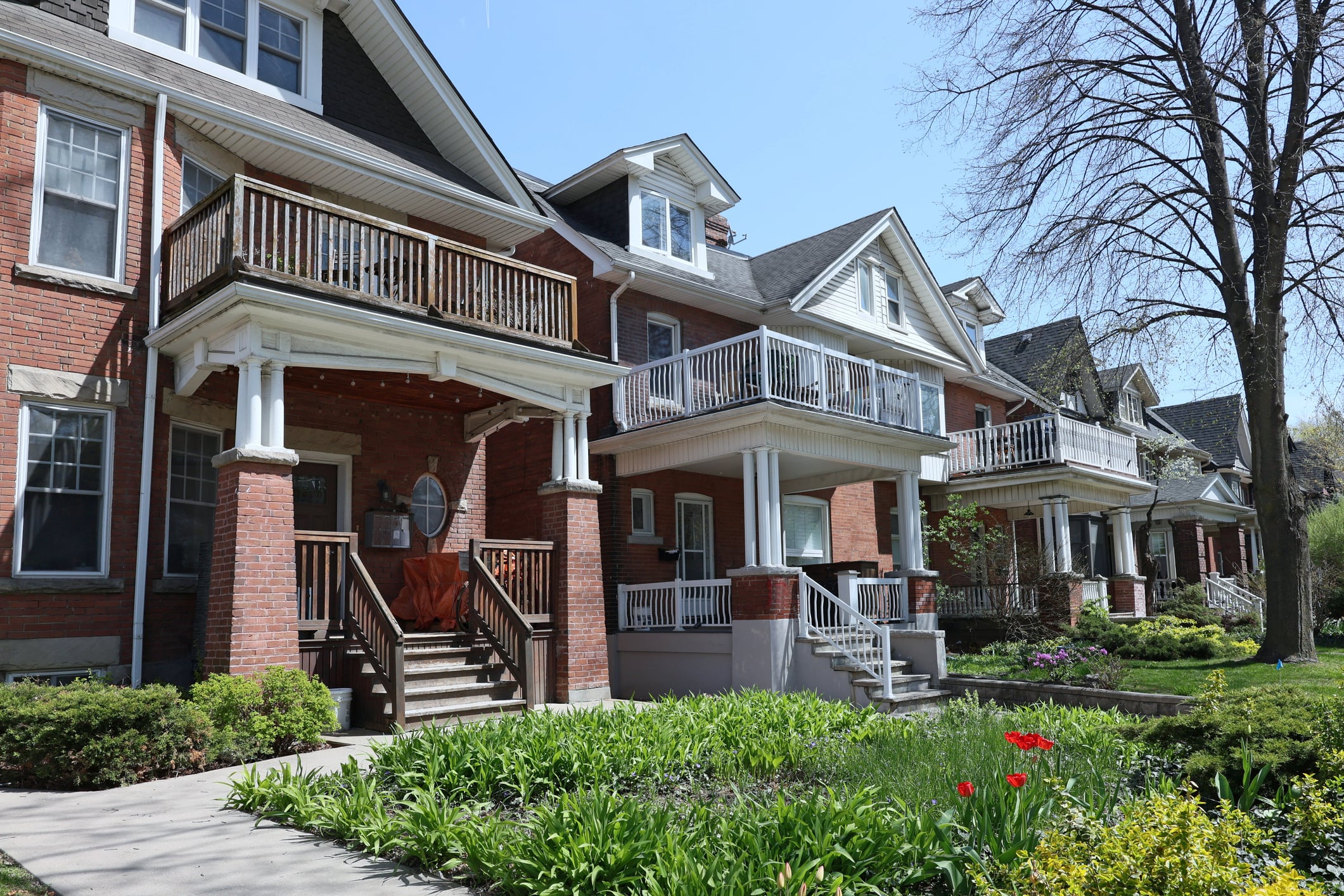
You can use an FHA loan to buy a duplex, triplex or fourplex with a down payment as low as 3.5% when you meet the credit requirements and occupy one unit as your primary residence.
Projected rent from the other units may be included in your qualifying income. The lender will not count the full amount of expected rent, and you still must qualify based on your credit, income, debts, assets and the proposed mortgage payment.
Three- and four-unit properties face an additional requirement. The property must pass FHA's self-sufficiency test, which compares adjusted market rent from all units with the full monthly housing payment.
FHA Multifamily Loan Basics
An FHA multifamily loan in the residential mortgage context is an FHA-insured mortgage used to finance an eligible property with two, three or four housing units.
Although duplexes, triplexes and fourplexes contain multiple units, they remain within FHA's single-family mortgage program. HUD's Section 203(b) program covers eligible one- to four-unit structures used as a principal residence.
| Feature |
FHA Guideline |
| Eligible Property |
Eligible one- to four-unit residential property |
| Occupancy |
At least one borrower must use the property as a primary residence |
| Minimum Down Payment |
As low as 3.5% with a qualifying credit score of at least 580 |
| Scores From 500 to 579 |
Generally limited to 90% loan-to-value, which usually means at least 10% down |
| Rental Income |
Eligible rent from units you do not occupy may help you qualify |
| Three- and Four-Unit Rule |
Property must pass FHA's self-sufficiency test |
| Three- and Four-Unit Reserves |
Three months of PITI after closing |
| Mortgage Insurance |
Upfront and annual FHA mortgage insurance generally apply |
| Maximum Property Size |
Four units under FHA's single-family mortgage program |
If you are comparing different multi-unit financing options, the rules vary considerably by program. FHA financing requires owner occupancy, while a VA multi-unit property has separate eligibility and occupancy rules.
FHA 2-4 Unit Guidelines and Requirements
Owner Occupancy
You must intend to use one unit as your primary residence.
Under the current FHA Single Family Housing Policy Handbook 4000.1, at least one borrower must generally occupy the property within 60 days of signing the security instrument and intend to continue living there for at least one year.
You cannot use this type of FHA financing solely to buy a rental property you do not plan to occupy.
The same basic distinction applies throughout the mortgage occupancy requirements: an owner-occupied multi-unit property is treated differently from an investment-only property.
Credit and Down Payment
FHA policy permits maximum financing when the borrower's qualifying credit score is at least 580. On a standard purchase, maximum financing generally means 96.5% loan-to-value, or a 3.5% minimum investment.
A qualifying score from 500 to 579 is generally limited to 90% loan-to-value, which normally requires at least 10% down.
These are FHA program thresholds rather than guaranteed lender minimums. Individual lenders can apply additional underwriting requirements.
The same FHA down payment requirements generally apply whether you are buying one unit or an owner-occupied two- to four-unit property.
Income and Debt Qualification
You must document enough qualifying income to support the mortgage and your other monthly obligations.
The lender evaluates your income, debts, credit history, assets and proposed housing payment. FHA does not establish one universal maximum debt-to-income ratio for every borrower because automated and manual underwriting can produce different requirements.
Eligible rental income can be added to qualifying income, but it does not eliminate the need to qualify for the mortgage under FHA and lender guidelines.
FHA Appraisal and Property Requirements
An FHA-approved appraiser evaluates the property's value and whether it meets applicable FHA minimum property requirements and standards.
For a two- to four-unit property, the appraisal also provides information about the units and market rents. The lender uses that information when calculating eligible rental income and, for three- and four-unit properties, the self-sufficiency test.
The FHA appraisal does not replace a home inspection. With several units, there may be more plumbing, electrical, heating, roofing and other systems to evaluate before you buy.
Reserves for Three- and Four-Unit Properties
FHA requires three months of PITI in verified reserves after closing for three- and four-unit properties.
The FHA total mortgage payment can include:
- Principal and interest
- Property taxes
- Hazard insurance
- Flood insurance when applicable
- FHA mortgage insurance
- Homeowners association fees when applicable
- Other required escrow or housing payments
Reserves are funds remaining after the money required to close has been accounted for. FHA also places limits on which asset sources can qualify as reserves.
2026 FHA Multifamily Loan Limits
FHA loan limits are higher for multi-unit properties than for one-unit homes.
For case numbers assigned in 2026, HUD set the following national floors and regular high-cost ceilings:
| Property Type |
2026 Standard-Area Floor |
2026 High-Cost Area Ceiling |
| Two Units |
$693,050 |
$1,599,375 |
| Three Units |
$837,700 |
$1,933,200 |
| Four Units |
$1,041,125 |
$2,402,625 |
Special exception limits can be higher in Alaska, Hawaii, Guam and the U.S. Virgin Islands.
Your county's exact limit can fall at the national floor or somewhere between the floor and ceiling based on local home prices.
The limit applies to the base FHA mortgage rather than simply the purchase price. Use the 2026 FHA loan limit map and select the correct number of units before assuming a particular loan amount is eligible.
How Rental Income Can Help You Qualify
Projected rent from the units you will not occupy may be included in your qualifying income.
If you have limited or no history of rental income from the property, FHA generally bases qualifying rent on 75% of the lesser of the appraiser's fair market rent or the rent shown in the lease or other rental agreement.
For example, assume you are buying a triplex and the two units you will rent each have both an appraiser-supported market rent and lease amount of $1,200 per month.
| Calculation |
Amount |
| Combined Eligible Rent Before Adjustment |
$2,400 |
| 75% of Eligible Rent |
$1,800 |
In this simplified example, $1,800 per month could potentially be added as effective rental income, subject to the full FHA documentation and underwriting requirements.
The rent associated with the unit you plan to occupy is not treated as rental income you actually expect to collect from a tenant. It does, however, enter the separate self-sufficiency calculation for a three- or four-unit property.
The FHA Self-Sufficiency Test for Three- and Four-Unit Properties
FHA requires three- and four-unit properties to pass a self-sufficiency test. A duplex is not subject to this additional test.
The calculation begins with the appraiser's fair market rent for all units, including the unit you plan to occupy.
FHA then subtracts the greater of:
- The appraiser's estimate for vacancies and maintenance
- 25% of the total fair market rent
The resulting figure is the property's net self-sufficiency rental income. The property's PITI divided by that net rental income cannot exceed 100%. Put more simply, adjusted rent needs to be at least equal to the applicable monthly housing payment.
Self-Sufficiency Test Example
Assume an appraiser estimates the following market rents for a triplex:
| Unit |
Estimated Monthly Market Rent |
| Unit 1 |
$1,200 |
| Unit 2 |
$1,200 |
| Unit 3 |
$1,100 |
| Total Market Rent |
$3,500 |
If the appraiser's vacancy-and-maintenance estimate is no greater than 25%, the minimum 25% reduction produces net self-sufficiency rental income of $2,625.
If the applicable monthly housing payment is $2,500, the property passes the test because $2,625 is greater than $2,500.
If the payment is $2,750, the property does not pass because adjusted rent is below the payment.
Your personal salary cannot simply make up the difference in a failed self-sufficiency test. The property itself has to satisfy the calculation.
FHA Multifamily Loan Rates
There is not one FHA multifamily mortgage rate set by HUD.
FHA insures the mortgage, while an FHA-approved lender sets the interest rate and other pricing. Your quote can depend on market conditions, credit profile, loan amount, loan-to-value ratio, property characteristics, discount points and other factors.
A duplex, triplex or fourplex should not automatically be assumed to receive the same pricing as a one-unit FHA purchase.
In the current higher-rate environment, compare the note rate, APR, discount points and total monthly payment rather than comparing the rate alone. Current FHA mortgage rates can also change daily.
Seller Concessions and Rate Buydowns on an FHA Multifamily Purchase
Seller concessions can become more useful when rates and upfront borrowing costs are high.
Under FHA rules, interested parties can generally contribute up to 6% of the sales price toward eligible origination charges, other closing costs, prepaid expenses and discount points.
The 6% limit can also include eligible permanent or temporary interest-rate buydowns and payment of the upfront FHA mortgage insurance premium.
Seller contributions cannot be used to satisfy your minimum required investment, so a seller cannot simply pay the 3.5% FHA down payment for you.
For example, a seller concession could potentially be used for eligible discount points that permanently reduce the note rate. A lower permanent rate reduces principal and interest, which may also improve the self-sufficiency calculation on a three- or four-unit property.
The actual benefit depends on mortgage pricing and the amount of eligible costs. A 6% program limit does not mean you automatically receive or can use a 6% credit.
FHA Mortgage Insurance on a Multifamily Property
An FHA purchase under the single-family program generally requires both upfront and annual mortgage insurance.
HUD's current standard upfront mortgage insurance premium is generally 1.75% of the base loan amount. It can usually be financed into the mortgage.
The annual MIP rate depends on factors including the loan term, base loan amount and original loan-to-value ratio.
With the minimum 3.5% down payment, the original LTV is above 90%, so annual FHA mortgage insurance generally remains for the mortgage term under the current MIP duration rules.
The FHA mortgage insurance removal rules differ from conventional PMI cancellation.
You can also use the FHA loan calculator to estimate how upfront and annual MIP affect the payment.
Benefits of Buying a Multifamily Home With FHA
Lower Down-Payment Option
A qualifying borrower may be able to buy an eligible duplex, triplex or fourplex with 3.5% down.
That can allow you to become an owner-occupant rather than meeting the larger down payment that may apply to some investment-property financing.
Rental Income May Help With Qualification
Eligible rent from the other units may increase qualifying income.
The lender still uses FHA's documentation and rental-income calculation rather than assuming you will collect every dollar of advertised rent.
Higher Loan Limits
FHA sets higher mortgage limits for properties with additional units.
A four-unit property therefore has a substantially higher FHA loan limit than a one-unit property in the same county.
Potential to Offset Housing Costs
After closing, rent from the other units can offset part of your housing costs.
This is commonly called house hacking, but actual cash flow still depends on rent collection, vacancies, repairs, utilities and other operating costs.
Risks and Costs to Consider
Vacancies
A vacant unit does not produce rent, but your mortgage and property expenses continue.
The lender's rental-income haircut and FHA's reserve rules account for some of this risk during underwriting. Your own budget should also allow for tenant turnover and missed rent.
Repairs and Maintenance
A property with several units can have more appliances, bathrooms, plumbing fixtures, heating systems and occupied spaces to maintain.
Review the condition of major systems before buying and leave room in your budget for repairs after closing.
Landlord Responsibilities
If you rent the other units, you become both a homeowner and a landlord.
That can mean handling leases, rent collection, repairs, security deposits and compliance with state and local landlord-tenant rules.
Utilities and Operating Expenses
Check which utilities are separately metered and which costs remain with the property owner.
Water, sewer, trash, common-area electricity, lawn care and other shared expenses can reduce the amount of rent available to offset the mortgage.
Rental Income Can Change
The appraiser's market-rent estimate is an underwriting input, not a guarantee of future income.
Local rental demand, vacancies, tenant turnover, property condition and local rent restrictions can change what you actually collect.
Can You Use FHA for a Five-Unit Apartment Building?
Not under the FHA single-family mortgage program described here.
FHA's standard residential program covers eligible properties with up to four units. A building with five or more units generally requires a different HUD multifamily program, commercial financing or another investment-property mortgage.
If you do not plan to occupy the property, owner-occupied FHA financing is also not the right structure. Investor financing can include conventional products or lender-specific options with DSCR loan requirements.
Can You Have More Than One FHA Loan?
FHA generally insures a borrower's principal residence rather than multiple FHA-financed investment properties.
Limited exceptions can allow a borrower to have more than one FHA-insured mortgage in specific circumstances. The rules for having two FHA loans cover those exceptions separately.
How to Prepare for an FHA Multifamily Purchase
1. Confirm the Legal Unit Count
Verify that every unit is legally recognized under local zoning and building requirements. An advertised or converted unit may not be treated as a legal dwelling unit for FHA appraisal and underwriting purposes.
2. Check the FHA Loan Limit
Use the property's county and legal unit count to find the correct FHA loan limit before making an offer.
3. Estimate Rental Income Conservatively
Do not rely only on the seller's advertised rents. Compare existing leases with appraisal-supported market rents and remember that the lender applies FHA's rental-income calculation.
4. Test Three- and Four-Unit Properties Early
Estimate the self-sufficiency test before making an offer when enough rent and payment information is available.
The final result depends on the appraisal and actual mortgage terms.
5. Review Cash Reserves
Plan for both the cash required at closing and the three months of PITI reserves required for a three- or four-unit property.
6. Inspect Each Unit and Major System
Look beyond the unit you plan to occupy. The entire property secures the mortgage and each unit can create repair or safety issues.
7. Review Existing Leases
Understand existing rent amounts, lease expiration dates, security deposits and tenant rights that may transfer with the property.
Bottom Line
An FHA multifamily loan can finance an eligible duplex, triplex or fourplex with a down payment as low as 3.5% when you occupy one unit and meet FHA and lender guidelines.
Projected rent from the other units may help you qualify, but FHA generally uses an adjusted amount rather than 100% of expected rent.
The biggest difference appears with three- and four-unit properties. They must pass FHA's self-sufficiency test and require three months of PITI in reserves after closing.
Before making an offer, check the legal unit count, county FHA limit, market rents, self-sufficiency calculation and full monthly payment. In the current rate environment, seller concessions and rate buydowns can also affect the cash and payment side of the transaction.
Frequently Asked Questions
Can You Buy a Multifamily Home With an FHA Loan?
Yes. FHA's single-family mortgage program can finance eligible properties with up to four units when you meet the borrower and property requirements and use the property as your primary residence.
Can You Buy a Duplex With an FHA Loan?
Yes. You can use an FHA loan to buy an eligible duplex when you occupy one unit as your primary residence. A duplex is not subject to FHA's three- and four-unit self-sufficiency test.
Can You Buy a Triplex With an FHA Loan?
Yes. An eligible triplex can be financed with FHA when you occupy one unit. The property must also pass FHA's self-sufficiency test, and three months of PITI reserves are required after closing.
Can You Buy a Fourplex With an FHA Loan?
Yes. FHA single-family financing covers eligible four-unit properties. You must occupy one unit, meet the applicable loan limit and reserve requirements, and the property must pass the self-sufficiency test.
What Are the FHA 4 Unit Guidelines?
An FHA fourplex must be an eligible residential property, at least one borrower must occupy a unit as a primary residence, the property must pass the self-sufficiency test and the borrower must have three months of PITI reserves after closing. The base mortgage must also stay within the applicable four-unit county loan limit.
Is the FHA Minimum Down Payment 3.5% on a 2-4 Unit Owner-Occupied Home?
Potentially, yes. FHA permits maximum financing for qualifying borrowers with a credit score of at least 580, which generally means a 3.5% minimum investment. Scores from 500 to 579 are generally limited to 90% LTV.
Can Rental Income From the Other Units Help You Qualify?
Yes. Eligible rental income may be added to qualifying income. With limited or no rental history, FHA generally uses 75% of the lesser of appraisal-supported fair market rent or the applicable lease amount.
What Is the FHA Self-Sufficiency Test?
For a three- or four-unit property, FHA compares the full monthly housing payment with adjusted fair market rent from all units, including the one you occupy. The calculation subtracts the greater of the appraiser's vacancy-and-maintenance estimate or 25% of fair market rent. Adjusted rent must be sufficient to cover the applicable PITI.
How Much Are the 2026 FHA Loan Limits for Multifamily Homes?
In standard-cost areas, the 2026 FHA floors are $693,050 for two units, $837,700 for three units and $1,041,125 for four units. Regular high-cost ceilings are higher, and the exact limit depends on the county and number of units.
Do You Need Reserves for an FHA Triplex or Fourplex?
Yes. FHA requires verified reserves equal to three months of PITI after closing for three- and four-unit properties.
Are FHA Multifamily Loan Rates Different?
HUD does not set one FHA multifamily mortgage rate. FHA-approved lenders set their own rates and pricing based on market conditions, the borrower, loan amount, property and other factors. Compare the note rate, APR and discount points when evaluating offers.
Can a Seller Pay for an FHA Rate Buydown?
Potentially, yes. FHA interested-party contributions can generally be up to 6% of the sales price and may cover eligible discount points and permanent or temporary rate buydowns. They cannot be used to satisfy the borrower's minimum required investment.
Can You Use FHA for a Five-Unit Property?
The FHA single-family program covered here is limited to one- to four-unit properties. A property with five or more units generally requires a different multifamily or investment-property financing structure.
How Long Must You Live in One Unit?
At least one borrower must generally occupy the property within 60 days of signing the security instrument and intend to continue using it as a principal residence for at least one year.




.jpg?quality=80&width=150)