Skip to content

Table of Contents

    FHA Loans in Michigan: 2026 Requirements & Limits

    Updated: October 8 2026 • 11 min read

    Key Takeaways

    • Every Michigan county has the same 2026 FHA loan limit: $541,287 for a single-family home.
    • Michigan property taxes can change after you buy because a transfer of ownership can cause the home's taxable value to reset the following year.
    • FHA loans are generally for primary residences and can be used for eligible homes with one to four units.
    A woman smiles and drinks coffee while sitting on the floor surrounded by boxes.

    Explore your FHA loan options.

    Michigan is simpler than many states when it comes to FHA loan limits. Detroit, Ann Arbor, Grand Rapids, Lansing, Traverse City and the Upper Peninsula all use the same limits in 2026.

    The broader FHA loan requirements cover your credit, down payment, income, debts and the property itself. Lenders can also set requirements that are stricter than FHA's minimum guidelines.

    Michigan FHA Loan Basics

    Requirement What Michigan Buyers Should Know
    2026 loan limit $541,287 for a single-family home in every Michigan county
    Minimum down payment As little as 3.5% with a credit score of 580 or higher
    Credit scores from 500 to 579 Generally require at least 10% down
    Income limit FHA does not set a maximum income limit
    Occupancy You generally need to use the home as your primary residence
    Mortgage insurance Upfront and annual FHA mortgage insurance generally apply

    A 580 credit score is not an automatic approval. Your lender will also consider your income, existing debts, credit history and available funds.

    FHA Home Loan Rates in Michigan for 2026

    FHA mortgage rates can change daily and vary based on your credit, loan amount, down payment, discount points and when you lock your rate.

    Mortgage rates remain relatively high compared with much of the past decade. When comparing offers, look at the APR and discount points along with the interest rate so you can see whether a lower rate requires a larger upfront cost.

    In Michigan, property taxes can also make a meaningful difference in your monthly payment. The tax bill paid by the current owner may not accurately show what you will pay after purchasing the home.

    Michigan uses the same FHA loan limits statewide, but mortgage pricing still varies by loan program and borrower. Current Michigan mortgage rates can help you compare FHA financing with other options.

    Get your custom rate.

    Michigan FHA Loan Calculator

    Most FHA purchase loans include an upfront mortgage insurance premium equal to 1.75% of the base loan amount. You can generally finance that premium into the mortgage instead of paying the entire amount at closing.

    FHA also charges annual mortgage insurance that is normally divided across your monthly payments. The rate depends on your loan amount, loan term and how much you put down.

    The calculator below uses a 0.55% annual mortgage insurance rate as an estimate. That rate applies to many FHA purchase loans, but not every FHA mortgage.

    On many FHA loans longer than 15 years, putting at least 10% down means paying annual mortgage insurance for 11 years. With less than 10% down, it generally remains for the mortgage term.

    You can use our FHA loan calculator to compare different home prices, down payments, interest rates and property-tax assumptions.

    Property taxes are especially worth checking carefully in Michigan. A transfer of ownership generally causes the property's taxable value to uncap in the calendar year after the transfer. That means the previous owner's tax bill can understate what you may owe after buying the home.

    If the home will be your primary residence, you may also qualify for Michigan's Principal Residence Exemption. The exemption removes the home's local school operating millage of up to 18 mills, although it does not eliminate all property taxes.

    FHA Loan
    Calculator

    Model principal and interest, FHA mortgage insurance, property taxes, and upfront MIP.

    Est. Monthly FHA Payment

    $0

    What’s driving this estimateLive from your current assumptions
    Use the sliders for quick comparisons or tap the blue value pills to type exact numbers.
    Upfront MIP

    Illustrative FHA estimate only. Uses a 1.75% upfront MIP and 0.55% annual MIP assumption. Actual FHA MIP rules depend on loan amount, term, LTV, and case-specific factors. Not a loan offer.

    How this calculator works

    Move the sliders to test scenarios, or tap any blue value pill to type an exact number. The headline result and supporting detail pills update live as you change inputs so you can compare options without resetting your work.

    Methodology: Base loan = home price × (1 − down payment %). Upfront MIP = 1.75% of the base loan, optionally rolled into the loan. Principal & interest are amortized over 30 years using the standard fixed-rate formula M = P · r(1+r)n / ((1+r)n−1), where r is the monthly rate and n is months. Annual MIP of 0.55% is divided by 12 and added monthly. Property taxes are estimated as home price × tax rate ÷ 12.

    Worked example: Home price $400,000, 3.5% down, 6.5% rate, 1.1% taxes, UFMIP financed: base loan $386,000; UFMIP $6,755; financed loan $392,755; monthly P&I ≈ $2,482; monthly MIP ≈ $177; monthly taxes ≈ $367; total ≈ $3,026/mo.

    Use these estimates to compare options and prepare questions for a lender. Final pricing, eligibility, and approval depend on a full application and lender review.

    FHA Loan Requirements for Michigan Borrowers

    Credit Score and Down Payment

    A credit score of 580 or higher can make you eligible for FHA's minimum 3.5% down payment.

    If your score is between 500 and 579, FHA guidelines generally require at least 10% down. Individual lenders can set higher credit requirements.

    Your score is only one part of FHA credit qualification. Lenders also consider your payment history, income, debts and available funds.

    FHA allows eligible gift funds, so the down payment does not necessarily have to come entirely from your own savings. The donor and transfer of the money must be properly documented.

    Debt-to-Income Ratio

    Your debt-to-income ratio, or DTI, compares your monthly debt payments with your gross monthly income. FHA does not have one 43% maximum that applies to every borrower.

    For manually underwritten loans, 31% for housing expenses and 43% for total monthly debt are the standard starting points. Higher ratios can be allowed in qualifying cases when FHA's additional requirements are met.

    Many FHA applications are reviewed through an automated underwriting system instead. Those applications are evaluated using the broader loan file rather than one DTI percentage as an automatic cutoff.

    Your existing debts still affect FHA debt-to-income qualification and how large a monthly payment you can support.

    Income Requirements

    FHA does not set a maximum income limit. Your lender instead needs to document enough stable qualifying income to support the mortgage and your other monthly obligations.

    There is no single salary required to buy a home with an FHA loan in Michigan. The amount you need depends on the home price, mortgage rate, taxes, insurance and your existing debts.

    Property and Occupancy Requirements

    An FHA purchase loan is generally intended for a home you will use as your primary residence.

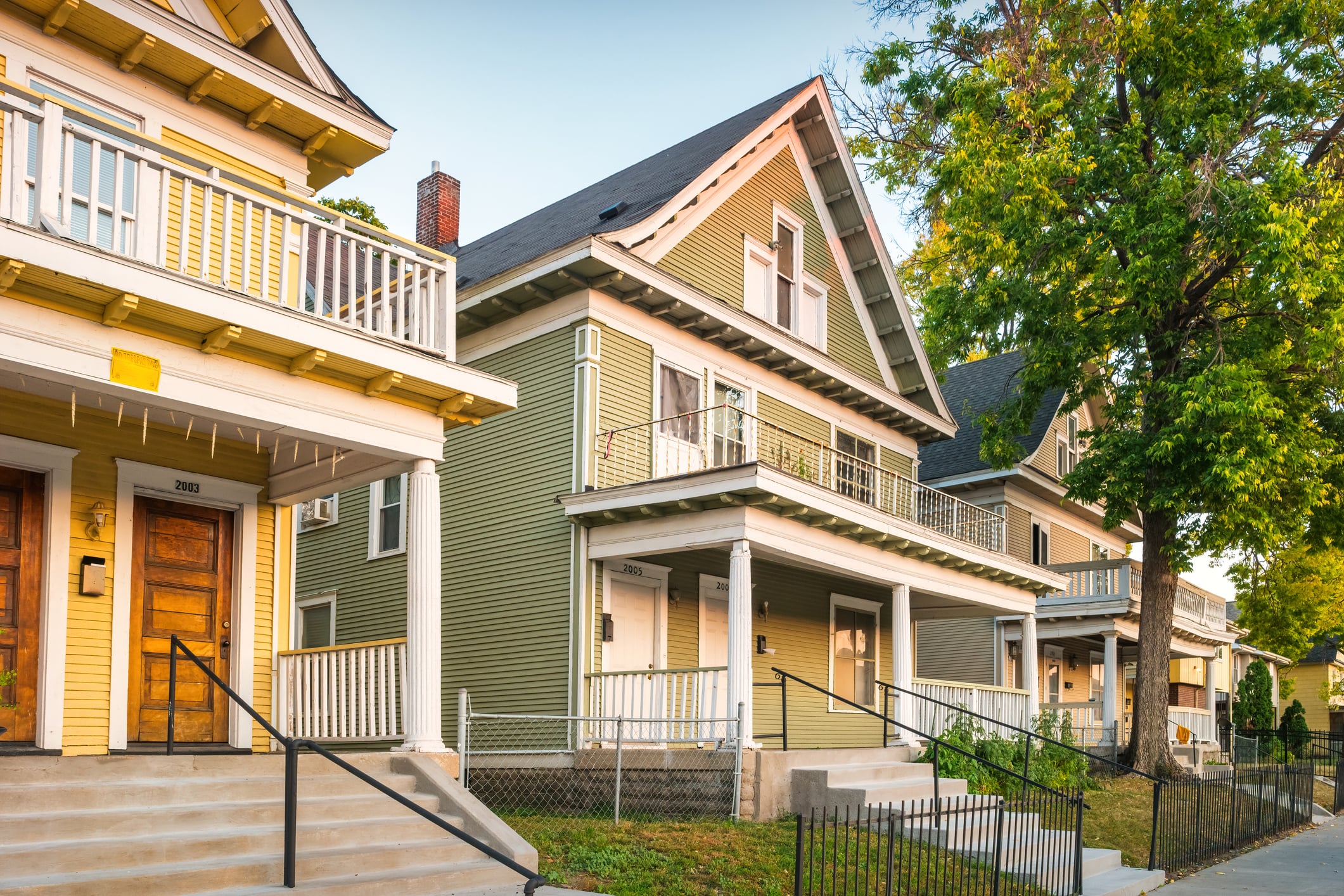
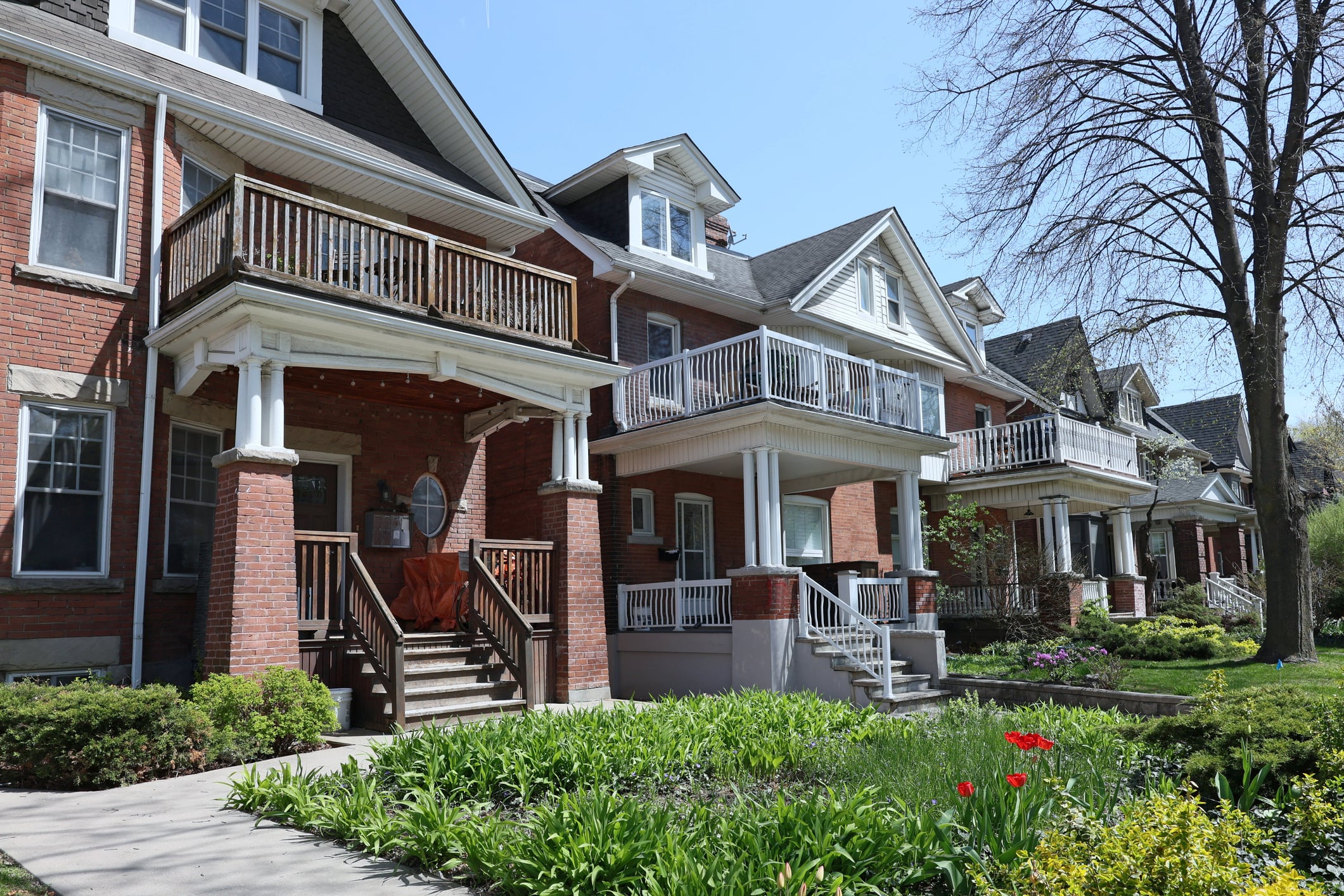
    Eligible properties can include single-family homes, certain condos and homes with two to four units.

    If you buy a duplex, triplex or fourplex, you need to live in one of the units. Eligible rental income from the other units may help you qualify, although additional rules apply to some FHA multifamily purchases.

    Buying a Condo With an FHA Loan in Michigan

    A condo can qualify for FHA financing, but the property itself must meet FHA requirements.

    The unit may be in an FHA-approved condominium project. In some cases, an individual unit in a project that is not approved can qualify through FHA's Single-Unit Approval process.

    Checking FHA condo eligibility early can help you identify property issues before you get too far into the purchase process.

    How to Apply for an FHA Loan in Michigan

    1. Compare FHA financing with other mortgage options based on your credit, savings and expected monthly costs.
    2. Apply with an FHA-approved lender and document your income, employment, debts and available funds.
    3. The lender reviews your finances through FHA's underwriting process.
    4. Choose a home that meets FHA property and occupancy requirements.
    5. Complete the FHA appraisal and any other required property reviews.
    6. Review your rate, APR, mortgage insurance, closing costs and total monthly payment before closing.

    FHA Loan Limits in Michigan for 2026

    Michigan has one set of FHA loan limits statewide in 2026.

    The limit for a single-family home is $541,287 in every county. That includes Wayne County in Detroit, Oakland and Macomb counties, Washtenaw County in Ann Arbor, Kent County in Grand Rapids and counties throughout northern Michigan and the Upper Peninsula.

    Homes with two to four units have higher limits because FHA increases the maximum loan amount as the number of units increases.

    Use the county lookup below to confirm the limit for the property you are considering. You can also check it through HUD's FHA loan limit lookup.

    2026 FHA loan limits by county

    Loading map…
    County 1-Unit Limit 2-Unit 3-Unit 4-Unit
    Source: HUD, 2026 FHA forward mortgage limits

    FHA loan limits are set annually by the U.S. Department of Housing and Urban Development (HUD). Limits vary by county and property type, with higher ceilings in designated high-cost areas and statutory special areas (Alaska, Hawaii, Guam, and the U.S. Virgin Islands). This map is for informational purposes only and does not constitute a loan offer or commitment to lend. Actual loan eligibility depends on credit, income, property, and lender guidelines.

    2026 FHA Loan Limits Across Michigan

    Unlike many states, Michigan does not have higher FHA limits in its more expensive metro areas. The same $541,287 limit applies to a single-family home statewide.

    Market County 2026 FHA Limit for a Single-Family Home
    Detroit Wayne $541,287
    Detroit Suburbs Oakland $541,287
    Detroit Suburbs Macomb $541,287
    Ann Arbor Washtenaw $541,287
    Grand Rapids Kent $541,287
    Lansing Ingham $541,287
    Traverse City Area Grand Traverse $541,287
    Marquette Marquette $541,287

    Michigan FHA Limits for 1- to 4-Unit Homes

    Property Size 2026 FHA Limit
    1 Unit $541,287
    2 Units $693,050
    3 Units $837,700
    4 Units $1,041,125

    These limits apply statewide. A duplex in Detroit, Ann Arbor or Grand Rapids has the same FHA maximum loan amount as an eligible duplex elsewhere in Michigan.

    What FHA Limits Mean in Michigan's Major Markets

    Detroit and Southeast Michigan

    Wayne, Oakland, Macomb, Livingston, Lapeer and St. Clair counties all use the standard $541,287 limit for a single-family home.

    The limit therefore stays the same across much of metro Detroit even though home prices and property taxes can vary considerably between communities.

    When comparing properties, pay particular attention to the estimated property taxes after the sale. Michigan's taxable-value rules mean the current owner's bill may not accurately represent what you will pay after the property's taxable value uncaps.

    Ann Arbor

    Washtenaw County also uses the $541,287 limit. FHA does not provide a higher limit for Ann Arbor despite its higher home prices compared with many other Michigan markets.

    As a result, buyers looking at more expensive Ann Arbor homes can reach the FHA borrowing limit sooner than buyers in lower-cost parts of the state.

    Grand Rapids

    Kent County uses the same $541,287 single-family limit as the rest of Michigan. The same is true in nearby Ottawa, Barry, Ionia and Montcalm counties.

    Moving from one county to another around Grand Rapids will not change the FHA limit, but local tax rates and the property's taxable value can still change the monthly cost.

    Lansing

    Ingham County uses the statewide $541,287 limit. Buyers in the Lansing area therefore have the same FHA borrowing cap as buyers in Detroit, Grand Rapids and northern Michigan.

    Northern Michigan and the Upper Peninsula

    The statewide FHA floor also applies in northern Michigan and the Upper Peninsula. That includes markets such as Traverse City, Marquette and Houghton.

    Even where purchase prices are well below the FHA limit, taxes, homeowners insurance and the property's condition still affect the amount you can comfortably spend.

    How Michigan Property Taxes Can Change After You Buy

    Michigan limits how quickly a property's taxable value can rise while the same owner holds it. A transfer of ownership can change that calculation.

    When a qualifying transfer occurs, the property's taxable value generally uncaps in the calendar year after the transfer. The new taxable value can therefore be higher than the figure used for the previous owner's tax bill.

    This is why buyers should be careful about using the seller's current property-tax bill when estimating a future mortgage payment. The Michigan Department of Treasury explains how transfers of ownership affect taxable value.

    Michigan's Principal Residence Exemption

    If the home is your primary residence, Michigan's Principal Residence Exemption can exempt it from local school operating taxes of up to 18 mills.

    The exemption does not eliminate the rest of the property-tax bill. It is also different from Michigan's Homestead Property Tax Credit.

    The Michigan Department of Treasury provides the current eligibility rules and forms.

    Flood Insurance in Michigan

    Standard homeowners insurance does not cover flood damage. Flooding can occur outside mapped high-risk flood zones, so the property's location and drainage or water exposure are worth considering when comparing insurance costs.

    Michigan's Department of Insurance and Financial Services provides information about flood insurance through the National Flood Insurance Program and private insurers.

    FHA Loans in Nearby States

    FHA's basic underwriting rules are federal, but loan limits and local housing costs change across state lines. Buyers comparing nearby markets can also check FHA requirements and limits in Ohio, Indiana and Wisconsin.

    Bottom Line

    Michigan is one of the simpler states for FHA loan limits in 2026. Every county uses the same $541,287 limit for a single-family home, with higher statewide limits for properties with two to four units.

    The more important local variable can be property taxes. Because Michigan taxable value can reset after a transfer of ownership, use a post-purchase tax estimate rather than assuming the seller's existing bill will remain the same.

    Frequently Asked Questions About FHA Loans in Michigan

    What Is the FHA Loan Limit in Michigan for 2026?

    The FHA limit for a single-family home is $541,287 in every Michigan county in 2026.

    Is the FHA Loan Limit Higher in Detroit or Ann Arbor?

    No. Wayne County and Washtenaw County both use the same $541,287 limit as the rest of Michigan.

    What Credit Score Do You Need for an FHA Loan in Michigan?

    A credit score of 580 or higher can make you eligible for FHA's minimum 3.5% down payment. Scores from 500 to 579 generally require at least 10% down. Lenders can set stricter requirements.

    Does FHA Have an Income Limit in Michigan?

    No. FHA does not set a maximum income limit for its standard home loan program. Your lender instead determines whether your qualifying income can support the mortgage and your other debts.

    Why Can Michigan Property Taxes Go Up After Buying a Home?

    A transfer of ownership can cause the home's taxable value to uncap in the following calendar year. That can result in a higher taxable value than the one used for the previous owner's bill.

    What Is Michigan's Principal Residence Exemption?

    For a qualifying primary residence, the Principal Residence Exemption removes up to 18 mills of local school operating taxes. It does not eliminate all property taxes.

    Can You Buy a Duplex With an FHA Loan in Michigan?

    Yes. FHA can finance an eligible two- to four-unit property if you plan to live in one of the units as your primary residence.

    Can You Buy a Condo With an FHA Loan in Michigan?

    Yes, but the condo must meet FHA requirements. The unit can be in an FHA-approved project, or it may qualify through FHA's Single-Unit Approval process.

    Ready to get started?

    Mortgage Resources

    Clear
    Selection