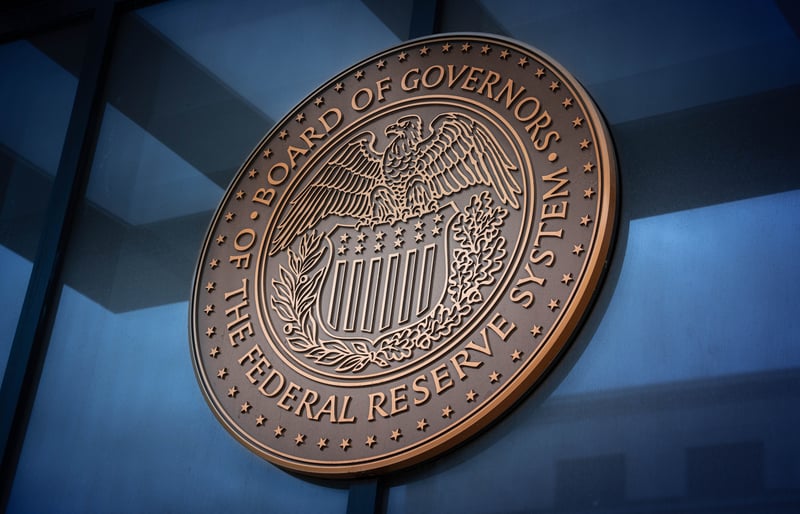
The Federal Reserve held rates steady again on July 29. But that doesn't mean mortgage rates will stay the same.
The war with Iran has repeatedly shaken up oil markets in 2026. That, in turn, has raised concern that higher energy costs could lead to higher inflation.
And those ongoing inflation concerns have in turn affected Treasury yields and expectations for future Fed policy, both of which can feed into mortgage pricing even when the federal funds rate does not change.
The Fed's July Monetary Policy Report said energy-related supply shocks and the conflict in the Middle East had contributed to higher inflation and uncertainty. Meanwhile, Freddie Mac's weekly average for a 30-year fixed mortgage fell to 5.98% on Feb. 26, then rose to 6.58% by July 23.
Same Fed rate, very different inflation, oil and bond-market backdrop.
Does the Fed Set Mortgage Rates?
No. The Fed does not directly set the interest rate on a 30-year fixed mortgage.
The Federal Open Market Committee sets a target range for the federal funds rate. This is an overnight rate used in bank funding markets. Changes in that rate can influence the broader economy and financial markets, but the effect on longer-term rates is indirect.
A Fed decision can still move mortgage rates. Investors may change their expectations for inflation, economic growth and future Fed policy after reading the statement, reviewing economic projections or listening to the Fed chair's news conference. Those expectations can move Treasury yields and mortgage-backed securities prices even when the target range stays the same.
How 30-Year Mortgage Rates Are Determined
Longer-Term Treasury Yields Set the General Direction
The 10-year Treasury yield is commonly used as a reference point for fixed mortgage rates. The two often move in the same direction because both depend on investors' expectations for inflation, growth and interest rates over time.
The relationship is not exact. A 30-year mortgage can be paid off early when a homeowner sells, refinances or makes additional principal payments. That uncertainty changes the value of mortgage-backed securities compared with Treasury securities, which have fixed payment schedules.
Mortgage-Backed Securities Add Mortgage-Specific Risk
Many conventional mortgages are sold into the secondary market and pooled into mortgage-backed securities. Investors evaluate those securities based partly on expected cash flows, interest-rate volatility and the chance that borrowers will repay earlier or later than expected.
When mortgage-backed securities become less attractive relative to Treasury securities, mortgage rates may need to rise to attract investors. When demand improves, the difference can narrow.
Guarantee Fees, Servicing and Lender Pricing Also Matter
For loans acquired by Fannie Mae or Freddie Mac, guarantee fees help cover expected credit losses, administrative expenses and a return on capital. Mortgage pricing can also reflect servicing value, hedging expenses, origination costs and lender margins.
Your Loan Details Determine Your Final Offer
Your unique financial situation plays a major role in determining your final rate. Factors like your credit score, down payment, loan amount, loan term, property type, occupancy, loan program and whether you pay discount points or receive lender credits all affect your final rate. Two borrowers applying on the same day can receive different combinations of rates and fees.
Why Mortgage Rates Can Rise After a Fed Hold
The Fed Can Send a More Restrictive Signal
A hold can still be interpreted as restrictive if Fed officials project fewer cuts, discuss persistent inflation or indicate that rates may need to remain high for longer. Investors may then demand higher yields on longer-term bonds.
But the opposite can also happen. Mortgage rates may fall after a hold if the Fed's message is less restrictive than investors expected or if other economic news pushes bond yields lower.
The 10-year Treasury yield was on the rise after the July 29 Fed decision, CNBC reported.
Inflation and Employment Data Can Change the Outlook
Inflation reports, employment data and other economic releases can change expectations for future Fed policy. Stronger inflation or growth can put upward pressure on longer-term yields. Weaker data can pull yields lower if investors expect slower growth or easier policy later.
Oil Prices and Inflation Expectations Can Move Rates
Threats to energy infrastructure and uncertainty around the Strait of Hormuz can push oil prices higher. More expensive oil can raise gasoline, transportation and production costs, which can keep inflation elevated.
The Fed said in July that energy prices had surged after the Middle East conflict began, oil prices had remained volatile around U.S.-Iran negotiations and shorter-term inflation expectations had risen. That report also said market expectations for the federal funds rate moved higher partly because investors believed the conflict could produce more inflation.
The market reaction is not always one-directional. Escalation can raise oil prices and inflation concerns, putting upward pressure on yields. De-escalation can pull oil prices and near-term inflation expectations lower. At the same time, a severe geopolitical shock can increase demand for Treasury securities as a safe haven, which can push yields down. The effect on mortgage rates depends on which force dominates.
Treasury Supply and Investor Demand Can Move Yields
Treasury yields also respond to the amount of government debt entering the market and the demand from investors buying it. A change in supply or demand can move longer-term rates even when the Fed's policy target is unchanged.
Mortgage Market Conditions Can Change the Spread
Mortgage rates can move differently from Treasury yields when the mortgage-Treasury spread changes. Interest-rate volatility, prepayment expectations, market liquidity and demand for mortgage-backed securities can all affect that spread.
This is why a small move in the 10-year Treasury does not always produce the same-size move in mortgage rates.
What the Fed's 2026 Holds Show
The Fed held its target range at 3.50% to 3.75% through its July meeting. Mortgage rates did not remain unchanged, in part because the economic backdrop shifted as markets reacted to inflation, oil prices and the conflict involving Iran.
These figures don't measure the immediate market reaction to each meeting. Freddie Mac publishes a weekly national average based on mortgage application data.
But they do show that an unchanged Fed target does not freeze mortgage rates.
The June Fed meeting is a good way to see that play out. Fed officials left the target range unchanged, but their median projection for the end-of-2026 federal funds rate increased. Seventeen of 18 participants also judged the risks to inflation as weighted to the upside. The meeting minutes said the 10-year Treasury yield had risen about 50 basis points since the Middle East conflict began, while optimism about the Iran conflict had recently pulled near-term inflation expectations lower. The weekly mortgage average changed only slightly from 6.52% on June 11 to 6.47% on June 18.
What This Means for Your Mortgage Quote
A Fed Hold Is Not a Promise That Your Rate Will Stay the Same
If your rate is not locked, it can change as market pricing changes. A Fed hold may already have been expected and reflected in rates before the meeting. New economic data or Fed guidance can then move the market in either direction.
National Averages Are Benchmarks, Not Personal Offers
Freddie Mac's survey helps show the broad direction of the market, but it does not represent every borrower or loan. Your rate may be higher or lower based on your application and the pricing available from a particular lender.
Compare the Full Loan Terms
When comparing mortgage offers, look at more than the interest rate. Review the annual percentage rate, discount points, lender credits, origination charges and total cash needed to close. A lower advertised rate may require higher upfront costs.
A Rate Lock Changes the Timing Risk
A rate lock generally protects the agreed rate for a set period if the loan closes on time and the application details do not materially change. An unlocked rate can change before closing. The Loan Estimate should indicate whether the rate is locked and when the lock expires.
Bottom Line
The Fed does not directly set 30-year fixed mortgage rates. It sets a short-term policy rate that influences the economy and investor expectations. Mortgage rates respond more directly to longer-term Treasury yields, mortgage-backed securities pricing and a variable mortgage-Treasury spread.
That is why mortgage rates can rise, fall or remain nearly unchanged after the Fed holds its target range steady. Your final quote also depends on your loan details, points, fees and lender pricing. A Fed hold is one market event, not a guarantee that your mortgage rate will hold.
Frequently Asked Questions
Does the Federal Reserve directly control mortgage rates?
No. The Fed directly targets the federal funds rate, an overnight bank funding rate. Its decisions can influence mortgage rates indirectly through inflation expectations, economic conditions, Treasury yields and mortgage-backed securities markets.
Why did my mortgage rate rise after the Fed held rates steady?
Your rate may have risen because longer-term bond yields increased, mortgage-backed securities prices declined, the mortgage-Treasury spread widened or lender pricing changed. The Fed's statement and projections may also have changed expectations about future inflation or policy.
Do mortgage rates always follow the 10-year Treasury yield?
No. They often move in the same general direction, but the relationship is not fixed. Mortgage rates can diverge when the mortgage-Treasury spread changes.
What is the mortgage-Treasury spread?
It is the difference between an average mortgage rate and the 10-year Treasury yield. The spread can change with prepayment risk, interest-rate volatility, liquidity, mortgage-backed securities demand and lender costs.
Can mortgage rates fall before the Fed cuts rates?
Yes. Bond markets price expectations about future inflation, growth and Fed policy. Mortgage rates can fall before an actual Fed cut if investors expect weaker inflation or slower economic growth.
Does a mortgage rate lock protect me from market changes?
Generally, yes, for the lock period and subject to the lender's conditions. A change in the loan amount, property, credit profile, closing date or other application details can affect the locked terms.
This article provides general educational information and is not personalized financial or investment advice.




.jpg?quality=80&width=150)