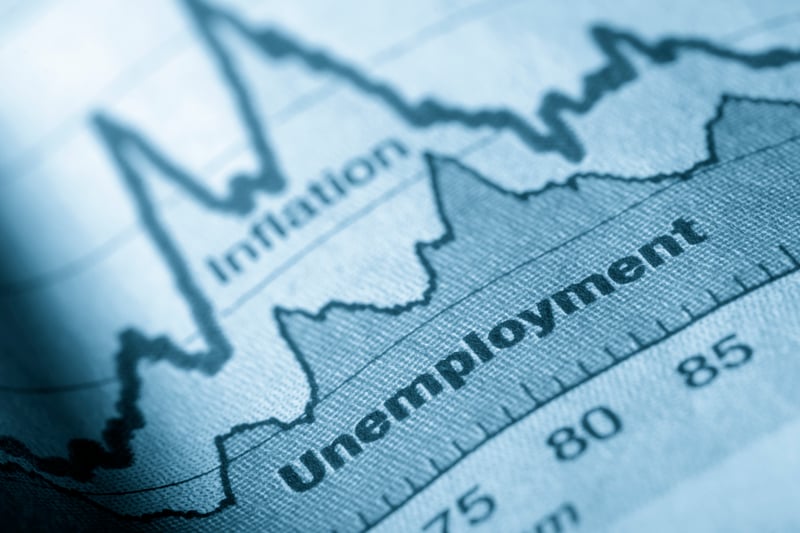
Inflation has a major impact on mortgage rates.
Take the last six years as an example. Record-low mortgage rates in 2021. Nearly 8% by late 2023. 6.55% as of mid July 2026.
.That roller coaster ride of mortgage rates in recent years has been closely tied to inflation. But the way inflation drives mortgage rates is more complex than you might expect.
Inflation and Mortgage Rates: A Look at the Last Six Years
| Time period |
What happened |
How it impacts mortgage rates |
| 2020-2021 |
Pandemic disruption pushed the Fed to cut interest rates |
Mortgage rates reached record lows |
| 2021-2022 |
Inflation accelerated and peaked at 9.1% in June 2022 |
Long-term yields and mortgage rates rose sharply |
| 2022-2023 |
The Fed raised its target range to 5.25%-5.50% |
Mortgage rates approached 8% in October 2023 |
| 2024-2025 |
Inflation cooled and the Fed reduced short-term rates |
Mortgage rates eased but remained well above 2021 levels |
| 2026 |
Energy volatility lifted headline inflation |
Mortgage rates moved back into the mid-6% range |
Why Inflation Pushes Long-Term Rates Higher
A fixed-rate loan pays the lender and investor in future dollars. When inflation is expected to remain high, those dollars buy less. Investors generally demand a higher nominal yield to compensate for that loss of purchasing power.
The relationship is not one-for-one. Long-term rates also reflect expected economic growth, future Federal Reserve policy, Treasury supply, global demand for safe assets and risk premiums.
Two Rate Channels to Keep Separate
The Federal Funds Rate
The Federal Reserve sets a target range for the federal funds rate. It uses that tool to pursue maximum employment and stable prices. Changes flow quickly into many short-term interest rates.
The 10-Year Treasury and Mortgage-Backed Securities
Fixed mortgage rates are tied more closely to long-term bond markets. Investors price Treasury securities and MBS based on the expected path of inflation, growth and monetary policy. That is why mortgage rates can move before a Fed meeting or in the opposite direction from a policy change.
2020-2021: Record-Low Rates
The Federal Reserve reduced the federal funds target to near zero in March 2020 and purchased large quantities of Treasury securities and agency mortgage-backed securities. Those actions supported market liquidity and lowered longer-term borrowing costs.
Freddie Mac's weekly survey reached a record low of 2.65% for the 30-year fixed mortgage in January 2021. The rate environment reflected emergency monetary policy, strong demand for safe assets and direct Federal Reserve purchases of MBS.
Those conditions were exceptional. They are not a normal baseline for mortgage rates.
2021-2022: Inflation Accelerated
Consumer demand recovered while supply chains remained constrained. Energy, vehicles, goods and housing-related costs rose. The Consumer Price Index reached a 9.1% annual increase in June 2022, the highest reading in about four decades.
Bond markets began pricing a sustained Federal Reserve response. Treasury yields and mortgage rates increased well before the Fed completed its rate-hiking cycle.
2022-2023: Rapid Monetary Tightening
The Federal Reserve raised the federal funds target range from near zero to 5.25% to 5.50%. It also reduced the size of its securities holdings through quantitative tightening.
The average 30-year fixed mortgage reached 7.79% in October 2023 in Freddie Mac's survey. Inflation was no longer at its 2022 peak, but investors remained uncertain about how long restrictive policy would be needed and whether inflation would return to the Fed's 2% objective.
2024-2025: Inflation Cooled, but Mortgage Rates Stayed Elevated
Inflation moderated, and the Federal Reserve began lowering its policy rate in 2024. Mortgage rates declined from their 2023 peak but did not fall in proportion to the reductions in the federal funds rate.
Long-term yields remained sensitive to growth, fiscal conditions and inflation expectations. The mortgage spread also remained wider than it was during parts of the pre-pandemic period. Those factors limited the decline in mortgage rates.
2026: Energy Prices Complicated the Inflation Picture
Conflict-related disruptions in the Strait of Hormuz contributed to higher and more volatile oil prices during the second quarter. Headline CPI rose 4.2% over the year ending in May 2026, then slowed to 3.5% in June as the energy index fell 5.7% during the month.
The June report showed that energy prices were still 15.7% higher than a year earlier, while the index excluding food and energy was up 2.6%. This distinction matters. Headline inflation can change quickly with fuel prices, while core measures can provide a clearer view of broader price pressure.
At its June meeting, the Federal Open Market Committee kept the federal funds target range at 3.5% to 3.75%. The decision did not lock mortgage rates in place. Bond markets continued to respond to inflation data and expectations.
That was also true at the Fed's July meeting amid renewed tensions in the Middle East. The Fed again opted to hold rates steady, but mortgage rates continued to rise.
What Falling Inflation Would Mean for Mortgage Rates
Sustained progress toward lower inflation would generally support lower long-term yields. Mortgage rates could also benefit if MBS demand improves and the mortgage spread narrows.
A single favorable inflation report does not guarantee lower mortgage rates. Markets price the expected path of inflation, not only the latest monthly number. Strong growth, larger federal borrowing needs or renewed energy shocks can offset cooling consumer prices.
How Borrowers Can Use Inflation Data
Inflation reports provide context for rate volatility, but they are not a reliable mortgage-timing strategy. A purchase decision should work at the current payment, not depend on a future refinance.
Compare quotes from multiple lenders on the same day and with the same assumptions. Confirm the interest rate, annual percentage rate, points, lender credits and lock period. A lower advertised rate may require higher upfront costs.
The Bottom Line
Inflation affects mortgage rates through both Federal Reserve policy and the long-term bond market. The 2020-2026 cycle shows that cooling inflation can reduce rate pressure, but mortgage rates also depend on Treasury yields, MBS spreads and investor expectations.
FAQ
Do mortgage rates always rise when inflation rises?
They often face upward pressure, but the relationship can be interrupted by recession fears, safe-haven Treasury buying or changes in MBS demand.
Will mortgage rates fall as soon as inflation reaches 2%?
Not necessarily. Markets may anticipate the change before it appears in official data. Long-term rates also reflect growth, government borrowing and risk premiums.
Which inflation report matters most for mortgage rates?
Markets watch CPI, the Personal Consumption Expenditures price index and wage data. The Fed formally targets inflation measured by the PCE price index, while CPI is released earlier and receives substantial market attention.
Why did mortgage rates remain high after the Fed started cutting?
The federal funds rate is a short-term rate. Fixed mortgage rates also depend on long-term Treasury yields and the spread investors require to hold mortgage-backed securities.




.jpg?quality=80&width=150)





























.jpg?quality=80&width=800)











































































































































































































.jpg?quality=80&width=800)

.jpg?quality=80&width=800)
















.jpg?quality=80&width=800)













.jpg?quality=80&width=800)






























.jpg?quality=80&width=800)





















.jpg?quality=80&width=800)