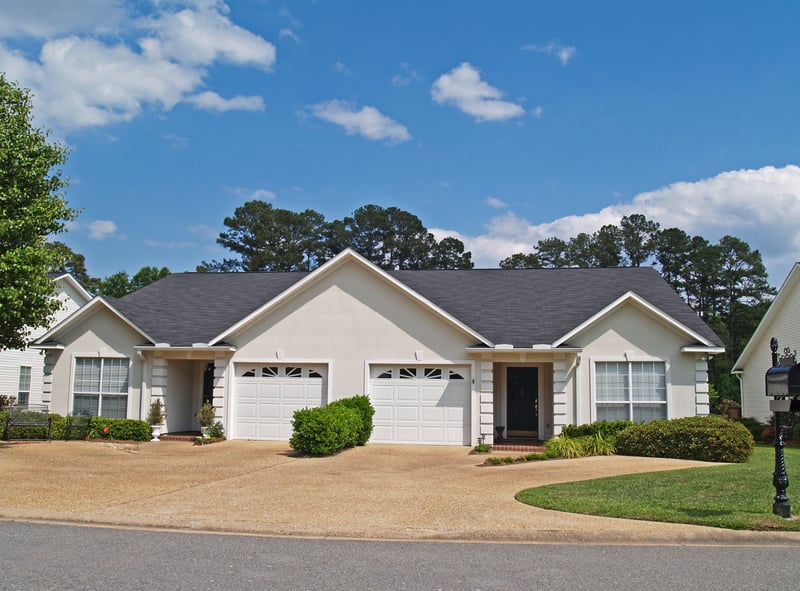
A short-term rental can potentially qualify for a second-home loan.
Renting a vacation property to guests through platforms such as Airbnb or Vrbo does not automatically make it an investment property.
But you still need to genuinely use the home yourself for part of the year, keep control over when it is occupied and meet the other requirements for second-home financing.
Short-Term Rental Second Home Basics
| Question |
What It Means for You |
| Can you rent out a second home short term? |
Potentially. Short-term rental activity does not automatically disqualify a property as a second home. |
| Do you need to use the home yourself? |
Yes. You must occupy the property for some portion of the year. |
| Is there a maximum number of rental nights? |
Fannie Mae does not set a specific annual rental-day limit for second homes. |
| Can short-term rental income help you qualify? |
Generally no. Rental income from a second home cannot normally be used as qualifying income. |
| Can a rental manager control bookings? |
A second home cannot be subject to an agreement that gives a management firm control over occupancy. |
What Makes a Short-Term Rental Eligible as a Second Home?
The mortgage classification depends more on how you use the property than on whether you sometimes rent it to guests.
Under Fannie Mae's second-home rules, an eligible property generally must:
- Be occupied by you for some portion of the year
- Have only one dwelling unit
- Be suitable for year-round occupancy
- Remain under your exclusive control
- Not be a timeshare
- Not be subject to an agreement giving a management company control over occupancy
Fannie Mae also allows a property with identified rental income to remain eligible as a second home when that income is not used to qualify and the other second-home requirements are met.
That means a cabin, beach house or other vacation property does not automatically become an investment property simply because you make it available to short-term guests while you are away.
You still need to meet the broader requirements for a second-home mortgage, including the applicable down payment, credit, income and reserve rules.
Can You Rent a Second Home to Short-Term Guests?
Potentially. Fannie Mae's rules leave room for rental activity on a property that otherwise qualifies as a second home.
For example, you might personally use a lake house during weekends and vacations and rent it to guests during other parts of the year. The fact that guests pay to stay there does not by itself determine the mortgage classification.
The key questions are whether you genuinely use the home yourself, whether you retain control over it and whether the property otherwise meets second-home requirements.
The broader rules for renting out a second home generally do not depend on which website, rental company or booking service you use to find guests.
How Many Days Can You Rent Out a Second Home?
Fannie Mae does not set a specific number of nights that you may or may not rent out a second home.
It also does not require you to personally occupy the property for a specific number of days. Instead, Fannie Mae requires you to occupy the property for some portion of the year.
This is different from federal tax rules.
The IRS uses a personal-use test when determining whether a dwelling you rent is treated as a residence for certain federal tax purposes. Under that test, personal use generally needs to exceed the greater of 14 days or 10% of the days the property is rented at a fair rental price.
That 14-day or 10% test is not Fannie Mae's mortgage rule. You should not use it as a substitute for the occupancy requirements that apply when obtaining a second-home mortgage.
Can You Use Short-Term Rental Income to Qualify?
Generally, no.
If you are financing the property as a second home, expected short-term rental income generally cannot be added to your income to help you qualify for the mortgage.
For example, suppose the second home would cost $3,000 per month and you expect guests to generate $2,000 per month during the busiest part of the year. If the property is being financed as a second home, you generally need to qualify without counting that expected $2,000 as qualifying income.
This is true even though the rental activity itself may be compatible with second-home financing.
If expected rent is essential to making the mortgage affordable, the rules for using rental income to qualify become especially important. Investment-property financing may fit the transaction better if rental income is central to how you plan to use and afford the home.
When Does a Short-Term Rental Become an Investment Property?
There is no single number of bookings or rental nights that automatically converts a property into an investment property for mortgage purposes.
The bigger issue is your actual intended use.
A second home is a property you personally occupy for part of the year. An investment property is generally real estate that you own but do not occupy.
If you are buying a property primarily to operate it as a short-term rental business and do not genuinely intend to use it as your own second home, investment-property financing is generally the more appropriate classification.
The distinction has real financing consequences. Under Fannie Mae's current standard guidelines, you may be able to buy an eligible one-unit second home with as little as 10% down. A one-unit investment property generally requires at least 15% down.
The difference between second-home and investment-property financing also affects reserves and how rental income can be treated during underwriting.
Why Does Control Over the Property Matter?
Fannie Mae requires you to maintain exclusive control over a second home.
This can become particularly important with resort properties or arrangements that involve professional rental management.
A second home cannot be subject to an agreement that gives a management firm control over occupancy. In practical terms, you should not be locked into an arrangement where another company determines when the property can be rented or when you can use it.
This is different from simply hiring someone to clean the house, maintain the property or help manage individual bookings.
The issue is whether the arrangement takes control of occupancy away from you.
Can You Use a Short-Term Rental Property Manager?
Potentially, but the terms of the arrangement matter.
A company that handles cleaning, guest communication or other services does not necessarily have control over occupancy.
A mandatory rental program that determines availability or restricts when you can personally use the home is more likely to conflict with Fannie Mae's requirement that you maintain exclusive control.
That distinction can be especially relevant for properties located in resorts or developments with rental pools or management agreements.
Before buying, review any mandatory rental or management agreements rather than assuming the home qualifies for second-home financing simply because individual units are privately owned.
Can a Short-Term Rental Condo Qualify as a Second Home?
Potentially, but both the unit and the condominium project need to meet the applicable mortgage requirements.
The unit still needs to satisfy the second-home occupancy rules. The condo project itself can also be subject to separate Fannie Mae eligibility requirements.
Short-term rental activity, hotel-like services, rental-pool arrangements and other project characteristics can affect the lender's review of a condominium project.
So a condo being legally available for purchase does not automatically mean it can be financed as a conventional second home.
How Much Do You Need to Put Down?
You may be able to buy an eligible one-unit second home with as little as 10% down.
Fannie Mae's current eligibility matrix allows up to 90% loan-to-value financing for standard one-unit second-home purchases. A one-unit investment property has a lower standard maximum of 85% LTV, which corresponds to at least 15% down.
Your actual requirement can be higher depending on your credit, underwriting results, lender and property.
The down payment required on a second home can therefore change if the property needs to be financed as an investment rather than a second home.
Do Short-Term Rental Second Homes Have Different Reserve Requirements?
The reserve requirement depends on the mortgage classification rather than the fact that the property is rented to short-term guests.
For a second-home transaction evaluated through Desktop Underwriter, Fannie Mae generally requires at least two months of reserves.
An investment property generally requires at least six months of reserves.
For example, a property with a $3,000 qualifying monthly housing payment would have a baseline reserve requirement of $6,000 as a second home versus $18,000 as an investment property under those standard DU requirements.
Additional reserves can apply when you own other financed properties. The full second-home reserve rules are separate from your down payment and closing costs.
Does Short-Term Rental Use Affect Your Mortgage Rate?
Short-term rental activity itself does not create a specific mortgage-rate surcharge.
The property's mortgage classification does matter. Second homes and investment properties can have different conventional eligibility and pricing than primary residences.
Your final rate also depends on your credit, down payment, loan structure, points, lender pricing and market conditions.
If the property qualifies as a second home, its financing should be compared using the actual pricing available for second-home mortgages rather than assuming short-term rental use adds a fixed amount to the rate.
Mortgage Rules and Tax Rules Are Different
A property can be treated one way for mortgage purposes and another way under federal tax rules.
For mortgage qualification, Fannie Mae focuses on factors such as your occupancy, control over the property and whether rental income is being used to qualify.
For federal income taxes, the IRS uses separate rules to determine how rental and personal use affect the reporting of income and expenses.
IRS Publication 527 explains how personal use and rental use of a vacation property can affect federal tax treatment.
Do not assume that satisfying the IRS definition of a residence automatically establishes that a property qualifies as a second home for your mortgage, or vice versa.
What Else Should You Check Before Renting Out a Second Home?
Mortgage rules are only one part of determining whether you can operate a short-term rental.
Local Short-Term Rental Rules
Local governments can require permits, registration, taxes or compliance with zoning and occupancy rules. Some communities restrict short-term rentals entirely.
HOA or Condo Restrictions
A homeowners association or condominium association can limit or prohibit short-term rentals even when local law allows them.
Homeowners Insurance
Your insurance coverage should reflect how the property is actually being used. A standard second-home policy may not provide the same coverage for short-term rental activity.
Federal and State Taxes
Rental income can create federal and state tax reporting obligations. The amount of personal and rental use can also affect how expenses are treated.
The Bottom Line
A short-term rental can potentially qualify as a second home. Renting the property to guests does not automatically turn it into an investment property.
You still need to personally occupy the home for part of the year, maintain control over the property and satisfy the other second-home requirements. Rental income from the property generally cannot be used to help you qualify for the mortgage.
If you are buying mainly to operate the property as a short-term rental and need the expected rent to qualify, investment-property financing may better match the transaction. Your mortgage application should reflect how you genuinely intend to use the property.
FAQ
Can a Short-Term Rental Be Considered a Second Home?
Potentially. A short-term rental can still qualify as a second home if you personally occupy it for part of the year, maintain control over the property and meet the other second-home requirements. Rental income from the home generally cannot be used to help you qualify.
How Many Days Can You Rent Out a Second Home?
Fannie Mae does not set a specific maximum number of short-term rental days for a second home. You must still occupy the property for some portion of the year and meet the other second-home requirements. Separate tax, insurance, HOA and local rules may apply.
Can You Use Short-Term Rental Income to Qualify for a Second Home Mortgage?
Generally, no. Expected rental income from a property being financed as a second home generally cannot be used as qualifying income. Investment-property financing follows different rental-income rules.
Does Short-Term Rental Use Make a House an Investment Property?
Not automatically. Occasional short-term rental activity can be compatible with second-home financing. A property purchased primarily to generate rental income and not personally occupied by you is more likely to fit the investment-property classification.
Can You Use a Property Manager for a Short-Term Rental Second Home?
Potentially. Fannie Mae prohibits agreements that give a management firm control over occupancy of a second home. Hiring someone for cleaning, maintenance or guest services is different from entering an arrangement that determines when you can use or rent the property.




%20(1).jpg?quality=80&width=150)




















.jpg?quality=80&width=800)














































































































.jpg?quality=80&width=800)