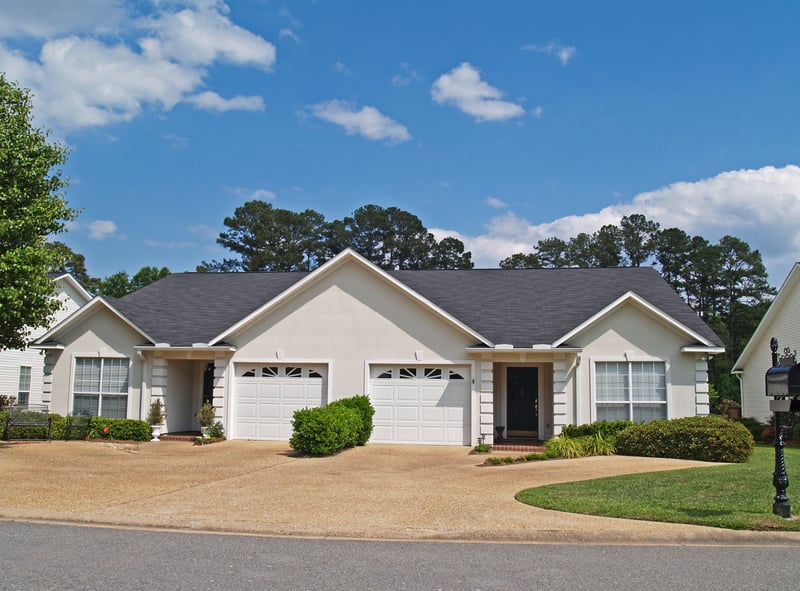
A second home will generally require at least 10% down if you're using a conventional loan.
Fannie Mae currently allows eligible one-unit second-home purchases to be financed up to 90% of the home's value, which means a 10% down payment.
Your actual requirement can be higher depending on your finances, the property, underwriting results and lender requirements.
Second Home Down Payment Basics
| Down Payment |
LTV |
What It Can Mean |
| 10% |
90% |
May meet Fannie Mae's standard minimum for an eligible one-unit second-home purchase. PMI will typically apply. |
| 15% |
85% |
Reduces the amount borrowed, but PMI will typically still apply. |
| 20% |
80% |
Generally avoids PMI on a conventional loan and lowers the starting loan balance. |
| More than 20% |
Below 80% |
Further reduces the amount borrowed and can affect conventional mortgage pricing. |
These percentages describe the relationship between your down payment and loan-to-value ratio, or LTV. They do not mean that every borrower will qualify at a particular down payment level.
Can You Buy a Second Home With 10% Down?
Yes, potentially. Under Fannie Mae's current eligibility rules, an eligible one-unit second-home purchase can be financed up to 90% LTV. That means you could put down 10% of the purchase price if the property value supports the loan and you meet the other requirements.
For example, on a $400,000 second home:
| Down Payment |
Cash Down |
Starting Loan Amount |
| 10% |
$40,000 |
$360,000 |
| 20% |
$80,000 |
$320,000 |
| 30% |
$120,000 |
$280,000 |
The down payment is only one part of qualifying. You will also need to meet the applicable second-home mortgage requirements for income, credit, occupancy and financial reserves.
Why Can Second Homes Require More Down Than Primary Homes?
Some conventional programs allow qualified borrowers to buy a primary residence with as little as 3% down. Standard Fannie Mae second-home financing does not offer that same maximum leverage.
For an eligible one-unit second-home purchase, Fannie Mae's standard maximum LTV is 90%. That effectively creates a 10% minimum down payment under those guidelines.
Second homes also have different pricing and underwriting rules because they are not the borrower's primary residence. You must genuinely use the property as a second home to qualify for that occupancy classification.
If the property is being purchased primarily to generate rental income, the mortgage rules for an investment property may apply instead. Fannie Mae currently allows up to 85% LTV for a standard one-unit investment-property purchase, which corresponds to at least 15% down.
What Happens if You Put 10% Down?
Putting 10% down can significantly reduce the amount of cash you need upfront, but it also means financing 90% of the purchase price.
That has several effects.
You Will Typically Pay PMI
Conventional borrowers who put less than 20% down will typically need private mortgage insurance. The CFPB explains that PMI protects the lender if you stop making mortgage payments, although you pay the cost.
PMI increases the cost of the mortgage, but it also allows borrowers to finance a home without waiting until they have accumulated a 20% down payment.
You Will Borrow More
On a $400,000 home, putting 10% down means borrowing $360,000 before any financed costs. Putting 20% down reduces that starting balance to $320,000.
A larger balance generally means a larger principal-and-interest payment when the mortgage rate and term are otherwise the same.
Your Loan Pricing Can Be Different
Second-home loans can carry additional conventional pricing adjustments, and LTV is one factor in mortgage pricing.
That does not mean there is a fixed rate penalty for putting 10% down. Your rate and upfront costs depend on your credit profile, LTV, lender, market conditions and other loan characteristics.
The relationship between down payment and second-home mortgage rates is best evaluated by comparing actual offers with the same loan term and point structure.
Should You Put 20% Down on a Second Home?
Putting 20% down can have clear advantages, but it is not universally required.
You Can Generally Avoid PMI
With a conventional mortgage, reaching a 20% down payment generally means you will not need borrower-paid PMI.
That can lower your monthly housing cost compared with an otherwise similar loan made with a smaller down payment.
You Borrow Less
A larger down payment reduces your mortgage balance from the start. That lowers the amount on which interest is charged and reduces your principal-and-interest payment when the loan terms are otherwise the same.
You Keep Less Cash Available
The downside is that the additional money becomes tied up in the property.
If increasing your down payment from 10% to 20% uses most of your available savings, you may have less cash available for closing costs, required reserves, repairs, furnishing the property or unexpected expenses after closing.
That trade-off can be particularly important with a second home because you may still be responsible for the mortgage and expenses on your primary residence.
Does a Larger Down Payment Lower Your Second Home Mortgage Rate?
It can improve your mortgage pricing, but there is no rule saying that putting another 5% or 10% down reduces your interest rate by a specific amount.
Fannie Mae applies loan-level price adjustments based on characteristics of the loan, including second-home occupancy and LTV. A lower LTV can reduce some of the pricing adjustments associated with the mortgage.
Those adjustments are not direct interest-rate surcharges. Your lender can reflect loan pricing through the interest rate, points or other pricing terms.
That means a 20% down loan does not automatically have a specific rate advantage over a 10% down loan. Compare the complete Loan Estimate, including the interest rate, APR, points and other loan costs.
Can Gift Funds Be Used for a Second Home Down Payment?
Yes, eligible gift funds can be used toward a second-home purchase under Fannie Mae rules, but how much of your own money you need depends partly on the LTV.
Fannie Mae allows personal gifts from acceptable donors to help cover a second-home down payment, closing costs or financial reserves.
If the LTV is greater than 80%, however, you generally need to contribute at least 5% of the purchase price from your own funds before gift funds can supplement the transaction.
For example, if you buy a second home with 10% down, the full 10% down payment generally cannot come from a standard gift. You would generally need to contribute at least 5% from your own funds, while an eligible gift could help cover the remaining amount.
At 80% LTV or lower, Fannie Mae does not require a minimum borrower contribution from your own funds when eligible gift funds are used.
Gift funds also have documentation requirements, including rules governing acceptable donors and verification of the transfer.
Can You Use Equity From Your Primary Home for the Down Payment?
You may be able to use equity from your current home to help fund a second-home purchase, depending on how you access that equity and whether you qualify for the additional debt.
Common possibilities include a home equity loan, HELOC or cash-out refinance on your primary residence. Selling your current home could also provide funds if you do not plan to keep it.
Borrowing against your primary residence is different from using cash savings because it creates or increases another debt obligation. The payment on that debt can affect your DTI and therefore your ability to qualify for the new mortgage.
That interaction is especially important when buying a second home while you already have a mortgage. Having enough money for the down payment does not by itself establish that you can qualify while carrying both properties.
How Much Cash Do You Actually Need to Buy a Second Home?
Your down payment is not the same as your total cash requirement.
You may also need money for:
- Closing costs
- Prepaid property taxes and homeowners insurance
- Discount points, if you choose to pay them
- Required financial reserves
- Moving, furnishing or immediate property expenses
Your second-home closing costs are amounts paid as part of completing the transaction. Financial reserves are different because they generally need to remain available after closing.
For a standard second-home transaction run through Desktop Underwriter, Fannie Mae generally requires at least two months of reserves. Additional amounts can apply if you own multiple financed properties.
The reserve requirement for a second home can therefore make the amount you need available substantially higher than the down payment alone suggests.
Second Home vs. Investment Property Down Payments
Your intended use of the property can change the minimum down payment.
| Property Type |
Maximum Standard Fannie Mae Purchase LTV |
Corresponding Minimum Down Payment |
| One-unit second home |
90% |
10% |
| One-unit investment property |
85% |
15% |
| Two- to four-unit investment property |
75% |
25% |
Those are maximum standard financing limits, not promises of approval. Your lender can require more based on the transaction and your financial profile.
A second home must also meet specific occupancy requirements. If you plan to buy mainly for rental income rather than personal use, financing the property as a second home simply to obtain a smaller down payment would misstate how you intend to use it.
The Bottom Line
You may be able to buy a qualifying second home with as little as 10% down through a conventional loan. You do not automatically need 20%.
The difference between 10% and 20% down can still be significant. Putting less down means borrowing more and typically paying PMI, while putting more down can reduce your loan balance and potentially improve mortgage pricing.
Before deciding how much to put down, consider the full amount of cash you will need. Closing costs and financial reserves come on top of the down payment, and keeping additional savings available after closing can be particularly important when you are responsible for two homes.
FAQ
What Is the Minimum Down Payment for a Second Home?
You may be able to put as little as 10% down on an eligible one-unit second home. Fannie Mae's current standard eligibility rules allow up to 90% LTV for qualifying second-home purchases. Your lender or underwriting results may require a larger down payment.
Do You Need 20% Down to Buy a Second Home?
No. A qualifying conventional second-home purchase may allow as little as 10% down. Putting 20% down can generally eliminate the need for PMI and reduce the amount you borrow, but it is not a universal minimum.
Can You Put 5% Down on a Second Home?
Not under Fannie Mae's standard second-home purchase limit. The current maximum standard LTV is 90% for an eligible one-unit second home, which corresponds to a 10% down payment.
Can a Gift Be Used for a Second Home Down Payment?
Yes. Fannie Mae permits eligible gift funds to be used for second-home purchases. If the LTV is greater than 80%, you generally must contribute at least 5% of the purchase price from your own funds before eligible gift funds can cover additional down payment or closing needs.
Is It Better to Put 10% or 20% Down on a Second Home?
It depends on your finances. Putting 10% down requires less cash upfront but generally means a larger mortgage and PMI. Putting 20% down reduces the loan balance and typically avoids PMI, but it also uses more of your available cash. Consider the monthly payment, mortgage pricing, closing costs and the reserves you want to retain after closing.




.jpg?quality=80&width=150)


















.jpg?quality=80&width=800)




































































































.jpg?quality=80&width=800)