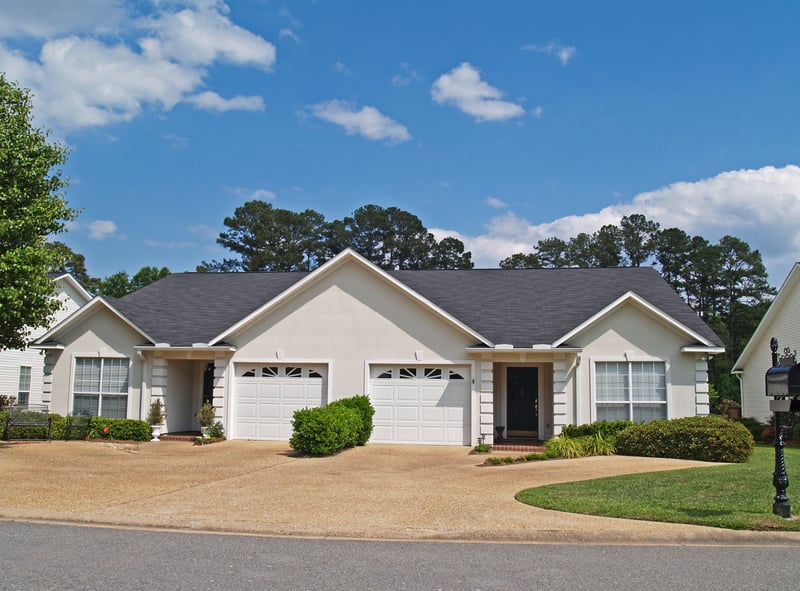
Getting a second-home loan comes with stricter requirements than buying a primary residence.
You may need a larger down payment, extra money left over after closing and enough income to support both your current housing costs and the new mortgage.
Second Home Mortgage Requirements Basics
| Requirement |
What It Means for You |
| Down payment |
You may be able to buy with as little as 10% down through an eligible conventional loan. |
| Property type |
The home generally needs to be a one-unit property. |
| Occupancy |
You need to use the home for some portion of the year. |
| Property use |
The home must be suitable for year-round living and remain under your control. |
| Cash reserves |
You may need at least two months of housing payments left in reserve after closing, with more required in some cases. |
| Credit score |
There is no fixed Fannie Mae minimum for loans run through Desktop Underwriter, although your credit still affects approval and pricing. |
| Rental income |
Income from the second home generally cannot be used to help you qualify. |
| Existing mortgage |
Your current housing payment will generally still count when the lender evaluates your debts. |
These are Fannie Mae standards for eligible conventional loans. Your lender can have additional requirements, and the final terms depend on your finances, the property and how the loan is underwritten.
What Qualifies as a Second Home?
A second home is a specific mortgage occupancy category. Owning another property does not automatically make your next purchase a second home, and calling a property a vacation home does not determine how the lender will classify it.
Fannie Mae's occupancy rules generally require you to use the home for part of the year. The property must also be a one-unit home, be suitable for year-round use and remain under your control.
You Need to Use the Home Yourself
You do not have to live in a second home for a set number of days under Fannie Mae's standard rule. You do, however, need to occupy it for some portion of the year.
If you are buying mainly to generate rental income rather than to use the property yourself, the home may need to be financed as an investment property instead. The difference between a second home and an investment property affects your down payment, reserve requirements, rental-income treatment and other parts of the mortgage.
The Home Must Be Suitable for Year-Round Living
Your second home generally needs to be a property that could be lived in throughout the year. A seasonal structure that cannot reasonably function as a year-round residence may not qualify.
Fannie Mae's standard second-home rules also limit the property to one unit. A duplex, triplex or four-unit property would not qualify under the same second-home guidelines.
You Need to Stay in Control of the Property
The home cannot be a timeshare, and you generally cannot enter into an agreement that gives a management company control over when the property can be occupied.
That does not mean you can never rent a second home. Some rental activity may still be allowed if you continue to use the property yourself and meet the other occupancy requirements.
If you are considering renting it when you are away, the rules around renting out a second home are worth understanding before you apply. Short-term rentals raise similar questions, particularly when determining whether an short-term rental can still qualify as a second home.
How Much Do You Need to Put Down on a Second Home?
You may be able to buy a qualifying second home with as little as 10% down.
Fannie Mae's current eligibility matrix allows eligible one-unit second-home purchases to be financed up to 90% of the home's value through Desktop Underwriter.
That does not mean every borrower will qualify with 10% down. Your credit, underwriting results, property and lender requirements can all affect how much you need to contribute.
Your down payment also affects how much you borrow, whether private mortgage insurance may apply and how the loan is priced. The down payment on a second home can therefore have a bigger effect than simply changing the amount of cash you bring to closing.
What Credit Score Do You Need for a Second Home?
There is no single Fannie Mae credit score minimum that applies to every second-home loan run through Desktop Underwriter.
Fannie Mae removed its fixed minimum credit score requirement for new DU casefiles beginning in November 2025. Fannie Mae explains that DU now evaluates the overall credit risk of the loan rather than relying on one fixed score cutoff.
Your credit score still matters. It can affect whether the loan is approved, how the loan is priced and what requirements the lender applies. Some lenders may also set their own minimum scores.
That is why broad claims such as “you need a 680 credit score for a second home” can be misleading. The credit score requirements for a second home depend on the underwriting method, your overall loan profile and the lender.
How Does DTI Work for a Second Home?
Your lender needs to make sure you can afford the new mortgage along with your existing monthly debts.
If you already have a mortgage on your primary home, that payment generally still counts when the lender calculates your debt-to-income ratio, or DTI. The proposed payment on the second home is then added to your other recurring obligations.
The new housing payment can include principal, interest, property taxes, homeowners insurance, mortgage insurance if applicable and homeowners association dues.
There is no one DTI limit that applies to every second-home borrower. The amount you can qualify for depends on how the loan is underwritten and the strength of the overall application.
If you are still paying on your primary residence, buying a second home while you already have a mortgage often comes down to whether your income can support both housing payments along with your other debts.
How Much Do You Need in Reserves?
You may need money left over after closing in addition to your down payment and closing costs.
For second-home loans run through Desktop Underwriter, Fannie Mae generally requires at least two months of reserves.
For example, if the monthly housing payment on the second home is $2,500, two months of reserves would equal $5,000.
You may need more if you own several financed properties or if the underwriting results require additional reserves.
Reserves are not the same as your down payment or closing costs. They are assets you still have available after the purchase is complete. The reserve requirements for a second home can therefore increase the amount of money you need available even though those funds are not spent at closing.
Can You Use Rental Income From a Second Home to Qualify?
Generally, no. If the property is being financed as a second home, income you expect to earn by renting it out generally cannot be used to help you qualify for the mortgage.
This is separate from whether you are allowed to rent the property at all. Limited rental activity may still be permitted while the property remains classified as a second home.
If you need rental income from the property to qualify for the mortgage, the lender may need to evaluate the transaction under investment-property rules instead. The rules for using rental income with a second-home mortgage are therefore different from the rules that apply to an investment property.
Are Second Home Mortgage Rates Higher?
They can be. A second-home mortgage can cost more than a similar mortgage on a primary residence because conventional second-home loans can carry additional pricing adjustments.
Those adjustments do not create one fixed rate surcharge. Your lender can reflect the additional cost through the mortgage rate, upfront points or a combination of both.
Your down payment also matters because some pricing adjustments become larger as your LTV increases.
When comparing second-home mortgage rates, look at the rate, points and other loan costs together rather than assuming a second home will always be a certain number of percentage points more expensive.
What Closing Costs Apply to a Second Home?
You can expect many of the same types of closing costs that come with buying a primary residence.
Depending on the transaction, these can include lender fees, appraisal costs, title charges, recording fees, property taxes, homeowners insurance and prepaid expenses.
You may also pay points or other loan costs depending on the pricing of the second-home mortgage. If you put less than 20% down, private mortgage insurance may also apply.
Your second-home closing costs are separate from your reserves. Closing costs are paid as part of the transaction, while reserves generally need to remain available after the loan closes.
Second Home vs. Investment Property Requirements
A second home and an investment property can look similar, but the mortgage rules are different.
A second home is intended partly for your own use. An investment property is generally purchased primarily as a rental or income-producing property.
| Requirement |
Second Home |
Investment Property |
| Do you need to live there? |
Yes, for some portion of the year |
Generally no |
| Eligible property size |
One unit |
One to four units may qualify depending on the transaction |
| Minimum down payment under standard Fannie Mae purchase limits |
As little as 10% |
Generally at least 15% for a one-unit property and more for two to four units |
| Can rent from the subject property help you qualify? |
Generally no |
Potentially, if the income meets the applicable requirements |
| Minimum DU reserves |
Two months |
Six months |
How you genuinely plan to use the property should determine the mortgage classification. You should not choose a second-home classification simply because its financing terms are more favorable.
The Bottom Line
You may be able to buy a second home with as little as 10% down, but qualifying usually requires more than just meeting the down payment requirement.
You generally need to use the property for part of the year, have enough income to support your existing and new housing costs and keep sufficient reserves available after closing. Your credit, debts, property type and intended use also affect approval.
If you plan to rent the property, pay particular attention to how that use affects the mortgage classification. A second home and an investment property can follow different rules for down payment, reserves, rental income and underwriting.
FAQ
What Are the Requirements to Get a Mortgage on a Second Home?
You generally need to buy a one-unit property that you will use for part of the year, meet the lender's credit and income requirements and have enough money for the down payment, closing costs and required reserves. The property must also be suitable for year-round use and remain under your control.
Can You Buy a Second Home With 10% Down?
Potentially. Fannie Mae's current standard eligibility rules allow eligible one-unit second-home purchases to be financed up to 90% of the home's value, which corresponds to a 10% down payment. Your lender or underwriting results may require more.
Do You Need 20% Down for a Second Home?
No. You may be able to buy a qualifying second home with as little as 10% down. Putting 20% down can reduce your loan balance and generally lets you avoid private mortgage insurance on a conventional loan, but it is not a universal minimum.
What Credit Score Do You Need to Buy a Second Home?
There is no fixed Fannie Mae minimum credit score for loans evaluated through Desktop Underwriter. Your credit still affects approval and pricing, and individual lenders may set their own requirements.
Can You Rent Out a Second Home?
Possibly. Limited rental activity does not automatically prevent a home from qualifying as a second home. You still need to use the property yourself for part of the year, maintain control over it and meet the other occupancy requirements. Income from the second home generally cannot be used to qualify for the mortgage.




.jpg?quality=80&width=150)



















.jpg?quality=80&width=800)










































































































.jpg?quality=80&width=800)