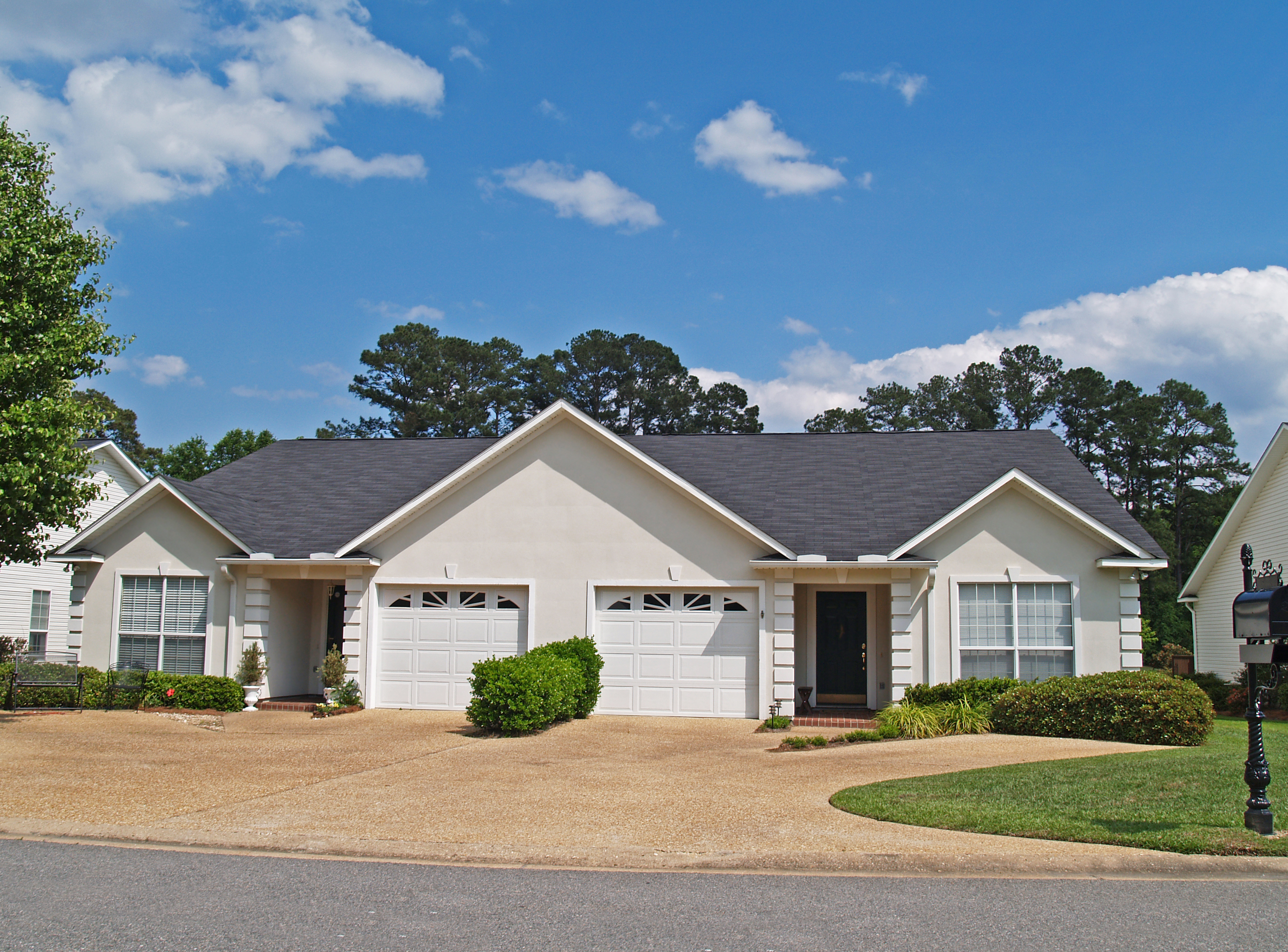
A $2 million house might require nearly half a million in annual household income to afford.
You might need roughly $464,000 to $546,000 in annual household income under the assumptions in this example, including 20% down, a 30-year fixed mortgage and a housing budget equal to 30% of gross income.
A larger down payment or lower mortgage rate can reduce the income needed, while high property taxes, insurance costs or monthly debts can push it higher. The 30% figure is a planning assumption rather than a lender qualification rule. The CFPB recommends starting with the complete monthly housing payment that fits your finances rather than relying on a home-price-to-income ratio.
$2 Million House Income Basics
| Factor |
Example |
| Home price |
$2,000,000 |
| Example down payment |
20%, or $400,000 |
| Example loan amount |
$1,600,000 |
| Example loan term |
30-year fixed |
| Illustrative mortgage rates |
5% to 7% |
| Illustrative income range |
About $464,000 to $546,000 |
The income range reserves $3,000 per month for costs beyond principal and interest, including property taxes and homeowners insurance. That's a planning placeholder, not an estimate for a particular $2 million property. Taxes and insurance can vary substantially by location and property.
You can our affordability calculator to replace these assumptions with your own income, debts, down payment and mortgage rate.
Income Needed for a $2 Million House at Different Rates
At this price point, even a one-percentage-point change in the mortgage rate can move the monthly payment by more than $1,000.
The examples below assume $400,000 down, leaving a $1.6 million mortgage. They also use a $3,000 monthly planning allowance for property taxes, homeowners insurance and other applicable housing expenses. The illustrative income assumes the resulting housing payment equals 30% of gross income.
| Example Rate |
Monthly Principal and Interest |
Example Total Housing Budget |
Illustrative Annual Income Needed |
| 5% |
About $8,589 |
About $11,589 |
About $464,000 |
| 6% |
About $9,593 |
About $12,593 |
About $504,000 |
| 7% |
About $10,645 |
About $13,645 |
About $546,000 |
These calculations are hypothetical and don't estimate the rate or loan amount you'll qualify for. The difference between the 5% and 7% examples is more than $2,000 per month in principal and interest, which changes the illustrative income requirement by more than $80,000 per year.
What Type of Mortgage Can Finance a $2 Million House?
At this price point, jumbo financing becomes much more relevant than it is for lower-priced homes. FHA, VA and USDA also work differently when the purchase price reaches $2 million.
Conventional and Jumbo Loans
A $2 million home with 20% down leaves a $1.6 million mortgage. That's above both the $832,750 baseline and $1,249,125 standard high-cost conforming loan limits for a one-unit property in 2026. FHFA sets those limits for mortgages Fannie Mae and Freddie Mac can acquire.
A $1.6 million mortgage would therefore generally be a jumbo loan in the continental U.S. Alaska, Hawaii, Guam and the U.S. Virgin Islands have higher special statutory conforming limits, so location still matters.
Jumbo qualification is more lender-specific than conforming financing. Down payment, reserves, credit and debt-to-income requirements can vary based on the loan amount and your overall financial profile. Don't treat 20% down as a universal jumbo requirement. It's the assumption used for the calculations on this page.
FHA Loans
A $2 million purchase is above the typical range for FHA financing. HUD's 2026 limits set the one-unit FHA floor at $541,287 and the standard high-cost ceiling at $1,249,125.
You could still buy a $2 million property with FHA financing if a sufficiently large down payment brings the FHA mortgage within the applicable county limit. FHA also provides higher special-exception limits in Alaska, Hawaii, Guam and the U.S. Virgin Islands.
For most buyers considering a $2 million property, however, an FHA loan is unlikely to be the most practical financing structure because the purchase price sits well above standard FHA loan limits.
VA Loans
A $2 million purchase can potentially be financed with a VA loan if you're eligible and can qualify for the mortgage.
The VA explains that borrowers with full entitlement don't have a VA loan limit. The lender still determines how much you can afford based on factors such as income, debts, credit and assets, and the property value must support the purchase price.
If you don't have full entitlement, the applicable conforming loan limit becomes part of the remaining-entitlement calculation. A $2 million VA mortgage may also be described as a VA jumbo loan because of its size, even though the VA itself does not impose a loan limit on borrowers with full entitlement.
USDA Loans
A USDA guaranteed loan is generally not a realistic financing path for a $2 million purchase. The program is designed for eligible low- and moderate-income households purchasing primary residences in qualifying rural areas.
USDA requires household income to remain within the applicable limit, generally 115% of median household income. The income needed to support a $2 million purchase under the examples above would therefore conflict with USDA's income-focused eligibility structure in typical circumstances.
Monthly Payment on a $2 Million House
The size of your down payment has a major effect on the mortgage payment. These examples use a hypothetical 6.5% rate and a 30-year fixed term.
| Down Payment |
Cash Down |
Loan Amount |
Monthly Principal and Interest |
| 10% |
$200,000 |
$1,800,000 |
About $11,377 |
| 20% |
$400,000 |
$1,600,000 |
About $10,113 |
| 25% |
$500,000 |
$1,500,000 |
About $9,481 |
These are principal-and-interest payments only. The CFPB notes that the total monthly payment can also include property taxes, homeowners insurance and mortgage insurance when applicable. HOA dues and other ownership expenses can add further costs.
Example Budget for a $2 Million House
Consider a household earning $525,000 per year, or $43,750 per month before taxes. At a hypothetical 6.5% rate with 20% down, principal and interest would be about $10,113. Adding the $3,000 planning allowance brings the example housing cost to roughly $13,113 per month.
| Budget Item |
Example Amount |
| Gross monthly income |
$43,750 |
| Example housing payment |
About $13,113 |
| Other qualifying monthly debts |
$2,000 |
| Housing plus other debt |
About $15,113 |
| Example debt-to-income ratio |
About 35% |
Debt-to-income ratio, or DTI, compares your qualifying monthly debt payments with gross monthly income. The CFPB defines DTI using that calculation. The 35% figure above is an example, not a jumbo mortgage qualification limit.
You can use the DTI calculator to replace the example debts with your own monthly obligations.
What if Your Assets Are Stronger Than Your Income?
A traditional salary calculation doesn't describe every buyer looking at a $2 million property. Business owners, investors, retirees and other high-net-worth buyers can hold substantial assets without receiving a large regular salary.
Some non-QM mortgages use alternative qualification methods, including products that evaluate eligible assets when determining whether you can repay the mortgage. These products are lender-specific, so there isn't a universal asset balance, down payment or formula that applies across the market.
Federal ability-to-repay rules still require covered mortgage lenders to make a reasonable, good-faith determination that you can repay the loan. The CFPB explains that lenders generally consider and document factors including income, assets, debts and monthly expenses.
If you're comparing an asset-based mortgage with a traditional jumbo loan, look beyond the qualification method. Rates, down payments, reserves, fees and prepayment terms can also differ.
Compare Related Affordability Scenarios for a $2 Million House
A $2 million property sits at the top of this affordability series, so a smaller change in price translates into a large change in cash and financing needs. Compare the numbers with a $1.5 million house if you're deciding how much of your budget to commit to the purchase.
The difference is $500,000 in purchase price. At 20% down, that also means an additional $100,000 upfront and $400,000 more in mortgage principal before accounting for differences in rates or property expenses.
What Affects the Income You Need?
Mortgage Rate
The rate has an outsized effect on a large mortgage balance. On the $1.6 million mortgage used above, moving from 5% to 7% increases monthly principal and interest by more than $2,000.
Down Payment
A larger down payment reduces both the mortgage balance and monthly payment. Jumbo lenders can also use down payment and available equity as part of their overall risk assessment, although requirements vary.
Don't overlook the cash you need after closing. A jumbo lender may require reserves in addition to your down payment and closing costs. Mortgage reserves are assets you retain after closing that can cover future housing payments.
Debt-to-Income Ratio
Even at a high income, large monthly obligations can reduce mortgage affordability. Payments on other homes, auto loans and other debts can materially change your DTI and the size of mortgage your income supports.
Property Taxes and Homeowners Insurance
A $2 million home's carrying costs vary significantly by location. Property taxes alone can differ by thousands of dollars per month between markets, and insurance costs can add another major variable. Get property-specific estimates rather than relying on the $3,000 allowance used here.
Mortgage Structure
Jumbo loans don't follow one universal set of terms. Your rate, down payment, reserves and underwriting can vary by lender, loan amount, occupancy and financial profile. Some buyers may also compare fixed-rate and adjustable-rate structures depending on how long they expect to keep the mortgage.
Ways to Lower the Income Needed
A larger down payment has an immediate effect because it reduces the balance on which interest is charged. In the 6.5% examples above, increasing the down payment from 10% to 25% reduces principal and interest by nearly $1,900 per month.
Reducing other monthly debt can also improve affordability. The effect is particularly relevant if you carry financing on other properties or large recurring obligations.
Property choice matters too. Two homes priced at $2 million can carry very different taxes, insurance and HOA costs, creating noticeably different income requirements.
Finally, don't use every available dollar for the down payment without considering liquidity. At this price point, closing costs, reserves, maintenance and unexpected property expenses can require substantial cash after the purchase.
The Bottom Line
A $2 million house could require roughly $464,000 to $546,000 in annual household income under the assumptions used here. With 20% down, you would finance $1.6 million, and hypothetical rates between 5% and 7% produce principal-and-interest payments ranging from about $8,589 to $10,645 per month.
For most buyers, a mortgage of that size falls into jumbo territory. Your actual income requirement depends on the rate, down payment, other debts, property expenses and the lender's underwriting requirements. Buyers with substantial assets but less traditional income may also have non-QM options, but those products need to be compared individually rather than treated as a standard alternative.
Frequently Asked Questions
What Salary Do You Need to Afford a $2 Million House?
Under the assumptions used here, roughly $464,000 to $546,000 in annual household income could support a $2 million house. The calculation assumes 20% down, a 30-year fixed mortgage, hypothetical rates from 5% to 7% and $3,000 per month for other housing costs.
Can You Afford a $2 Million House on a $400K Salary?
It would be difficult under the core assumptions used here. A $400,000 salary equals about $33,333 in gross monthly income. Thirty percent is about $10,000, which is below the example total housing payment even at the hypothetical 5% rate. A substantially larger down payment or lower property expenses could change the calculation.
Can You Afford a $2 Million House on a $500K Salary?
It can fit under some scenarios. A $500,000 income equals about $41,667 per month before taxes. The hypothetical 6% example produces a total housing budget of about $12,593, or roughly 30% of that income. Your other debts and actual property expenses still have to fit.
Can You Afford a $2 Million House on a $600K Salary?
A $600,000 income provides $50,000 in gross monthly income. Even the hypothetical 7% example housing cost of about $13,645 is roughly 27% of that income before accounting for other debts and personal expenses.
How Much Is a Down Payment on a $2 Million House?
Ten percent is $200,000, 20% is $400,000 and 25% is $500,000. Jumbo down payment requirements vary by lender, loan amount and your qualifications, so these percentages are examples rather than universal minimums.
Is a $2 Million House a Jumbo Loan?
Usually, but the purchase price alone doesn't determine whether a mortgage is jumbo. The loan amount must exceed the conforming limit that applies to the property. With 20% down, a $2 million purchase creates a $1.6 million mortgage, which is above the 2026 standard high-cost one-unit conforming ceiling in the continental U.S.
Can You Buy a $2 Million House Without a $500K Salary?
Potentially. A larger down payment reduces the mortgage and monthly income needed. Buyers with substantial qualifying assets may also have access to lender-specific asset-based or other non-QM financing. The lender still has to determine that you can repay the mortgage under applicable rules.




.jpg?quality=80&width=150)

















.jpg?quality=80&width=800)




















































































.jpg?quality=80&width=800)

.jpg?quality=80&width=800)








.jpg?quality=80&width=800)













.jpg?quality=80&width=800)