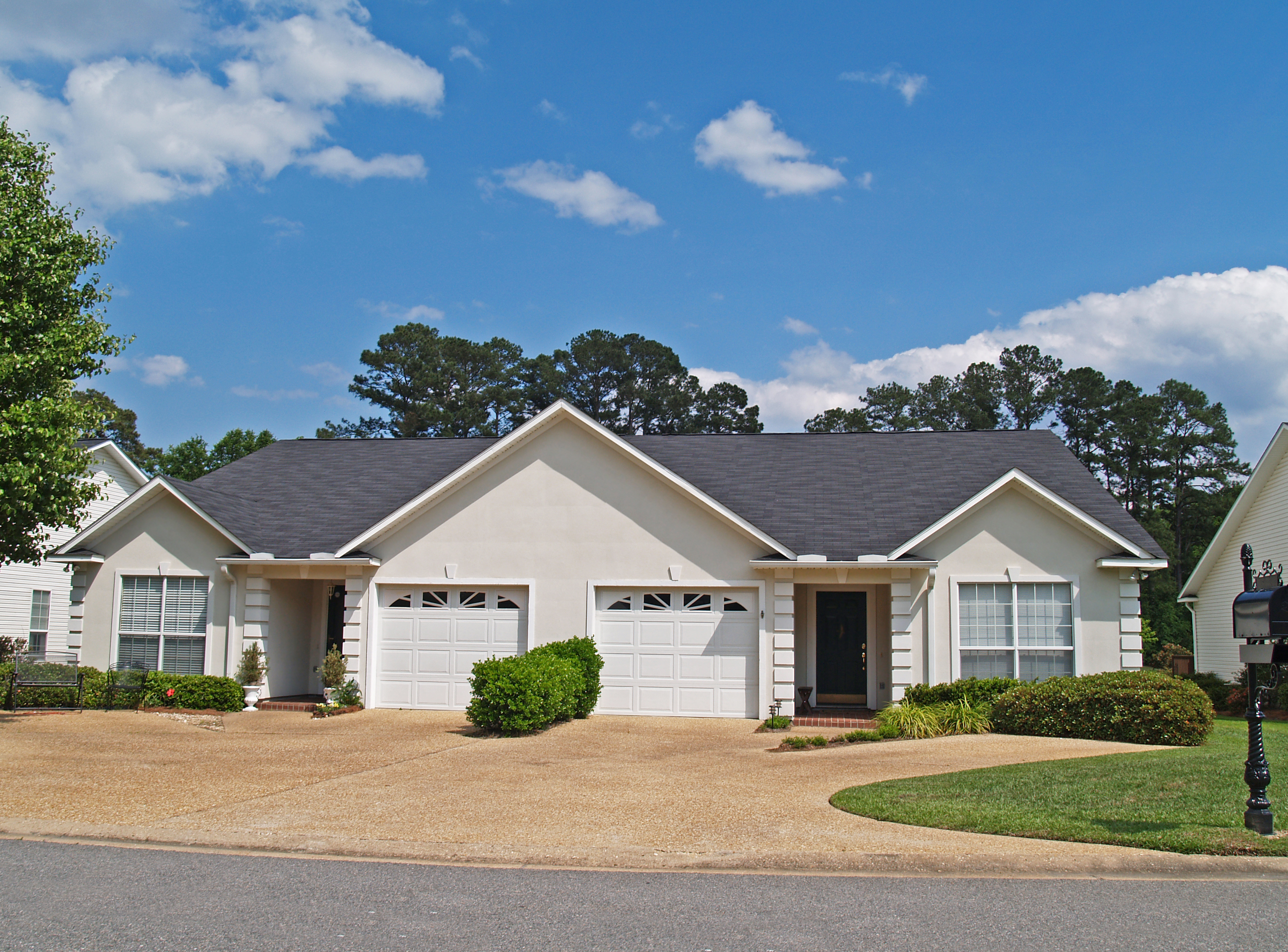
With a $225,000 salary, you may be looking at homes anywhere from the upper $700,000s to around $1 million. At that point, the conversation starts to shift.
The payment still matters, but so do questions like how much cash you want tied up in the house, whether the loan stays within conforming limits and whether buying the $1 million house is actually worth giving up the monthly flexibility of an $800,000 one.
$225,000 Salary Basics
| Item |
Illustrative Figure |
| Annual gross salary |
$225,000 |
| Monthly gross income |
$18,750 |
| Illustrative home-price range |
$750,000 to $1,000,000 |
| Middle example |
$875,000 home |
| Example assumptions |
30-year fixed mortgage, 20% down, 1.2% annual property taxes, 0.35% annual homeowners insurance, no HOA and no PMI |
How Much House Can $225,000 Support?
A $225,000 salary equals $18,750 in gross monthly income. With 20% down, an $875,000 home creates a $700,000 mortgage. At 6.5%, the estimated total housing cost is about $5,555 per month using the tax and insurance assumptions here.
That is not a recommendation to spend $875,000. It is simply a useful midpoint. A buyer who wants to keep saving aggressively may prefer something closer to $750,000. Someone with little debt, a large cash reserve and fewer competing expenses may be comfortable closer to $1 million.
What the Monthly Difference Looks Like
| Home Price |
20% Down |
Loan Amount |
Est. Principal and Interest at 6.5% |
Est. Taxes and Insurance |
Est. Total Monthly Housing Cost |
| $750,000 |
$150,000 |
$600,000 |
$3,792 |
$969 |
$4,761 |
| $875,000 |
$175,000 |
$700,000 |
$4,424 |
$1,130 |
$5,555 |
| $1,000,000 |
$200,000 |
$800,000 |
$5,057 |
$1,292 |
$6,348 |
The $1 million example costs about $1,587 more per month than the $750,000 example. That is roughly $19,000 a year of additional cash flow going to housing.
For some households, the more expensive home is worth it. For others, that $19,000 is a major part of annual investing, travel or tuition spending.
Rates Matter Even More on a $700,000 Mortgage
The middle example carries a $700,000 loan. Here is how the same house looks at three illustrative rates.
| Illustrative Rate |
Loan Amount With 20% Down |
Est. Principal and Interest |
Est. Total Monthly Housing Cost |
| 5.5% |
$700,000 |
$3,975 |
$5,105 |
| 6.5% |
$700,000 |
$4,424 |
$5,555 |
| 7.5% |
$700,000 |
$4,895 |
$6,025 |
At this loan size, a rate change can move the monthly bill by enough to reshape the budget. That is why a fixed price range can become stale quickly if it was calculated under a very different rate assumption.
A $1 Million Home Does Not Automatically Mean Jumbo
Jumbo status is based on the loan amount, not simply the home's price. FHFA set the 2026 baseline conforming loan limit at $832,750 for one-unit properties in most of the United States. Higher limits apply in designated high-cost areas.
With 20% down on a $1 million home, the loan would be $800,000, below that baseline limit. With 10% down, the loan would be $900,000, above the baseline in most counties.
That makes the down payment more than a monthly-payment decision. It can also affect which loan category you fall into.
How Much Cash Do You Want Left After Closing?
Twenty percent down on an $875,000 home is $175,000. On a $1 million home, it is $200,000. Add closing costs, moving costs and any immediate repairs, and the amount of cash leaving your accounts can get large quickly.
A buyer with $300,000 available may be comfortable putting $200,000 down and keeping the rest liquid. Another buyer with $220,000 available may feel very differently about the same purchase.
The CFPB notes that down payment size affects LTV and can influence mortgage insurance and pricing.
What Does $750,000 Feel Like by Comparison?
At $750,000 with 20% down, the loan is $600,000 and the estimated housing cost is about $4,761 at 6.5%. That is still a substantial payment, but it leaves considerably more room each month than the $1 million example.
If $750,000 is already your target, the income needed for a $750,000 house is a useful reverse check.
Debt Still Matters, Even at $225,000
A high salary can make debt feel less important, but underwriting still counts recurring obligations. Two luxury-car payments, student loans or payments on another property can consume a meaningful share of monthly income.
The CFPB explains that DTI compares monthly debt payments with gross monthly income. Different mortgage products and lenders can apply different standards.
$200,000 vs. $250,000 Is a Useful Reality Check
At $200,000 a year, gross monthly income is about $16,667. At $250,000, it is about $20,833. A $225,000 salary sits exactly between them.
That $4,166 monthly spread from $200,000 to $250,000 sounds large, but taxes and other obligations absorb part of it. A household at $200,000 with a paid-off car and a bigger down payment can still have more housing flexibility than a household at $250,000 with expensive recurring debts.
The Bottom Line
A $225,000 salary can put homes from roughly $750,000 to $1 million in play under a range of budgets. The better question is how much of your cash and monthly income you want committed to housing, especially as the loan amount approaches the conforming limit.
FAQ
Can I Afford a $1 Million House on a $225,000 Salary?
It may be possible. With 20% down and the assumptions used here, the estimated housing cost is about $6,348 per month at 6.5%. Whether that feels comfortable depends on your debts, savings and other spending.
Is a $1 Million House Automatically a Jumbo Loan?
No. With 20% down, the loan would be $800,000, below the 2026 baseline conforming limit of $832,750 in most U.S. counties.
How Much Is $225,000 a Year Per Month?
It is $18,750 in gross monthly income.
Would Buying an $800,000 Home Leave More Flexibility?
Generally, yes, compared with a $1 million home under the same financing assumptions. The smaller loan and lower property costs can leave more cash available each month.




.jpg?quality=80&width=150)





















.jpg?quality=80&width=800)




































































































.jpg?quality=80&width=800)

.jpg?quality=80&width=800)













.jpg?quality=80&width=800)













.jpg?quality=80&width=800)

































.jpg?quality=80&width=800)