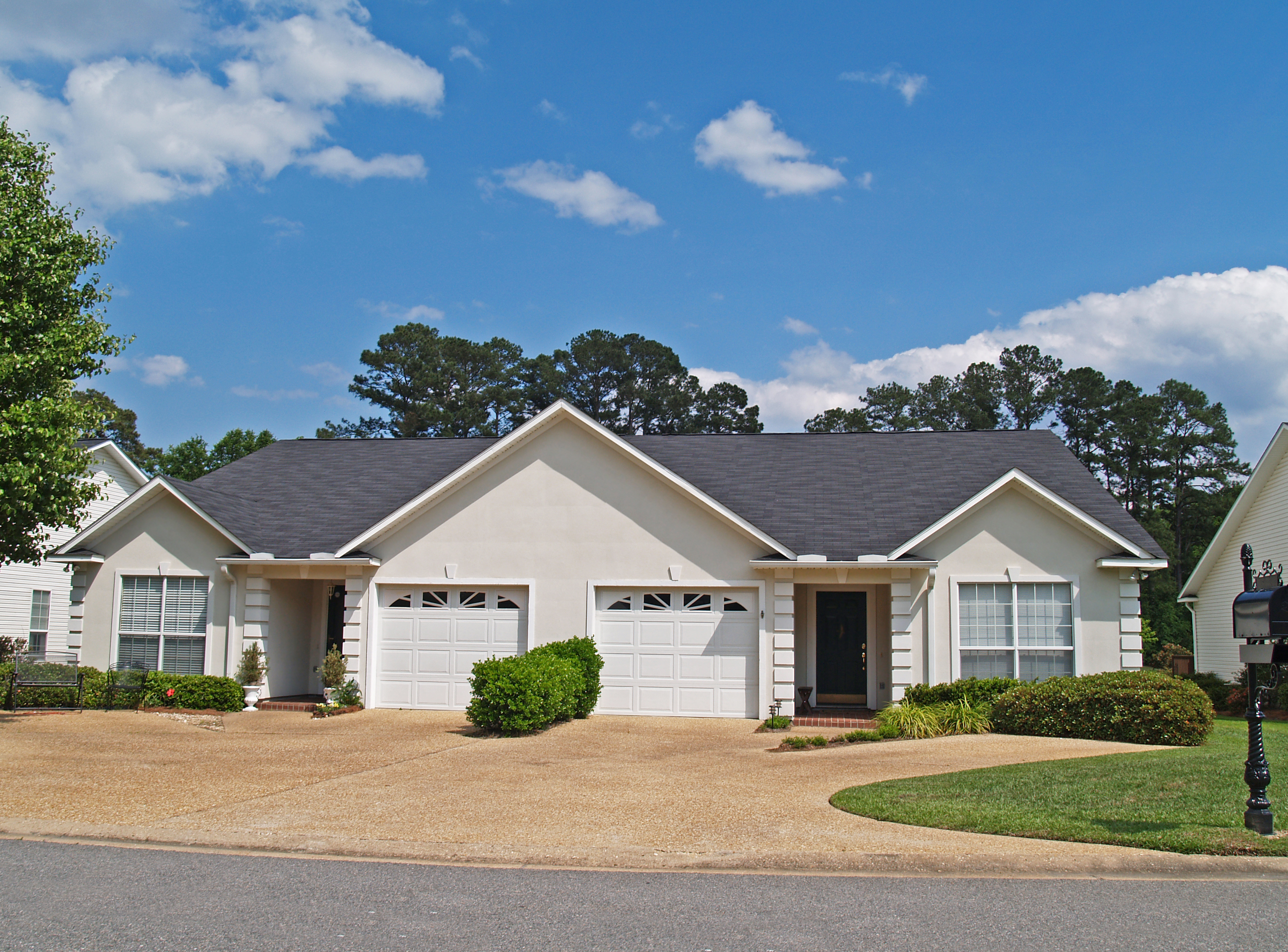
There are several types of mortgages available to finance a home, and the differences go beyond the interest rate.
Some loans are backed by government agencies, while conventional mortgages are financed without federal mortgage insurance or guarantees. Loans can also have fixed or adjustable rates, different repayment terms and different requirements for down payment, credit, property type and occupancy.
Understanding those differences can make it easier to compare your mortgage options based on the complete cost and structure of the loan.
Types of Mortgages Basics
| Mortgage Type |
Who It May Fit |
Down Payment |
Key Feature |
| Conventional |
Borrowers who meet conventional underwriting requirements |
As little as 3% for certain eligible transactions |
Not government-insured or guaranteed. PMI may apply at higher loan-to-value ratios. |
| FHA |
Borrowers who meet FHA borrower and property requirements |
As little as 3.5% with an FHA minimum decision credit score of at least 580 |
Insured by the Federal Housing Administration and generally includes FHA mortgage insurance. |
| VA |
Eligible Veterans, service members and certain surviving spouses |
VA generally does not require a down payment |
VA-backed loans generally do not require private mortgage insurance. |
| USDA |
Eligible households buying qualifying primary residences in eligible rural areas |
No down payment for eligible guaranteed-loan borrowers |
Household income and geographic eligibility requirements apply. |
| Jumbo |
Borrowers financing amounts above applicable conforming loan limits |
Varies by lender and transaction |
Not eligible for purchase by Fannie Mae or Freddie Mac as a conforming loan. |
| Non-QM |
Some borrowers whose finances do not fit standard qualified-mortgage or agency underwriting |
Varies by product and lender |
Can use different methods of documenting income or evaluating the loan. |
The Main Types of Home Loans
Conventional Loans
A conventional mortgage is a loan that is not insured or guaranteed by a federal government agency such as FHA, VA or USDA.
Many conventional mortgages are designed to meet standards established by Fannie Mae or Freddie Mac. Loans that meet applicable requirements, including loan limits, are generally called conforming loans.
Some eligible conventional purchase transactions allow financing up to 97% of the home's value, which corresponds to a 3% down payment. Fannie Mae's standard 97% LTV purchase option requires at least one first-time homebuyer, while HomeReady has separate eligibility requirements.
Conventional loans with higher loan-to-value ratios may require private mortgage insurance. PMI requirements, pricing and cancellation rules differ from FHA mortgage insurance.
FHA Loans
FHA loans are mortgages made by private lenders and insured by the Federal Housing Administration.
Under current HUD requirements, borrowers with a minimum decision credit score of at least 580 may be eligible for maximum FHA financing with a minimum required investment of 3.5%. Scores from 500 through 579 are generally limited to 90% loan-to-value.
FHA loans generally include both upfront and annual mortgage insurance premiums. FHA financing is available to eligible repeat buyers as well as first-time buyers.
VA Loans
VA-backed purchase loans are available to borrowers who meet Department of Veterans Affairs eligibility requirements, including eligible Veterans, service members and certain surviving spouses.
VA does not generally require a down payment, although lenders may require one in certain circumstances. VA also does not establish a program-wide minimum credit score, although lenders can set their own credit standards.
VA-backed mortgages do not require private mortgage insurance. A VA funding fee can apply unless the borrower qualifies for an exemption.
USDA Loans
USDA's Single Family Housing Guaranteed Loan Program provides 100% financing for eligible borrowers purchasing qualifying homes in eligible rural areas.
The home must generally be used as the borrower's primary residence, and household income must fall within USDA program limits for the area.
USDA guaranteed loans use an upfront guarantee fee and annual fee rather than conventional PMI.
Jumbo Loans
A jumbo loan generally refers to a mortgage with a loan amount above the applicable conforming limit for Fannie Mae and Freddie Mac.
Because jumbo loans do not follow a single universal underwriting program, credit, down payment, reserve and DTI requirements vary by lender and loan product.
Jumbo financing can be fixed-rate or adjustable-rate and can be used for different property and occupancy types depending on the lender's guidelines.
Non-QM Loans
Non-qualified mortgage, or non-QM, loans are mortgages that do not meet the federal definition of a qualified mortgage.
Some non-QM programs use alternative methods to evaluate income or repayment ability. Examples can include bank statement, asset-based or debt-service coverage ratio financing, depending on the lender and transaction.
Requirements vary significantly by product, and non-QM financing should not be treated as one standardized loan program.
Government-Backed vs. Conventional Mortgages
FHA, VA and USDA loans are government-backed mortgages. Conventional loans do not carry the same federal insurance or guarantee.
The government backing does not mean the federal agency generally lends the money directly to the borrower. For FHA, VA and USDA guaranteed loans, private lenders originate the mortgage while the federal program provides insurance or a guarantee subject to its rules.
| Feature |
Conventional |
Government-Backed |
| Federal backing |
No FHA, VA or USDA insurance or guarantee |
Insured or guaranteed through FHA, VA or USDA |
| Eligibility |
Based primarily on lender and conventional underwriting requirements |
Program-specific borrower, property or geographic requirements can apply |
| Mortgage insurance or program fee |
PMI may apply depending on LTV and loan structure |
FHA uses MIP, VA can charge a funding fee and USDA uses guarantee fees |
| Down payment |
As little as 3% for certain eligible loans |
Can range from 0% for eligible VA or USDA borrowers to FHA's applicable minimum investment |
The differences can affect both eligibility and cost. A comparison of FHA and conventional financing, for example, should include mortgage insurance and upfront costs in addition to the interest rate.
Market conditions can also affect how the two options price relative to each other, which is why FHA vs. conventional financing when rates are high can produce a different payment comparison for different borrower profiles.
Eligible military borrowers can separately compare VA and conventional mortgages, while eligible rural buyers may want to compare USDA and conventional loans.
For higher loan amounts, the differences between jumbo and conventional financing depend on the applicable conforming limit and the lender's jumbo requirements.
Comparing FHA, VA and USDA Loans
FHA, VA and USDA loans all have federal backing, but they serve different borrowers and transactions.
FHA is broadly available to borrowers who meet its credit, income, occupancy and property requirements. VA requires eligible military service or another qualifying status. USDA guaranteed loans have household income limits and require an eligible rural property.
The financing structures are also different. FHA requires a borrower investment and mortgage insurance under applicable rules. VA generally does not require a down payment or PMI. USDA guaranteed financing can provide 100% financing but uses upfront and annual guarantee fees.
Borrowers who qualify for more than one government-backed program can compare USDA vs. FHA loans, USDA vs. VA loans or VA vs. FHA financing based on the actual costs and eligibility requirements.
Fixed-Rate vs. Adjustable-Rate Mortgages
The loan program determines one part of your mortgage structure. The interest rate can also be fixed or adjustable.
Fixed-Rate Mortgages
A fixed-rate mortgage keeps the same interest rate for the entire loan term. The principal-and-interest portion of the required monthly payment therefore stays consistent, although the total housing payment can still change because of property taxes, homeowners insurance, mortgage insurance or escrow adjustments.
Fixed-rate mortgages are commonly available with several repayment terms, including 10, 15, 20 and 30 years.
Adjustable-Rate Mortgages
An adjustable-rate mortgage, or ARM, generally starts with a fixed initial rate for a specified period and can then adjust according to the loan's index, margin and adjustment caps.
For example, a 5/1 ARM generally keeps its initial rate for five years and can then adjust once per year. Other ARM structures use different initial periods or adjustment frequencies.
The adjustable-rate mortgage hub covers the different ARM structures, while a direct ARM vs. fixed-rate mortgage comparison focuses on the tradeoffs between payment stability and future rate adjustments.
Choosing a Mortgage Term: 10, 15, 20 or 30 Years
The mortgage term determines how long the scheduled repayment period lasts. A shorter term generally produces a higher monthly principal-and-interest payment but repays principal faster and reduces total interest when comparing the same loan amount and interest rate.
A longer term generally lowers the required monthly principal-and-interest payment but spreads repayment over more years.
The example below isolates the effect of the loan term by assuming the same $320,000 loan amount and hypothetical 6.5% fixed interest rate for every option. Actual mortgage rates typically differ by loan term, borrower and lender.
| Loan Term |
Example Monthly Principal and Interest |
Example Total Interest |
| 10 years |
$3,634 |
$116,024 |
| 15 years |
$2,788 |
$181,758 |
| 20 years |
$2,386 |
$252,600 |
| 30 years |
$2,023 |
$408,142 |
Example assumes a $320,000 fixed-rate mortgage at 6.5% with principal and interest only. It excludes taxes, insurance, mortgage insurance, HOA dues, closing costs and other expenses. The 6.5% rate is hypothetical and is used for every term only to illustrate the effect of repayment length.
10-Year Mortgages
A 10-year fixed mortgage pays the balance down rapidly but requires a substantially higher monthly payment than longer terms for the same loan amount and rate.
Comparing a 10-year vs. 15-year mortgage shows how even a five-year difference changes both the scheduled payment and total interest.
15-Year Mortgages
A 15-year mortgage provides a shorter repayment period than a 30-year loan while spreading payments over more time than a 10-year mortgage.
It generally requires a higher monthly payment than a 20- or 30-year term for the same principal and rate.
20-Year Mortgages
A 20-year mortgage sits between the more common 15- and 30-year structures. The payment and total-interest tradeoff can be compared using a 15-year vs. 20-year mortgage calculator or a direct 20-year vs. 30-year comparison.
30-Year Mortgages
A 30-year mortgage spreads repayment over the longest period among these common terms, which generally produces the lowest required principal-and-interest payment when the loan amount and rate are held constant.
A 30-year vs. 15-year mortgage calculator can show how the payment and interest differences change at your own loan amount and interest-rate assumptions.
Other Mortgage Tradeoffs to Compare
The loan program, interest-rate structure and term are not the only choices that affect a mortgage.
Points vs. a Larger Down Payment
Cash available at closing can sometimes be used either to increase the down payment or pay discount points to reduce the mortgage rate. The effect depends on the loan terms, pricing and how long you expect to keep the mortgage.
Comparing mortgage points vs. a larger down payment can help separate the upfront and monthly effects of each option.
Primary Residence vs. Second Home
Mortgage requirements can change when the home is not your primary residence. A second-home mortgage can have different occupancy, down payment and reserve requirements from financing a primary residence.
Purchase vs. Renovation Financing
If the property needs significant repairs or improvements, a standard purchase mortgage is not the only financing structure available.
Some home improvement and renovation loans can finance eligible renovation costs along with the property, depending on the program.
How to Compare Different Types of Mortgages
Comparing mortgage types works best when the same purchase scenario is used for each option.
For each mortgage, compare:
- Eligibility requirements
- Down payment and total cash needed at closing
- Interest rate and APR
- Monthly principal and interest
- Mortgage insurance or program fees
- Property and occupancy requirements
- Loan term
- Whether the rate is fixed or adjustable
- Total borrowing cost over the period you expect to keep the loan
A lower interest rate does not automatically mean a lower-cost loan if another option has substantially different points, mortgage insurance, fees or upfront costs.
Bottom Line
The main types of mortgages include conventional, FHA, VA, USDA, jumbo and non-QM financing. Those programs can then be combined with different interest-rate structures and repayment terms.
Compare the requirements and complete costs of the loans available to you rather than choosing based on one feature such as the interest rate or down payment alone.
Frequently Asked Questions
What Are the Main Types of Mortgages?
Common mortgage categories include conventional, FHA, VA, USDA, jumbo and non-QM loans. Mortgages can also be classified by their interest-rate structure, such as fixed-rate or adjustable-rate, and by repayment term, such as 15 or 30 years.
Which Type of Mortgage Is Best?
No mortgage type is universally best. The comparison depends on which programs you qualify for and how their down payment, interest rate, mortgage insurance, fees, monthly payment and loan terms apply to your transaction.
What Is the Easiest Type of Mortgage to Qualify For?
There is no single easiest mortgage for every borrower. FHA, VA, USDA and conventional loans use different eligibility and underwriting requirements. VA and USDA also have eligibility requirements unrelated to credit alone, while individual lenders can apply additional standards.
Is FHA or Conventional Better?
Neither is universally better. FHA can have different credit and down payment requirements, while conventional financing uses a different mortgage insurance structure. Comparing the actual Loan Estimates for both options can show which produces the more suitable combination of upfront cost and monthly payment for a specific borrower.
Is a Fixed-Rate or Adjustable-Rate Mortgage Better?
A fixed-rate mortgage keeps the same interest rate throughout the loan term, while an ARM can change after its initial fixed period. The tradeoff depends on the initial pricing, adjustment terms, how long you expect to keep the mortgage and whether you can accommodate a higher payment if the ARM adjusts upward.



.jpg?quality=80&width=150)

















.jpg?quality=80&width=800)





















































































.jpg?quality=80&width=800)

.jpg?quality=80&width=800)









.jpg?quality=80&width=800)













.jpg?quality=80&width=800)