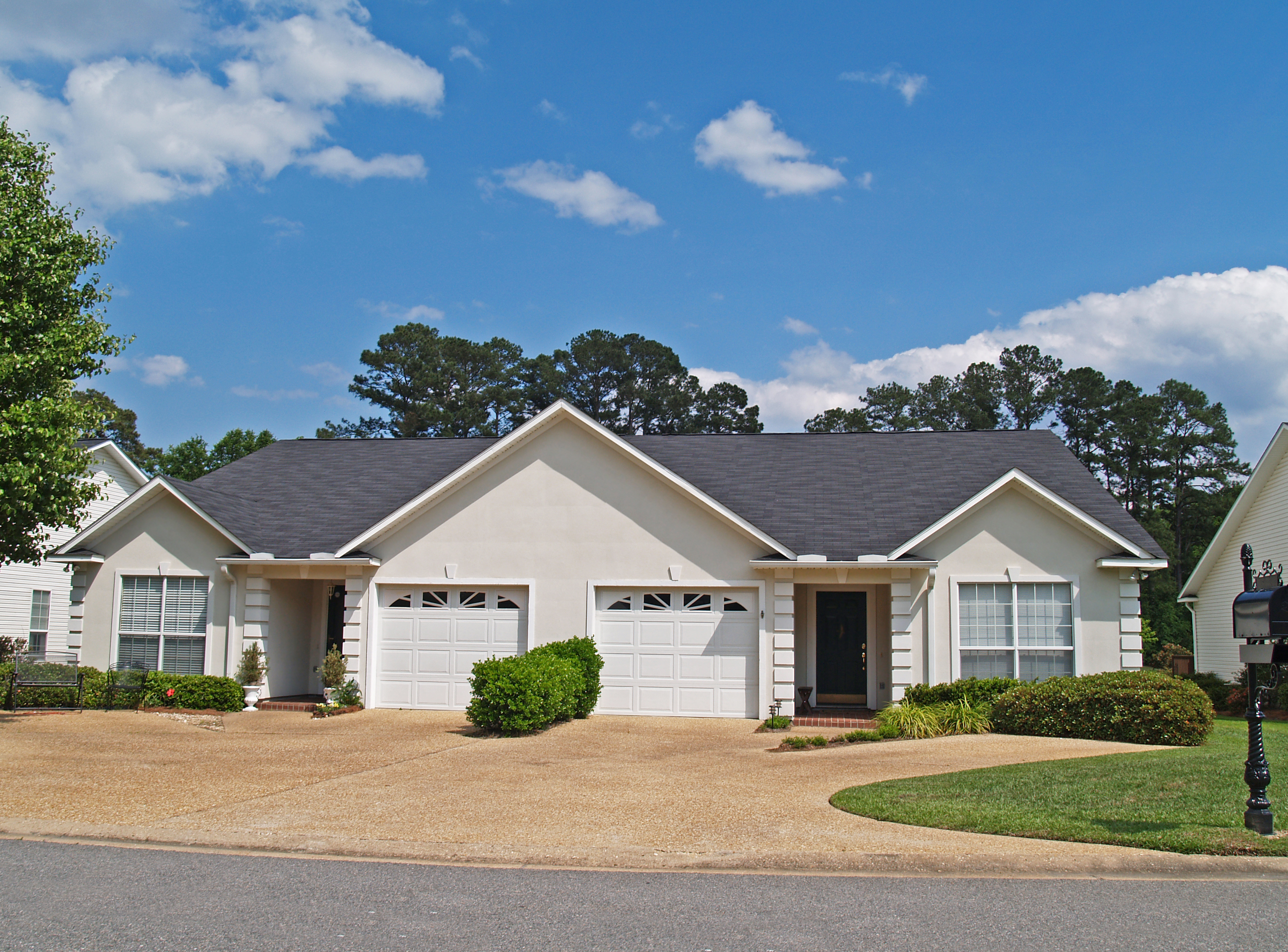
A $3,500 total monthly housing payment could support a home price of roughly $435,000 to $539,000 under the examples below, which assume 5% down, a 30-year fixed mortgage and $750 of the monthly budget reserved for property taxes, homeowners insurance, mortgage insurance and other housing costs.
Your actual affordable price can be higher or lower depending on your mortgage rate, down payment, debts and the property's expenses. The CFPB notes that your total monthly housing payment can include principal, interest, property taxes, homeowners insurance, mortgage insurance and HOA fees.
$3,500 Monthly Payment Basics
| Factor |
Example |
| Total monthly housing budget |
$3,500 |
| Planning allowance for taxes, insurance and other housing costs |
$750 |
| Amount available for principal and interest |
$2,750 |
| Example mortgage term |
30-year fixed |
| Example down payment |
5% |
| Illustrative home-price range |
About $435,000 to $539,000 at example rates of 7% to 5% |
The $750 allowance is only a planning placeholder. If a particular home has higher property taxes, insurance, mortgage insurance or HOA dues, less of the $3,500 budget remains available for principal and interest.
Use the monthly payment calculator to replace these assumptions with the home price, down payment, mortgage rate and property costs you're considering.
What $3,500 a Month Buys at Different Rates
The examples below hold the total monthly housing budget at $3,500 and reserve $750 for costs beyond principal and interest. That leaves $2,750 for principal and interest on a 30-year fixed mortgage with 5% down.
| Example Mortgage Rate |
Approx. Loan Amount |
Approx. Home Price With 5% Down |
| 5% |
About $512,300 |
About $539,200 |
| 6% |
About $458,700 |
About $482,800 |
| 7% |
About $413,300 |
About $435,100 |
These are hypothetical calculations rather than estimates of the mortgage rate or loan amount you'll receive. The same $3,500 budget supports about $104,000 more in home price at 5% than at 7% under these assumptions.
At a hypothetical 6.5% rate, $2,750 in principal and interest supports a loan of about $435,100, or a home price of roughly $458,000 with 5% down.
FHA, VA and USDA Scenarios on a $3,500 Payment
Low- and zero-down-payment programs can reduce the amount of cash you need upfront, but the monthly payment still has to fit your $3,500 ceiling.
FHA Loans
An FHA loan can require a minimum investment of 3.5% when you qualify for maximum FHA financing. FHA policy sets that minimum required investment at 3.5% of the adjusted property value.
FHA loans also include upfront and annual mortgage insurance premiums. A smaller down payment can reduce the cash needed at closing, but the larger loan balance and mortgage insurance use part of your monthly budget.
VA Loans
Eligible veterans, service members and certain surviving spouses can use a VA loan. The VA explains that an eligible borrower can buy without a down payment when the sales price does not exceed the appraised value and other requirements are met.
VA loans also do not require PMI or FHA-style MIP. A VA funding fee can apply unless you're exempt. Financing the full purchase price means borrowing more, so zero down does not necessarily produce a lower monthly payment than a loan with money down.
USDA Loans
A USDA guaranteed loan can provide 100% financing for an eligible primary residence in a qualifying rural area. USDA explains that eligible borrowers can receive 100% financing and that household income generally cannot exceed 115% of the area's median household income.
USDA guarantee fees also affect the cost of the mortgage, so the home price has to leave room for those expenses within the same $3,500 budget.
What's Inside the $3,500 Payment?
Principal and Interest
Principal reduces the balance you owe, while interest is the cost of borrowing. In the core examples, $2,750 of the $3,500 monthly budget is available for principal and interest.
A higher rate means the same $2,750 payment supports a smaller mortgage balance. That's why the example home price falls by more than $100,000 between the 5% and 7% scenarios.
Property Taxes
Property taxes vary by local tax rules and the property's assessed value. A home with a $700 monthly tax bill leaves much less of the budget available for the mortgage than one with a $300 tax bill.
Use the actual property-tax history and any expected reassessment when comparing homes rather than applying the same estimate to every property.
Homeowners Insurance
Homeowners insurance premiums also vary based on the property, location and coverage. Some properties can require additional coverage, such as flood insurance.
A higher insurance bill reduces the home price you can support when $3,500 is a firm total monthly limit.
Mortgage Insurance and HOA Dues
A conventional mortgage with less than 20% down can require private mortgage insurance. FHA financing uses mortgage insurance premiums instead. HOA dues add another recurring ownership expense for properties covered by an association.
The CFPB explains that the total mortgage payment commonly includes costs beyond principal and interest, including taxes, homeowners insurance and mortgage insurance.
Income Needed to Support a $3,500 Payment
There is no single salary required for a $3,500 housing payment because your debts and loan program also affect mortgage qualification.
As a budgeting example, if $3,500 represents 30% of gross monthly income, you would need about $11,667 per month in gross income, or approximately $140,000 per year.
| Example |
Amount |
| Monthly housing payment |
$3,500 |
| Example share of gross income |
30% |
| Example gross monthly income |
About $11,667 |
| Example annual income |
About $140,000 |
The 30% figure is a planning assumption rather than an underwriting threshold. Two households earning $140,000 can have very different buying power if one has substantial car, student loan or credit card payments.
You can use the debt-to-income calculator to see how your recurring debts affect the broader affordability calculation.
Compare Related Affordability Scenarios
A $3,500 budget sits directly between the existing $3,000 and $4,000 monthly-payment scenarios, so it's useful for seeing what an additional $500 per month can do to buying power.
If you need to keep the payment lower, compare a $3,000 monthly payment. If you can comfortably spend closer to $4,000, the larger payment can support a higher loan amount, assuming the rate, down payment and property costs stay similar.
Keep the comparison consistent. A $3,500 principal-and-interest payment supports a much higher home price than a $3,500 total housing budget that also has to cover taxes, insurance and other costs.
How to Stretch a $3,500 Budget
A larger down payment reduces the mortgage balance and the amount of principal and interest due each month. On a conventional mortgage, additional money down can also reduce PMI or eliminate it once the applicable loan-to-value threshold is reached.
Reducing monthly debt can improve your buying power even though it does not directly change the mortgage payment. Paying off a large auto loan, for example, lowers your debt-to-income ratio and frees up cash in your personal budget.
Property selection can be equally important. Lower property taxes, homeowners insurance or HOA dues leave more of the $3,500 available for the mortgage itself.
Finally, compare loan programs using total monthly cost rather than the minimum down payment. A low-down-payment program can preserve cash upfront while increasing the balance or adding insurance and program fees.
The Bottom Line
A $3,500 total monthly housing budget could support a home price of roughly $435,000 to $539,000 under the assumptions used here. The examples assume 5% down, a 30-year fixed mortgage, hypothetical rates from 7% to 5% and $750 per month reserved for taxes, insurance, mortgage insurance and other housing costs.
Your actual home-price range depends on your mortgage rate and the specific property's expenses. Start with the full $3,500 budget, subtract realistic taxes, homeowners insurance, mortgage insurance and HOA costs, then determine how much is left for principal and interest.
Frequently Asked Questions
What House Can I Afford With a $3,500 Monthly Payment?
Under the assumptions used here, roughly $435,000 to $539,000. The calculation assumes 5% down, a 30-year fixed mortgage, hypothetical rates from 7% to 5% and $750 per month for costs beyond principal and interest.
How Big of a Mortgage Is $3,500 a Month?
If $3,500 is your total housing budget, you first need to subtract taxes, insurance, mortgage insurance and applicable HOA dues. With $2,750 available for principal and interest, the examples above support a mortgage of roughly $413,300 at 7%, $458,700 at 6% or $512,300 at 5%.
What Salary Do You Need for a $3,500 Monthly Housing Payment?
If $3,500 represents 30% of gross monthly income, the corresponding annual income is about $140,000. That is a budgeting example, not a mortgage approval requirement.
Can You Afford a $450,000 House With a $3,500 Monthly Budget?
Potentially. With 5% down and a hypothetical 6.5% rate, a $450,000 home would have a $427,500 mortgage and about $2,702 in monthly principal and interest. Adding the $750 planning allowance brings the example total to about $3,452 per month.
Can You Afford a $500,000 House With a $3,500 Monthly Budget?
It depends heavily on the rate and property expenses. Under the 5%-down examples, a $500,000 home fits comfortably within the principal-and-interest calculation at 5% and is closer to the limit at 6%. At 7%, the same budget supports a lower purchase price unless you increase the down payment or reduce other housing costs.
Can FHA, VA or USDA Financing Fit a $3,500 Monthly Budget?
Yes, depending on the purchase price and your eligibility. FHA can allow 3.5% down, while eligible VA and USDA borrowers can have zero-down options. Mortgage insurance, guarantee fees, funding fees and the larger loan balance can still affect whether the full payment remains within $3,500.




.jpg?quality=80&width=150)
















.jpg?quality=80&width=800)

















































































.jpg?quality=80&width=800)

.jpg?quality=80&width=800)








.jpg?quality=80&width=800)













.jpg?quality=80&width=800)