Buying a duplex gives you two financing paths. You can live in one unit and finance the property as your primary residence, or you can rent out both units and finance it as an investment property.
Living in one unit can substantially reduce the down payment. FHA financing can allow 3.5% down for qualifying borrowers, while eligible conventional loans for 2- to 4-unit properties can reach 95% LTV, or 5% down. If you will not live there, conventional investment-property financing is generally limited to 75% LTV, or at least 25% down.
Duplex Financing Basics
| Financing Option |
Potential Down Payment |
Must You Occupy a Unit? |
Can Rental Income Be Used? |
| FHA |
As little as 3.5% for eligible borrowers |
Yes |
Potentially |
| Conventional owner-occupied |
As little as 5% with eligible automated underwriting |
Yes |
Potentially |
| VA |
Potentially 0% for eligible borrowers with sufficient entitlement |
Yes |
Potentially, subject to VA requirements |
| Conventional investment property |
At least 25% |
No |
Potentially |
| DSCR or other non-QM financing |
Program-specific |
Generally no owner-occupancy requirement for investment programs |
Qualification may focus on property cash flow instead of traditional personal income |
The right option depends heavily on whether you intend to occupy the duplex.
FHA and conventional financing both provide owner-occupied options. The full FHA vs. conventional comparison for multi-unit properties covers the differences in mortgage insurance, down payment and qualification.
Eligible veterans and service members can also use VA financing on a property with up to four units if they occupy one unit. VA-backed financing can allow no down payment when the borrower has sufficient entitlement and the purchase price does not exceed the property's reasonable value.
FHA multi-family loans can finance qualifying properties with two to four units when the borrower occupies the property as a principal residence.
Duplex vs. Triplex vs. Fourplex
A duplex sits at the simplest end of small multi-unit financing. You have one unit to occupy and one potential rental unit.
| Property |
Rental Units if You Occupy One |
Owner-Occupied Conventional Down Payment |
FHA Self-Sufficiency Test |
2026 Baseline Conventional Loan Limit |
| Duplex |
1 |
As little as 5% |
No |
$1,066,250 |
| Triplex |
2 |
As little as 5% |
Yes |
$1,288,800 |
| Fourplex |
3 |
As little as 5% |
Yes |
$1,601,750 |
The FHA self-sufficiency test is a major distinction. HUD applies that test to three- and four-unit properties, not duplexes.
A duplex therefore avoids an additional FHA qualification hurdle that can affect larger multi-unit purchases.
The separate guides to buying a triplex and buying a fourplex cover those unit-specific requirements.
Living in One Unit Changes the Financing
Living in one side of the duplex lets the property qualify as your principal residence rather than an investment property, assuming the applicable occupancy requirements are met.
This is commonly called house hacking: you occupy part of the property while renting the other unit.
The financing difference can be substantial.
An eligible owner-occupied conventional duplex purchase can reach 95% LTV through automated underwriting. A conventional duplex purchased entirely as an investment property is generally limited to 75% LTV.
FHA also requires principal-residence occupancy. HUD requires at least one borrower to occupy the property within 60 days of signing the security instrument and intend to continue occupying it for at least one year.
How Much Down Payment Do You Need for a Duplex?
The down payment depends mainly on the loan program and occupancy.
FHA Duplex Down Payment
FHA permits a minimum down payment of 3.5% for borrowers who meet its applicable credit requirements.
HUD policy currently permits maximum FHA financing at qualifying credit scores of 580 or above. Borrowers with scores from 500 through 579 are generally limited to 90% LTV, or at least 10% equity.
The FHA minimum down payment applies to the entire duplex, not only the unit you occupy.
Conventional Duplex Down Payment
Fannie Mae's current Desktop Underwriter matrix allows eligible 2- to 4-unit principal-residence purchases at up to 95% LTV.
That means an eligible owner-occupied duplex can require as little as 5% down.
Manual underwriting can have lower maximum LTVs and different credit requirements.
Investment-Property Duplex Down Payment
If you will rent both units instead of occupying one, a conventional purchase is generally capped at 75% LTV.
That translates to at least 25% down.
Example: $450,000 Duplex
| Financing |
Example Minimum Down Payment |
Cash Down |
| FHA owner-occupied |
3.5% |
$15,750 |
| Conventional owner-occupied |
5% |
$22,500 |
| Conventional investment property |
25% |
$112,500 |
These figures cover only the down payment. Closing costs, prepaids and reserves can require additional cash.
Can You Use Rent From the Other Unit to Qualify?
Potentially. This is one of the major reasons duplex financing can work differently from financing a one-unit home.
Fannie Mae allows qualifying rental income from the other unit of a 2- to 4-unit principal residence when its documentation requirements are met.
For a purchase, the lender generally starts with the documented gross monthly rent and uses 75% of that amount. The remaining 25% accounts for expenses such as vacancy and maintenance.
The lender then compares the net rental amount with the property's monthly principal, interest, taxes, insurance and applicable association dues.
The current Fannie Mae process for using rental income to qualify also depends on your property-management history.
Example: Rent From One Duplex Unit
Assume the unit you plan to rent has documented market rent of $1,800 per month.
| Calculation |
Amount |
| Gross monthly rent |
$1,800 |
| 75% qualifying rental amount |
$1,350 |
| Monthly PITIA for the duplex |
$3,200 |
| Remaining housing expense after rental offset |
$1,850 |
The lender does not simply add the full $1,800 to your salary.
Under Fannie Mae's current rules, a borrower with less than 12 months of rental-property management experience generally can use positive rental income to offset the property's housing expense, but cannot use the remaining positive amount as additional qualifying income.
Borrowers with at least 12 months of qualifying rental-property management experience may be able to use positive adjusted net rental income more broadly.
For a duplex purchase, Fannie Mae generally requires a Small Residential Income Property Appraisal Report, Form 1025, and a transferred lease when applicable to document the rent.
How Much Do You Need in Reserves?
Do not assume that an owner-occupied duplex eliminates reserve requirements.
For Fannie Mae loans underwritten through Desktop Underwriter, a 2- to 4-unit principal-residence transaction requires six months of reserves.
Fannie Mae also generally requires six months of reserves for an investment-property transaction.
Reserves are assets left after closing that could cover future housing payments. They are separate from your down payment and closing costs.
Requirements can differ by loan program and underwriting result.
For example, VA has additional reserve rules when rental income from a multi-unit property is needed to qualify. VA requires at least six months of PITI reserves and documentation showing prior landlord experience or use of a property-management company before prospective rent can be included as effective income.
If You Will Not Live in the Duplex
A duplex can also be purchased entirely as a rental property.
The financing is then based on investment-property requirements rather than principal-residence rules.
For conventional financing, a 2-unit investment-property purchase is generally limited to 75% LTV, requiring at least 25% down.
Other requirements can include reserves, investment-property pricing adjustments and different restrictions on the source of funds.
The investment-property down payment requirements apply even if you intend to occupy one of the units later but are not purchasing the property as your principal residence now.
Other investment-property financing options can include non-QM programs such as DSCR loans, with requirements that vary by lender and program.
Know the Occupancy Rules Before You Buy
Owner-occupied financing is based on a genuine intent to use the duplex as your principal residence.
For FHA, HUD requires at least one borrower to move in within 60 days and intend to occupy the property for at least one year.
Fannie Mae defines a principal residence as a property the borrower occupies as their primary residence.
The exact occupancy covenant in your loan documents matters. Do not apply for owner-occupied terms if you actually intend to rent both units from the beginning.
The broader occupancy requirements by loan type differ among conventional, FHA, VA and investment-property programs.
How Rental Income Can Affect Affordability
Rental income can reduce the amount of the duplex's housing expense that counts against you in underwriting.
That can allow a buyer to qualify for a property that would otherwise create too high a debt-to-income ratio.
But the amount shown on a listing is not automatically the amount a lender will use.
The lender may rely on the appraisal's market-rent analysis, leases and agency-specific calculations.
Use a home affordability calculator for an initial budget, then account separately for the way your lender will treat eligible rental income.
How to Find a Duplex
Duplexes are not distributed evenly across housing markets. Older neighborhoods, areas with historic two-family housing and communities with a larger stock of small rental properties may have more inventory.
Before making an offer, confirm that the property is legally recognized for two-unit use.
Also review:
- Existing leases and monthly rent
- Whether either unit is vacant
- Who pays utilities
- Property taxes and insurance
- Condition of major systems
- Local rental-registration requirements
- Whether the current use conforms with zoning
A property that physically has two living areas is not necessarily a legal duplex.
How to Evaluate a Duplex Before You Buy
Separate the mortgage qualification from the property's economics.
A lender may approve the loan based on its underwriting rules, but that does not establish whether the property will produce positive cash flow.
Start with the rent you can reasonably expect to collect, then account for expenses that do not disappear when the unit is occupied.
Example Duplex Budget
Assume you plan to occupy one unit of a $450,000 duplex and rent the other for $1,800 per month.
| Monthly Item |
Example Amount |
| Rent collected |
$1,800 |
| Total housing payment |
$3,200 |
| Rental unit's share of water and common expenses |
$150 |
| Maintenance reserve |
$200 |
| Estimated monthly cost remaining to owner |
$1,750 |
This is a personal budgeting example, not the lender's qualifying calculation.
Actual costs can also include vacancies, repairs, capital improvements, property management, utilities, licensing and other local expenses.
Review the property's actual operating history rather than relying on a generic percentage rule.
Duplex Inspection and Appraisal
An appraisal and a home inspection serve different purposes.
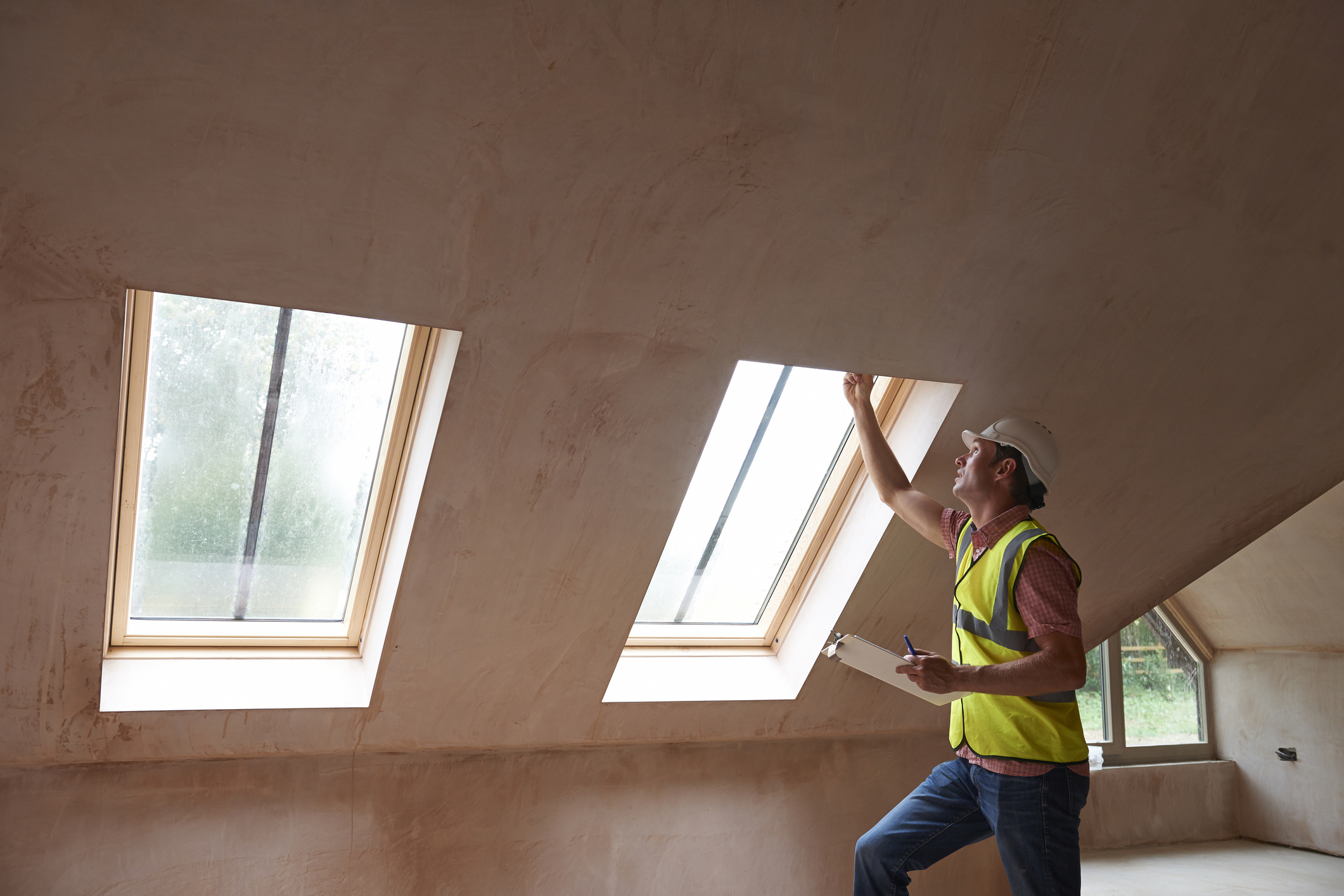
The appraisal supports the lender's valuation and evaluates the property for the applicable loan program. For a conventional duplex, the appraiser may use Form 1025, which includes an analysis of the property's income and comparable rents.
A home inspection is primarily for the buyer and evaluates the property's physical condition in more detail.
Because a duplex has two living units, pay close attention to systems that may serve one or both sides of the property, including:
- Electrical systems
- Plumbing
- Heating and cooling
- Roof and exterior
- Water heaters
- Separate or shared utilities
- Fire and safety features
The home inspection requirements by loan type are separate from the appraisal requirements.
How to Buy a Duplex Step by Step
- Decide whether you will occupy one unit or buy the duplex purely as an investment.
- Set a budget that includes the down payment, closing costs and required reserves.
- Compare FHA, conventional, VA if eligible, and investment-property financing based on your occupancy plan.
- Get preapproved using the correct property and occupancy type.
- Shop for legally recognized duplexes within your price range.
- Review existing rents, leases and property expenses before making an offer.
- Make the purchase offer with the appropriate financing terms.
- Complete the appraisal and property inspection.
- Provide the lender with any requested lease, rental-income or asset documentation.
- Complete underwriting and closing.
- Move into your unit if you used owner-occupied financing and take over the landlord responsibilities for the rental unit.
What Happens if the Duplex Already Has Tenants?
A duplex can be sold with an existing tenant in one or both units.
Before closing, review any leases that will transfer with the property.
Confirm details including the rent amount, lease expiration, security deposit, utility responsibilities and any outstanding




.jpg?quality=80&width=150)
















.jpg?quality=80&width=800)



















































































.jpg?quality=80&width=800)

.jpg?quality=80&width=800)








.jpg?quality=80&width=800)













.jpg?quality=80&width=800)