USDA loans can be a strong option for eligible borrowers who want to buy a home with little or no money down.
The biggest USDA loan advantages are no down payment for eligible borrowers, competitive loan structure, lower guarantee-fee costs compared with some other low-down-payment options and access to financing in eligible areas that may otherwise be harder to buy in.
USDA Loan Advantages
| Advantage |
What It Means |
Who It Helps Most |
| No Down Payment |
Eligible borrowers may be able to finance 100% of the home’s value. |
Buyers with steady income but limited savings for a down payment. |
| Lower Upfront Barrier |
The program can reduce the amount needed to buy compared with loans requiring 3% to 20% down. |
First-time buyers and repeat buyers in eligible areas. |
| Guarantee Fee Structure |
USDA loans use upfront and annual guarantee fees instead of conventional private mortgage insurance. |
Borrowers comparing USDA with FHA or low-down-payment conventional loans. |
| Primary Residence Focus |
The program supports owner-occupied homes in eligible rural and suburban areas. |
Borrowers buying a home to live in, not an investment property. |
| Lender Participation |
USDA guarantees a portion of the loan for approved lenders. |
Eligible borrowers who need a low-down-payment path through a private lender. |
USDA Loans Can Allow No Down Payment
The best-known advantage of a USDA loan is the possibility of 100% financing. USDA materials describe the Single Family Housing Guaranteed Loan Program as offering 100% financed, no-money-down loans to eligible low- and moderate-income people. The program is backed by a 90% loan guarantee to encourage approved lender participation.
That does not mean every borrower or every property qualifies. The no-down-payment feature applies only when the borrower, household income, property and loan meet USDA program rules.
For borrowers who qualify, the advantage is clear: a USDA loan may make homeownership possible sooner than a loan that requires several years of down payment savings.
USDA Loans Can Help Preserve Cash
A no-down-payment loan can help preserve cash for moving costs, repairs, furniture, emergency savings or other post-closing needs. That can be especially useful for buyers who have stable income but limited savings.
For example, a 3% down payment on a $300,000 home is $9,000 before closing costs. A 5% down payment is $15,000. If an eligible borrower uses USDA financing with no down payment, that cash may remain available for other costs, subject to final loan approval and closing requirements.
You can use our USDA loan calculator to get an idea of what your payment might be.
| Purchase Price |
3% Down Example |
5% Down Example |
USDA Down Payment For Eligible Borrowers |
| $250,000 |
$7,500 |
$12,500 |
$0 |
| $300,000 |
$9,000 |
$15,000 |
$0 |
| $350,000 |
$10,500 |
$17,500 |
$0 |
This table is for educational purposes only. It does not include closing costs, prepaid expenses, escrow deposits, seller credits, lender credits or USDA guarantee fees.
USDA Guarantee Fees Can Be Lower Than Some Other Low-Down-Payment Costs
USDA loans do not use conventional private mortgage insurance. Instead, they include guarantee fees. USDA materials list a 1.00% upfront guarantee fee and a 0.35% annual fee for the Single Family Housing Guaranteed Loan Program. The annual fee is based on the unpaid principal balance.
The upfront guarantee fee is often financed into the loan. The annual guarantee fee is paid monthly. Because the annual fee is tied to the loan balance, the dollar amount can decline as the loan amortizes.
This can make USDA financing worth comparing with FHA and conventional low-down-payment options. The comparison should include down payment, monthly payment, guarantee fees, mortgage insurance, closing costs, property eligibility and income limits.
USDA Loans Can Work In More Places Than Some Buyers Expect
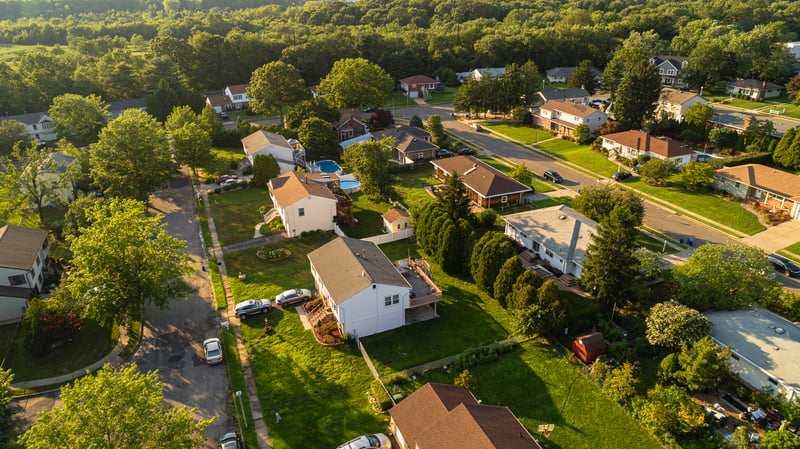
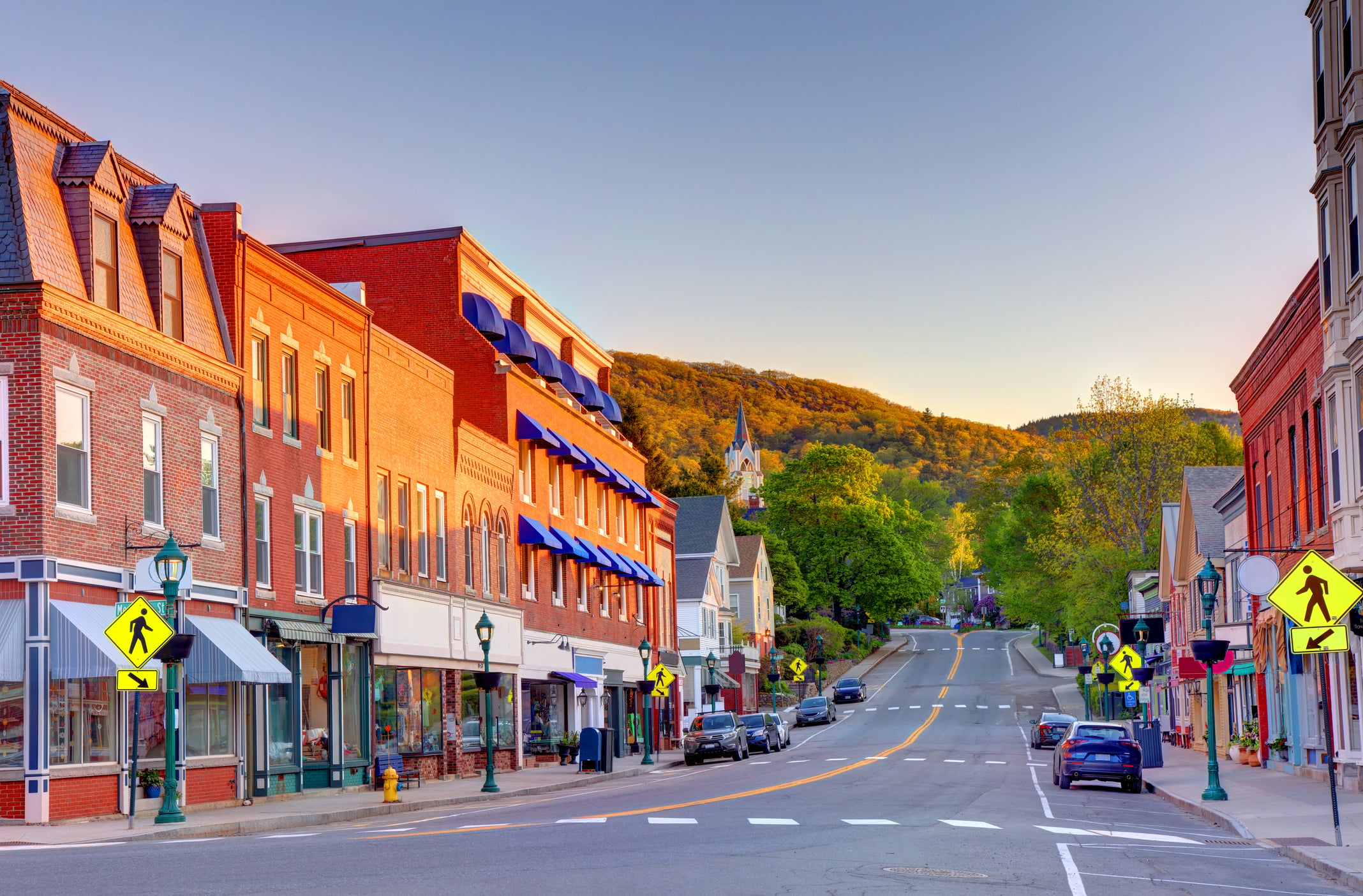
USDA loans are associated with rural housing, but eligible areas can include small towns and some suburban communities. Eligibility depends on the property address, not only how the area looks.
USDA provides an eligibility site that allows users to check whether a property is located in an eligible rural area. The site also provides tools for checking potential applicant and household eligibility.
Because eligibility is address-specific, buyers should check the property before assuming it qualifies or does not qualify.
USDA Loans Are Designed For Primary Residences
USDA guaranteed loans are intended for borrowers buying homes as their primary residence in eligible areas. They are not designed for vacation homes or investment properties.
This owner-occupancy requirement helps focus the program on homeownership rather than investor purchases. It also means the program may fit borrowers buying a home to live in, but not borrowers buying a rental property or second home.
USDA Loans Can Support Moderate-Income Buyers
USDA loans are income-limited. The program is designed for low- and moderate-income households, and eligibility depends on household income, location and household size.
USDA’s Single Family Housing Programs page says eligibility for USDA loans, guarantees and grants is based on income and varies according to the area’s median income.
The income limit is not a drawback for every borrower. For households that fall within the limits, the income-based structure can open access to a no-down-payment loan option that might otherwise be unavailable.
USDA Loans Can Be Competitive With FHA, VA And Conventional Options
A USDA loan is one of several low- or no-down-payment mortgage options. The right comparison depends on eligibility, location, credit, income, down payment, fees and monthly payment.
| Loan Type |
Main Advantage |
Main Eligibility Limit |
| USDA |
No down payment for eligible borrowers and properties. |
Property location and household income limits. |
| VA |
No down payment for many eligible borrowers and no monthly mortgage insurance. |
Military service or qualifying surviving-spouse eligibility. |
| FHA |
Flexible credit and lower down payment than many conventional loans. |
FHA mortgage insurance and FHA property rules. |
| Conventional |
Broad property eligibility and potential PMI cancellation over time. |
May require stronger credit or down payment depending on the file. |
USDA can be attractive when the home is eligible, the borrower meets income rules and the no-down-payment structure produces a stronger overall fit than FHA or conventional financing.
USDA Loans May Allow Seller Contributions And Gift Funds
USDA materials list seller or interested-party contributions as allowable up to 6% of the sales price and state that there is no limit on gift funds.
That can help eligible borrowers manage cash to close. Seller contributions may help cover certain closing costs, while gift funds may help cover costs that are not financed. The lender still needs to document the source and treatment of funds under program rules.
USDA Loans Still Have Trade-Offs
The advantages of USDA loans are meaningful, but the program is not available to every borrower or property. The main trade-offs are eligibility limits, guarantee fees and property requirements.
| Trade-Off |
Why It Matters |
| Property Eligibility |
The home must be in a USDA-eligible area. |
| Income Limits |
Household income must fit program limits for the area and household size. |
| Guarantee Fees |
The upfront and annual guarantee fees add cost, even without a down payment. |
| Primary Residence Requirement |
USDA financing is generally for owner-occupied homes, not second homes or investment properties. |
| Property Standards |
The home must meet program and lender requirements. |
Who Benefits Most From a USDA Loan?
USDA loans tend to work best for borrowers who meet the program rules and want to buy a primary residence in an eligible area with little or no down payment.
Common borrower profiles include:
- Buyers with steady income but limited down payment savings
- First-time buyers purchasing in eligible rural or suburban areas
- Repeat buyers who meet USDA income and property rules
- Borrowers comparing USDA with FHA or conventional low-down-payment options
- Households that want to preserve cash after closing
USDA may be less useful if the property is outside an eligible area, household income exceeds the limit or the buyer wants a second home or investment property.
The Bottom Line
The main advantage of a USDA loan is that eligible borrowers can buy an eligible home with no down payment. USDA loans can also offer a useful fee structure, primary-residence financing in eligible areas and access to homeownership for low- and moderate-income households.
The benefits are conditional. The property must be in a USDA-eligible area, household income must meet program limits and the loan must satisfy USDA and lender requirements. Before choosing a USDA loan, compare the payment, guarantee fees, closing costs, eligibility rules and alternatives such as FHA, VA or conventional financing.
Frequently Asked Questions
What Are the Main Advantages Of USDA Loans?
The main advantages of USDA loans are no down payment for eligible borrowers, access to financing in eligible rural and suburban areas, and a guarantee-fee structure that can be competitive with some other low-down-payment loan options.
Do USDA Loans Require a Down Payment?
USDA loans can allow no down payment for eligible borrowers buying eligible properties. The borrower, property and household income must meet USDA program rules.
Are USDA Loans Only For Farms?
No. USDA loans are not only for farms. Eligible areas can include rural communities, small towns and some suburban areas. Eligibility depends on the property address.
Who Is Eligible For a USDA Loan?
Eligibility depends on household income, property location, occupancy, credit, repayment ability and lender requirements. USDA loans are generally for low- and moderate-income borrowers buying primary residences in eligible areas.
What Fees Do USDA Loans Have?
USDA loans have an upfront guarantee fee and an annual guarantee fee. USDA materials list the upfront guarantee fee as 1.00% and the annual fee as 0.35% of the unpaid principal balance.
Is the USDA Annual Fee the Same As Mortgage Insurance?
No. USDA uses an annual guarantee fee, not conventional private mortgage insurance. The fee is paid monthly and helps support the USDA guarantee program.
Can USDA Closing Costs Be Paid By the Seller?
Seller or interested-party contributions may be allowed up to 6% of the sales price under USDA materials. The lender must confirm the contribution fits USDA and transaction requirements.
Are USDA Loans Good For First-Time Buyers?
USDA loans can be useful for first-time buyers who meet income limits and are buying eligible primary residences in USDA-eligible areas. They are not limited to first-time buyers.
What Is the Biggest Drawback Of a USDA Loan?
The biggest drawback is limited eligibility. The home must be in an eligible area, household income must fit USDA limits and the loan must meet program and lender requirements.
How Do I Check If a Home Is USDA-Eligible?
USDA provides an eligibility site where users can check property eligibility and potential applicant eligibility.




%20(1).jpg?quality=80&width=150)