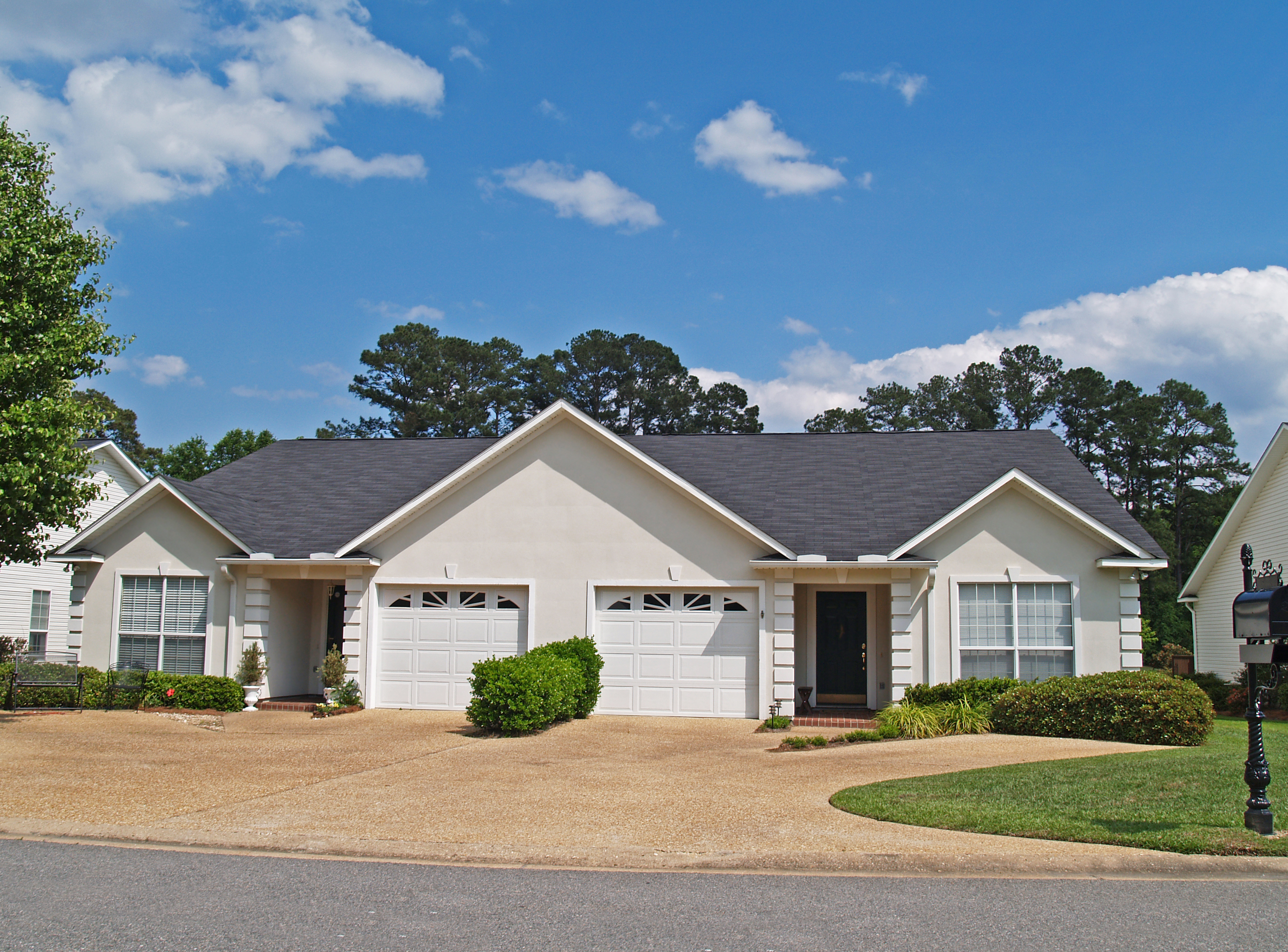
Use this USDA loan calculator to estimate a Section 502 Guaranteed loan payment using the home price, interest rate, property taxes, homeowners insurance and USDA program fees.
Your USDA calculator result should answer more than what principal and interest could cost. USDA Guaranteed loans have a program-specific upfront guarantee fee and annual fee, and both can affect the amount you borrow or pay each month.
The calculator assumes a USDA Section 502 Guaranteed loan. This is the USDA mortgage program offered through approved private lenders. USDA Direct loans are a separate program with different income, loan-term and assistance rules.
You can also compare USDA with other mortgage calculators if you are considering more than one loan type.
USDA Loan Calculator Basics
| Input or Result |
What It Means |
| Home Price |
The purchase price used for your USDA loan scenario |
| Down Payment |
USDA Guaranteed loans can provide 100% financing when program requirements are met |
| Base Loan Amount |
The mortgage amount before a financed upfront guarantee fee is added |
| Upfront Guarantee Fee |
A one-time USDA program fee equal to 1% for fiscal year 2027 |
| Financed Loan Amount |
The mortgage balance after adding the upfront guarantee fee when you finance it |
| Annual Fee |
An ongoing USDA fee set at 0.35% for fiscal year 2027 and calculated using the applicable average scheduled unpaid principal balance |
| Principal and Interest |
The scheduled mortgage payment based on the financed balance and interest rate |
| Taxes and Insurance |
Estimated property taxes and homeowners insurance included in your housing-payment estimate |
The calculator models the USDA Guaranteed Loan Program. Eligibility still depends on USDA loan requirements, including household income, property location, primary-residence use and underwriting.
How to Read Your USDA Loan Calculator Result
Start with the full estimated monthly payment rather than principal and interest alone. A USDA housing payment can also include the monthly amount collected for the annual guarantee fee, property taxes and homeowners insurance.
Then look separately at the upfront guarantee fee. Financing the fee increases the mortgage balance, which increases principal and interest. Paying it without financing keeps the starting mortgage balance lower but increases the amount you need upfront.
Finally, check whether the household and property meet USDA eligibility rules. An affordable calculator result does not establish that the mortgage is eligible for a USDA guarantee.
USDA Upfront Guarantee Fee vs. Annual Fee
USDA Guaranteed loans have two distinct program fees.
For fiscal year 2027, which began Oct. 1, 2026, USDA Rural Development set the upfront guarantee fee at 1% and the annual fee at 0.35% for purchase and refinance transactions. USDA published the current rates in its FY2027 Conditional Commitment Notice.
The USDA guarantee fee works differently from conventional private mortgage insurance.
Upfront Guarantee Fee
The upfront guarantee fee is a one-time charge. For fiscal year 2027, it equals 1% of the applicable base loan amount.
For example, a $300,000 base USDA mortgage produces a $3,000 upfront guarantee fee:
$300,000 × 1% = $3,000
The fee can generally be financed. In this simplified example, financing the entire fee increases the mortgage from $300,000 to $303,000.
USDA permits the guarantee fee to be financed in addition to the program's 100% financing when the applicable requirements are met.
Annual Guarantee Fee
The annual fee is ongoing. USDA set the rate at 0.35% for fiscal year 2027.
The actual annual charge is based on the average scheduled unpaid principal balance for the applicable year. That means the dollar amount can gradually decline as the scheduled mortgage balance falls.
A quick calculation using the starting balance can provide an estimate, but the actual USDA methodology is more precise than multiplying the opening balance by 0.35% every year.
USDA Loan Payment Example at Current Rates
Suppose you're evaluating a $300,000 home using a USDA Guaranteed loan with no down payment and you finance the 1% upfront guarantee fee.
This example uses a 7.03% 30-year fixed rate, based on Freddie Mac's national mortgage-rate benchmark for the week ending Sept. 24, 2026. USDA rates are set by individual lenders, so 7.03% is an illustration rather than a USDA rate quote.
| Item |
Example Amount |
| Home Price |
$300,000 |
| Down Payment |
$0 |
| Base Loan |
$300,000 |
| 1% Upfront Guarantee Fee |
$3,000 |
| Financed Mortgage Balance |
$303,000 |
| Example Interest Rate |
7.03% |
| Estimated Principal and Interest |
About $2,022/mo |
| Estimated USDA Annual Fee |
About $88/mo initially |
| Illustrative Property Taxes |
$275/mo |
| Illustrative Homeowners Insurance |
About $88/mo |
| Estimated Total Housing Payment |
About $2,473/mo |
The tax example assumes property taxes equal to 1.1% of the home price per year, while the insurance example assumes 0.35% per year. Actual costs depend on the property and location.
The annual-fee amount is also an estimate. USDA calculates the actual fee from the average scheduled unpaid principal balance rather than simply using the opening balance.
Can You Really Get a USDA Loan With $0 Down?
Yes. The USDA Single Family Housing Guaranteed Loan Program can provide 100% financing for an eligible household purchasing an eligible property.
The program is not restricted to first-time homebuyers.
A $0 down payment does not necessarily mean you will bring no money to closing. Closing costs, prepaid interest, homeowners insurance, initial escrow funding and other transaction expenses can still apply.
The rules around USDA down payments are therefore separate from the amount of cash ultimately needed at closing.
How Much USDA Loan Can You Qualify For?
The calculator can estimate a payment, but it cannot tell you your final USDA loan amount.
USDA underwriting looks at repayment income and debt-to-income ratios. USDA's standard benchmarks are generally 29% for the proposed housing payment and 41% for total monthly debts, although the Guaranteed Underwriting System can accept some files above those benchmarks and other rules apply to manually underwritten files.
The USDA DTI requirements explain those ratios in more detail.
Program eligibility also uses a separate household-income test. That means a household can have enough repayment income to support the mortgage but still earn too much to qualify for USDA financing.
If the main question is what home price a zero-down payment can support, compare how much house you can afford with no down payment.
USDA Income Limits in 2026
USDA Guaranteed loans are income-limited. Eligibility is based on USDA's adjusted-income limit for the area where the property is located and the size of the household.
USDA updated its Single Family Housing Guaranteed Loan Program income limits in July 2026. The agency's current eligibility system reflects those limits.
| Household Size |
How the USDA Limit Works |
| 1-4 People |
USDA uses the applicable one- to four-person adjusted-income limit for the area |
| 5-8 People |
A higher five- to eight-person limit applies for the same area |
| More Than 8 People |
USDA applies an additional household-size adjustment under its published methodology |
The dollar limits vary by location, so there is no single nationwide household-income figure that determines USDA eligibility.
Household Income Is Different From Borrower Income
USDA's income test is broader than simply adding the income of the people signing the mortgage.
For program eligibility, USDA considers annual income from household members under its income rules and then applies eligible deductions to determine adjusted annual income.
Repayment income is a separate underwriting concept. It is the stable and dependable income used to determine whether the applicants signing the note can support the mortgage.
Use USDA's official eligibility system for the current income limit for a specific location and household.
Does the Home Qualify for USDA Financing?
Income eligibility is only half of the initial USDA screening. The home must also be located in an area USDA designates as eligible for the Guaranteed Loan Program.
The word “rural” can be misleading if you picture only remote properties. Eligibility is determined using USDA's program boundaries rather than a general assumption about whether a community looks rural.
USDA also requires the borrower to occupy the home as a primary residence.
Check a specific address using USDA's property eligibility tool. Geographic eligibility can change, so use the current map when evaluating a home.
USDA Loan Closing Costs and Seller Contributions
Zero down does not mean zero closing costs.
USDA permits reasonable and customary closing costs and other eligible purchase expenses to be included in the transaction under program rules. Whether costs can be financed depends in part on the loan amount and property value.
Seller contributions can also reduce the amount you need to cover yourself. USDA currently limits seller and other interested-party contributions to 6% of the sales price, and the funds must be used for an eligible loan purpose.
On a $300,000 purchase, 6% equals $18,000. That is a program limit rather than an amount a seller is required to contribute.
USDA specifically allows seller contributions to pay all or part of the upfront guarantee fee. They can also be used for eligible closing costs and prepaid expenses. USDA does not allow the buyer to receive unused seller-contribution funds as cash.
Seller Credits and Rate Buydowns
In the current rate environment, a seller credit may also be compared with the cost of discount points.
USDA guidance permits eligible discount points or buydown costs that permanently reduce the effective interest rate to be financed when program requirements are met.
That does not mean a particular number of points will reduce the rate by a fixed amount. Mortgage pricing changes with the market and lender.
When comparing options, look at how much of the seller contribution is being used for closing costs, the USDA upfront fee or rate-related costs and how each choice changes your cash needed and monthly payment.
USDA vs. FHA Loan Payments
USDA and FHA loans can both serve buyers who are not making a large conventional down payment, but the payment structures work differently.
USDA Guaranteed financing can provide 100% financing when the household and property qualify. USDA uses an upfront guarantee fee and annual fee.
FHA loans use upfront and annual mortgage insurance premiums and generally require a down payment. FHA does not use USDA's household-income or rural-property eligibility tests.
Those differences mean two loans for the same home can start with different mortgage balances and monthly insurance or guarantee-fee costs.
The USDA vs. FHA calculator compares those payment structures side by side.
If conventional financing is also an option, the main differences between USDA and conventional loans include the down payment, property and income restrictions, PMI and USDA guarantee fees.
What Else Affects USDA Loan Eligibility?
A household can fall within the USDA income limit and choose an eligible property without automatically qualifying for the mortgage.
Lenders also evaluate your ability to repay the loan, including qualifying income, recurring debts and credit history.
USDA does not establish one universal minimum credit score for every Guaranteed loan, although lenders or investors can apply their own credit requirements.
You can review USDA credit requirements separately from the household-income test because the two answer different eligibility questions.
How the USDA Annual Fee Changes Over Time
The 0.35% annual fee is not necessarily the same dollar amount every year.
USDA calculates the fee using the average scheduled unpaid principal balance for the year. As a normally amortizing mortgage is paid down, that balance generally declines, which gradually reduces the dollar amount of the annual fee.
The annual fee does not use the same equity-based cancellation rules as private mortgage insurance on many conventional loans. It generally continues while the USDA Guaranteed loan remains outstanding.
What a USDA Loan Calculator Cannot Determine
A USDA calculator can estimate the mortgage payment and program fees. It cannot determine final program eligibility or loan approval.
The calculator does not know whether:
- Your adjusted household income falls within the USDA limit for the property location.
- The property's address is USDA-eligible.
- Your income and debts meet underwriting requirements.
- Your credit profile meets applicable lender requirements.
- The property will support the required appraised value.
Property taxes and homeowners insurance are also estimates until you have property-specific figures. Closing costs and prepaid expenses can affect the money needed at closing even when the mortgage itself requires no down payment.
Bottom Line
A USDA loan calculator should make the program's major payment pieces easy to see: principal and interest, property taxes, homeowners insurance, the upfront guarantee fee and the annual fee.
For fiscal year 2027, USDA Guaranteed loans continue to use a 1% upfront guarantee fee and a 0.35% annual fee. Eligible borrowers can also receive 100% financing, which makes a zero-down scenario useful to model.
Eligibility remains a separate question. Check household income and the property address through USDA before relying on the payment estimate for a particular home.
Frequently Asked Questions
Are USDA Loans Really $0 Down?
Yes. USDA Guaranteed loans can provide 100% financing when the household, borrower and property meet program requirements. Closing costs, prepaid expenses and other transaction costs can still require cash unless they are covered through financing or another permitted source.
What Is the Current USDA Upfront Guarantee Fee?
The USDA upfront guarantee fee is 1% for fiscal year 2027 purchase and refinance transactions under the Single Family Housing Guaranteed Loan Program. The fee can generally be financed into the mortgage.
What Is the Current USDA Annual Fee?
The annual fee is 0.35% for fiscal year 2027. USDA calculates the charge using the applicable average scheduled unpaid principal balance, and lenders generally collect it through the monthly mortgage payment.
Does a USDA Loan Calculator Include Taxes and Insurance?
This calculator includes estimated property taxes and homeowners insurance in the total payment. Use property-specific figures when available because actual taxes and insurance can differ substantially from an estimate.
How Much House Can I Afford With a USDA Loan?
Affordability depends on your repayment income, existing debts, mortgage rate, taxes, insurance and USDA annual fee. You must also remain within the USDA household-income limit and buy an eligible property, so the payment you can afford is not necessarily the same as the USDA loan amount you can qualify for.
Can USDA Loan Closing Costs Be Rolled Into the Loan?
Eligible closing costs can potentially be financed when the transaction and property value support the resulting loan amount. The USDA upfront guarantee fee can also generally be financed. Final treatment depends on the specific costs and loan structure.
Can a Seller Pay USDA Closing Costs?
Yes. USDA generally allows seller and other interested-party contributions up to 6% of the sales price for eligible loan purposes. Seller contributions can also pay all or part of the USDA upfront guarantee fee.
Can the USDA Guarantee Fee Be Financed?
Yes. The 1% upfront guarantee fee can generally be added to the USDA Guaranteed mortgage. Financing it reduces the amount needed for that fee at closing but increases the balance used to calculate principal and interest.
Does the USDA Annual Fee Go Away at 20% Equity?
No. USDA's annual guarantee fee does not use the 80% loan-to-value cancellation structure associated with conventional PMI. The USDA annual fee generally continues while the Guaranteed loan remains outstanding.
What Are the USDA Income Limits for 2026?
The limit depends on the property's location and household size. USDA updated its Guaranteed Loan income limits in July 2026, and the current eligibility system should be used to check the applicable adjusted-income limit for a specific household and location.
Whose Income Counts Toward the USDA Income Limit?
USDA household-income rules can include income from household members beyond the people signing the mortgage. USDA then applies eligible deductions when determining adjusted annual income for program eligibility. Repayment income used for underwriting is calculated separately.
How Do I Know if a Home Is in a USDA-Eligible Area?
Use USDA's official eligibility system to check the address. Property eligibility is determined by USDA's program boundaries rather than simply whether a home is commonly described as rural or suburban.
Is This Calculator for USDA Direct Loans?
No. This calculator models the USDA Section 502 Guaranteed Loan Program. USDA Direct loans are made directly by USDA Rural Development and use different income, interest-rate and loan-term rules.
Is a USDA Loan Cheaper Than an FHA Loan?
Either structure can produce the lower payment depending on the home price, mortgage rate, FHA down payment and applicable program fees. USDA also has household-income and property-location requirements that FHA does not use.




.jpg?quality=80&width=150)
















.jpg?quality=80&width=800)





















































































.jpg?quality=80&width=800)

.jpg?quality=80&width=800)










.jpg?quality=80&width=800)













.jpg?quality=80&width=800)