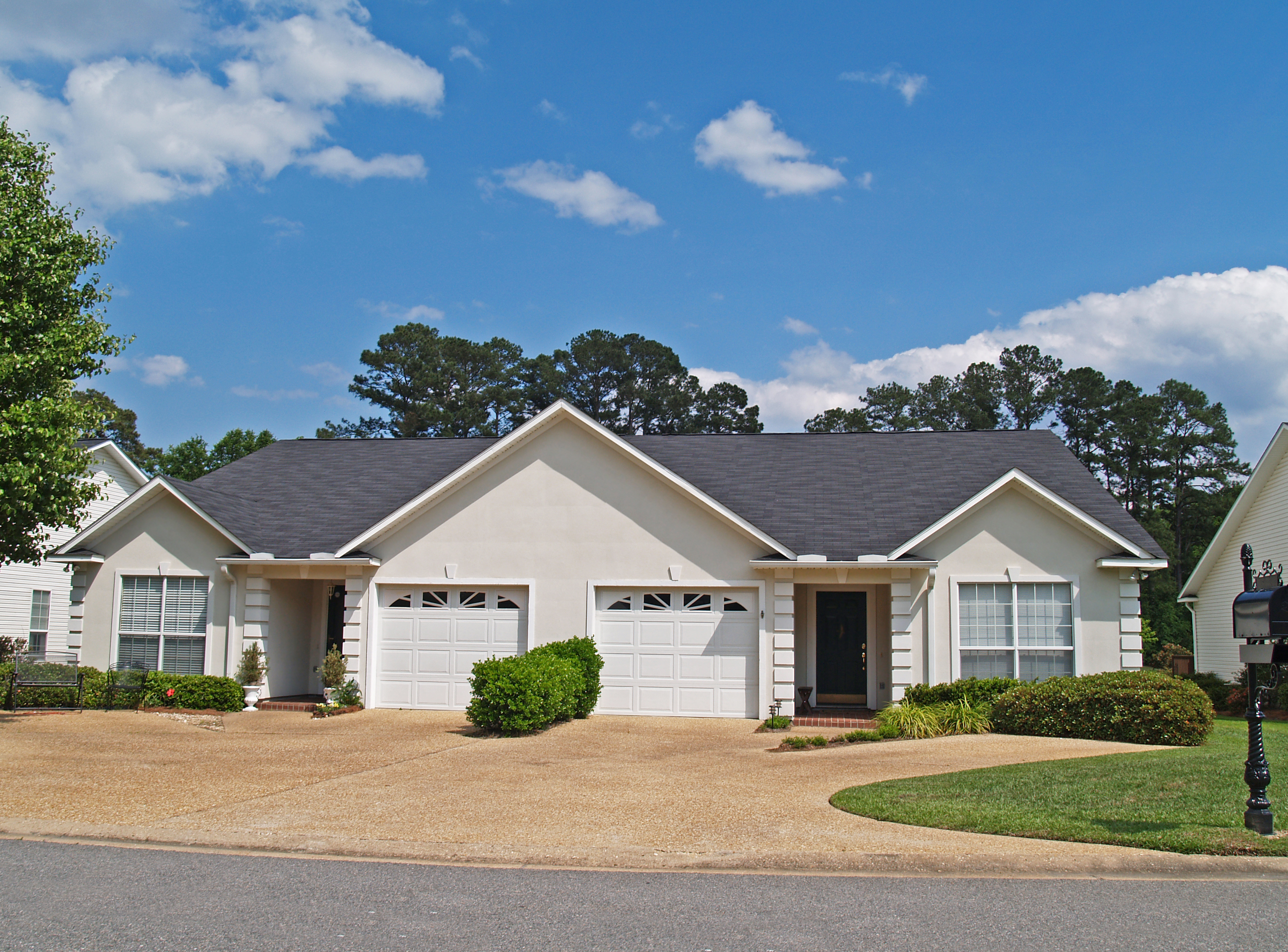
A fourplex is the largest property you can buy within the standard one- to four-unit residential mortgage framework. If you live in one unit, you can potentially use owner-occupied financing while renting the other three.
Eligible conventional loans for 2- to 4-unit properties can require as little as 5% down with owner occupancy. FHA can allow 3.5% down for qualifying borrowers. If you plan to rent all four units, conventional investment-property financing generally requires at least 25% down.
Fourplex Financing Basics
| Loan Option |
Potential Down Payment |
Must You Live There? |
Can Rental Income Be Used? |
| FHA |
As little as 3.5% for eligible borrowers |
Yes |
Potentially, but the property must also pass FHA's self-sufficiency test |
| Conventional owner-occupied |
As little as 5% with eligible automated underwriting |
Yes |
Potentially |
| VA |
Potentially 0% for eligible borrowers with sufficient entitlement |
Yes |
Potentially, subject to VA requirements |
| Conventional investment property |
At least 25% |
No |
Potentially |
| DSCR or other non-QM financing |
Program-specific |
Generally used for investment properties |
Qualification may focus more heavily on property cash flow |
The biggest financing decision is whether you will actually occupy one of the four units.
If you are comparing FHA and conventional options, our FHA vs. conventional comparison for multi-unit properties breaks down the differences in down payment, mortgage insurance and qualification.
Eligible veterans and service members may also be able to use VA financing for a four-unit property when they occupy one unit. VA rules also impose specific reserve and landlord-experience requirements when prospective rental income is needed to qualify.
What Is a Fourplex?
A fourplex is a residential property with four separate dwelling units under one ownership structure. The units may be arranged side by side, stacked, or in another configuration, but the property is treated as a four-unit residence rather than four separately owned homes.
For conventional mortgage purposes, a fourplex still falls within the one- to four-unit residential property category. Fannie Mae defines a two- to four-unit property as a structure that provides living space for two to four families under a single deed.
That distinction matters for financing. A fourplex can still qualify for residential mortgage programs, including conventional, FHA and VA financing when their occupancy and underwriting requirements are met. Properties with five or more units generally fall outside standard one- to four-unit residential mortgage guidelines.
A fourplex is also different from a one-unit home with an accessory dwelling unit. The lender and appraiser look at factors such as the property's legal use, unit configuration, separate addresses or utilities and whether the units can legally be rented when determining the property's unit count.
Duplex vs. Triplex vs. Fourplex
A fourplex gives an owner-occupant three potential rental units, the most of any property that still falls within standard one- to four-unit residential financing.
| Property |
Potential Rental Units if You Occupy One |
Owner-Occupied Conventional Down Payment |
FHA Self-Sufficiency Test |
2026 Baseline Conventional Loan Limit |
| Duplex |
1 |
As little as 5% |
No |
$1,066,250 |
| Triplex |
2 |
As little as 5% |
Yes |
$1,288,800 |
| Fourplex |
3 |
As little as 5% |
Yes |
$1,601,750 |
The extra rental unit can increase the income available to support the property, but a fourplex also brings more tenant turnover, maintenance and operating costs than a duplex or triplex.
You can compare those tradeoffs with buying a duplex and buying a triplex.
Living in One Unit Changes the Financing
If you genuinely intend to make one unit your principal residence, a fourplex can qualify for owner-occupied mortgage terms.
This is one form of house hacking: you occupy one unit while collecting rent from the others.
An eligible conventional fourplex can reach 95% LTV through automated underwriting, or 5% down.
FHA can finance up to 96.5% of the adjusted value for qualifying borrowers, or 3.5% down.
If you do not occupy any unit, conventional financing generally treats the purchase as an investment property and caps LTV at 75%.
How Much Down Payment Do You Need for a Fourplex?
Consider a $750,000 fourplex.
| Financing |
Example Down Payment |
Cash Down |
| FHA owner-occupied |
3.5% |
$26,250 |
| Conventional owner-occupied |
5% |
$37,500 |
| Conventional investment property |
25% |
$187,500 |
The difference between owner-occupied and investment financing can be substantial. In this example, the 5%-down conventional owner-occupied option requires $150,000 less for the minimum down payment than a 25%-down investment-property loan.
Closing costs, prepaids and required reserves are additional.
Can You Count Rent From the Other Three Units?
Potentially. With three rental units, qualifying rent can make a significant difference in the underwriting calculation.
For an eligible Fannie Mae purchase, the lender generally starts with documented gross rent and uses 75% of that amount to account for vacancy and operating expenses.
Fannie Mae's rental-income policy allows qualifying income from 2- to 4-unit principal residences when the applicable documentation and eligibility requirements are met.
Example: Rent From Three Units
Assume the three units you plan to rent have documented monthly rents of $2,000, $1,950 and $1,900.
| Calculation |
Amount |
| Total gross rent |
$5,850 |
| 75% of documented rent |
$4,387.50 |
| Monthly PITIA |
$5,600 |
| Housing expense remaining after rental income |
$1,212.50 |
The lender does not simply add the full $5,850 to your salary.
How the income is ultimately treated depends on the loan program, documentation and your rental-property management history.
Fannie Mae's current rules generally limit how positive net rental income can be used when a borrower has less than 12 months of property-management experience.
The broader rules for using rental income to qualify determine how the rents affect your final debt-to-income calculation.
The FHA Self-Sufficiency Test Can Decide the Deal
A fourplex financed with FHA must pass an additional property-level test before the loan can qualify.
HUD applies its self-sufficiency test to three- and four-unit properties.
The calculation uses the appraiser's estimated market rent from all four units, including the one you plan to occupy.
HUD then subtracts the greater of the appraiser's estimated vacancy and maintenance costs or 25% of total fair market rent.
If the 25% factor applies, 75% of the property's total appraiser-supported market rent must be enough to cover the property's monthly principal, interest, taxes and insurance.
Example: A Fourplex That Fails the FHA Test
Assume the appraiser assigns these monthly market rents:
| Unit |
Market Rent |
| Unit 1 |
$2,050 |
| Unit 2 |
$2,000 |
| Unit 3 |
$1,950 |
| Unit 4 |
$1,900 |
| Total |
$7,900 |
Using a 25% vacancy-and-maintenance factor:
$7,900 × 75% = $5,925
If the property's monthly PITI is $6,100, the available net self-sufficiency rental income is $175 short of the payment.
The property would fail the FHA self-sufficiency test under those assumptions, even if your personal income is high enough to make the payment.
Example: A Fourplex That Passes
Now assume another fourplex has total appraiser-supported market rent of $8,400.
$8,400 × 75% = $6,300
If monthly PITI is $6,100, the property clears the test by $200, assuming the appraiser does not use a larger vacancy-and-maintenance deduction.
Passing the self-sufficiency test does not automatically approve the mortgage. You still have to meet the borrower qualification requirements.
FHA Loan Limits Can Matter More on a Fourplex
Four-unit properties have higher loan limits than one-unit homes, but the applicable FHA and conventional limits are different.
The 2026 baseline conforming loan limit for a four-unit property is $1,601,750 in most of the country.
For FHA, the 2026 four-unit loan-limit floor in low-cost areas is $1,041,125, with higher county limits in more expensive markets.
That difference can matter on higher-priced fourplexes. A property may fit within conventional conforming limits while exceeding the FHA limit for its county.
Reserves Matter on a Fourplex
A fourplex purchase usually requires you to have money left after closing, not just enough for the down payment.
For Fannie Mae loans underwritten through Desktop Underwriter, a 2- to 4-unit principal-residence transaction requires six months of reserves.
Fannie Mae's reserve requirements also call for six months on an investment-property transaction.
FHA reserve rules differ. Under current HUD manual-underwriting rules, three- and four-unit properties require reserves equal to three months of PITI after closing.
Other requirements can apply based on the loan and underwriting method.
If you already own financed properties, additional investment-property reserve requirements may also affect the amount of cash you need.
If You Will Not Live in the Fourplex
You can buy a fourplex strictly as an investment property, but you will not receive owner-occupied financing terms.
Conventional 3- and 4-unit investment-property purchases are generally limited to 75% LTV.
That means a minimum 25% down payment.
The investment-property down payment requirements are therefore much higher than those for an eligible owner-occupied fourplex.
Investment financing can also have different reserve requirements, pricing and rules for sources of funds.
Occupancy Rules Still Apply
Owner-occupied financing requires a genuine intent to make the fourplex your primary residence.
For FHA, at least one borrower generally must move into the property within 60 days after signing the security instrument and intend to occupy it for at least one year.
Conventional principal-residence financing similarly requires the property to be the borrower's primary residence.
The exact occupancy requirements vary by mortgage program.
Can You Buy Another Multi-Unit Property Later?
Buying a fourplex does not permanently prevent you from buying another property later, but your financing options may change.
FHA generally will not insure more than one principal residence for the same borrower at the same time, with limited exceptions.
Current HUD exceptions can include certain employment-related relocations, increases in family size, vacating a jointly owned property and qualifying as a non-occupying co-borrower.
Simply completing one year of occupancy does not automatically create an exception allowing you to obtain another FHA-insured principal-residence mortgage.
The rules for having two FHA loans at once depend on whether you meet one of HUD's permitted exceptions.
If you later move out and retain the fourplex as a rental, a future purchase could instead use conventional or another eligible financing program depending on your circumstances.
How Rental Income Can Affect Affordability
Three rental units can offset a substantial portion of a fourplex's housing cost.
But do not use the listing's advertised gross rent as though every dollar will count in underwriting.
The lender may rely on an appraisal, leases and program-specific rental-income calculations.
It also matters whether your rental income merely offsets the housing payment or can be counted as additional qualifying income.
For a first-pass budget, compare the full monthly housing payment with a conservative estimate of rent after vacancy and expenses.
Finding a Fourplex
Fourplexes are less common than single-family homes and duplexes, so inventory can be limited.
Before making an offer, confirm that the property is legally recognized as four residential units.
Review:
- Current leases
- Rent collected from each unit
- Lease expiration dates
- Vacancies
- Utility responsibilities
- Property taxes and insurance
- Local zoning
- Rental registrations or licenses
- Condition of shared systems and common areas
A property with four kitchens or four separate living areas is not automatically a legal fourplex.
Evaluate the Property's Actual Expenses
Mortgage qualification and property cash flow are separate questions.
A lender may determine that you can qualify for the loan, but the property can still cost more to operate than expected.
Example Fourplex Budget
Assume you occupy one unit and collect $2,000, $1,950 and $1,900 from the other three.
| Monthly Item |
Example Amount |
| Rent collected |
$5,850 |
| Total housing payment |
$5,600 |
| Owner-paid common utilities |
$300 |
| Maintenance reserve |
$400 |
| Estimated amount remaining to owner |
$450 |
This is a simple household-budget example, not an investment-return calculation.
Actual costs may also include vacancies, larger repairs, capital improvements, property management, lawn care, snow removal, licensing and other expenses.
Fourplex Appraisal and Inspection
A fourplex generally requires a full appraisal that recognizes the property as four residential units.
Fannie Mae uses the Small Residential Income Property Appraisal Report, Form 1025, for 2- to 4-unit properties. That appraisal includes rental analysis as well as valuation information.
A home inspection is separate and provides a more detailed assessment of physical condition.
With four units, pay particular attention to:
- Roof age and condition
- Heating and cooling systems
- Electrical service
- Plumbing
- Water heaters
- Separate or shared utilities
- Common areas
- Fire and safety features
Shared systems can create larger repair bills because one failure may affect multiple units.
How to Buy a Fourplex Step by Step
- Decide whether you will live in one unit or rent all four.
- Set a cash budget that includes down payment, closing costs and reserves.
- Compare conventional, FHA and VA financing when applicable.
- If considering FHA, estimate whether the property's market rents are likely to pass the self-sufficiency test.
- Check the applicable FHA or conventional loan limit for your county.
- Get preapproved using the correct occupancy and property type.
- Search for legally recognized four-unit properties.
- Review leases, rent history and operating expenses before making an offer.
- Complete the appraisal and home inspection.
- Provide leases, rental documentation and asset statements requested in underwriting.
- Complete underwriting and closing.
- Move into your unit if you used owner-occupied financing and take over management of the other units.
Taking Over Existing Tenants
A fourplex is more likely than a smaller property to have multiple existing tenants at closing.
Review every lease individually and confirm each tenant's rent, security deposit, lease expiration and utility obligations.
Landlord-tenant rules vary by state and municipality. Local law can control security-deposit transfers, notices, rental registrations and your obligations under existing leases.
Review the rules in the property's location or consult an attorney for legal questions.
If Conventional Financing Does Not Work
Owner-occupants may be able to compare FHA or VA financing, subject to their requirements.
For a non-owner-occupied fourplex, non-QM investment-property loans can provide alternatives when conventional financing does not fit.
DSCR loans can qualify eligible investment properties based more heavily on property cash flow rather than traditional employment income. Credit, down payment, reserves and minimum DSCR requirements vary by program.
Bottom Line
A fourplex gives you three potential rental units while remaining within standard one- to four-unit residential mortgage guidelines.
If you occupy one unit, qualifying conventional financing can require as little as 5% down and FHA can allow as little as 3.5% down. If you rent all four units, conventional financing generally requires at least 25% down.
For FHA financing, the self-sufficiency test is a key hurdle. The appraiser-supported rents from all four units must produce enough net rental income to cover the property's PITI under HUD's calculation.
FAQ
How Much Down Payment Do You Need to Buy a Fourplex?
If you occupy one unit, eligible conventional financing can require as little as 5% down, while FHA can require as little as 3.5% for qualifying borrowers. If you buy the fourplex entirely as an investment property, conventional financing generally requires at least 25% down.
Can You Buy a Fourplex With an FHA Loan?
Yes. FHA can finance a qualifying fourplex when you occupy one unit as your principal residence. The property must also pass FHA's self-sufficiency test, which compares net appraiser-supported market rent from all four units with the property's monthly PITI.
Can You Use Rental Income to Qualify for a Fourplex?
Potentially. Rent from the other three units can be considered when the applicable documentation and underwriting requirements are met. Fannie Mae generally uses 75% of documented gross rent in its rental-income calculation for an eligible subject-property purchase.
Do You Have to Live in a Fourplex to Get Owner-Occupied Financing?
Yes. Owner-occupied financing requires the fourplex to genuinely be your principal residence. If you plan to rent all four units from the beginning, the mortgage should be structured as investment-property financing rather than as a principal-residence loan.
Is Buying a Fourplex a Good Investment?
That depends on the purchase price, rent, financing, vacancies, maintenance, taxes, insurance and other operating costs. Mortgage approval does not establish that a fourplex will be profitable. Review the property's actual income and expenses separately before deciding whether it fits your goals.




.jpg?quality=80&width=150)
















.jpg?quality=80&width=800)





















































































.jpg?quality=80&width=800)

.jpg?quality=80&width=800)











.jpg?quality=80&width=800)













.jpg?quality=80&width=800)