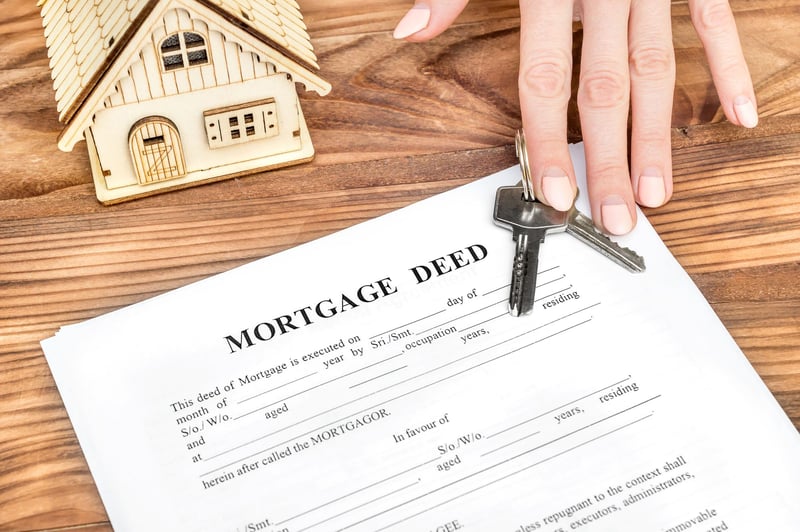
What is a deed, and what is title? A deed is the legal document that transfers ownership of real estate. Title is the legal right to own the property.
Say you buy a $350,000 house. The seller signs a deed transferring the property to you, and you hold title even if a mortgage or deed of trust gives your lender a separate security interest.
Deed vs. title matters for ownership disputes, mortgages, recorded liens and title insurance.
Deed vs. Title Basics
| Feature |
Deed |
Title |
| Definition |
A legal instrument used to convey a real estate interest |
The legal rights or interests of ownership |
| Physical Document |
Yes, often recorded in public land records |
Not usually a single physical document |
| Main Purpose |
Documents a transfer of ownership rights |
Describes who legally holds the rights to the property |
| Important Parties |
Grantor and grantee |
Current owners and parties with legally recognized interests |
| Mortgage Impact |
Transfers title despite financing |
Ownership can be subject to a lender's lien |
| Potential Problems |
Invalid execution, incorrect description, forged signature |
Competing claims, liens, easements and ownership defects |
What Is a Property Deed?
A deed is a written instrument that transfers an interest in real estate. The person transferring it is the grantor, and the recipient is the grantee. See grantor vs. grantee roles for each side's obligations.
State law governs how deeds are signed, delivered and recorded. Rules vary by state, so check your state's requirements.
What Information Appears on a Deed?
A deed names the grantor and grantee, gives a legal description of the property and states the intent to transfer. It also carries the signature and acknowledgment state law requires.
The street address isn't enough on its own. Many deeds also list reservations, exceptions or easements that affect the property.
Does a Deed Have to Be Recorded?
Recording puts the deed in the public land records.
It protects the buyer against certain later competing claims.
A signed and delivered deed can bind the original parties before it's recorded. But recording an invalid deed doesn't cure a forgery or grant rights the grantor never had.
What Is Title to a House?
Title is legal ownership of real estate. Unlike a car, a house has no single "certificate of title."
Title gives you the right to possess, use, lease, sell or transfer the property, subject to other interests and laws. You can hold fee simple title while a bank holds a mortgage lien. The lien makes the house collateral; it doesn't make the lender the owner. Compare ownership forms in fee simple vs. life estate.
What Does Clear Title Mean?
Clear title means no unresolved defects or competing claims block the sale.
It can still carry permitted easements and restrictions.
An existing mortgage lien must be released at closing. A utility easement, by contrast, stays with the property as an accepted exception.
What Is Marketable Title?
Marketable title is title a reasonable buyer would accept without substantial doubt about the seller's ownership. Recorded easements are often acceptable, while unresolved ownership claims can stop a closing. The contract and state law decide close cases.
How Do a Deed and Title Work Together?
The deed conveys title.
Title is the bundle of rights being conveyed.
Suppose Maria sells a house to Jordan. She signs and delivers a deed transferring her fee simple interest, and Jordan becomes the owner, subject to any interests that lawfully remain.
A deed can't give Jordan more title than Maria holds.
What Types of Property Deeds Are There?
| Deed Type |
Typical Effect |
| General Warranty Deed |
Transfers an interest with broad title warranties that can extend to earlier owners |
| Special or Limited Warranty Deed |
Generally limits warranties to claims arising through or under the grantor |
| Quitclaim Deed |
Transfers whatever interest the grantor has, if any, without warranties of title |
| Transfer-on-Death Deed or Designation |
May direct how title passes after death when allowed by state law |
| Trustee's or Personal Representative's Deed |
Transfers an interest through a person acting in an authorized fiduciary role |
A deed's label doesn't settle its effect; the conveyance language controls.
Warranty Deed vs. Quitclaim Deed
A warranty deed includes legal promises about title. A quitclaim deed makes none and transfers only what the grantor actually holds.
If the grantor of a quitclaim deed owns nothing, the buyer gets nothing, recorded or not. A warranty deed gives you a legal claim when a defect breaches its promises, but it doesn't cure the defect.
Do You Get the Deed When You Have a Mortgage?
Yes. You receive ownership through a deed at closing, and the lender receives a lien.
Say you buy a $400,000 home with a $320,000 mortgage. The seller's deed conveys title to you. You sign a note promising to repay, and a mortgage or deed of trust secures that debt against the home. Learn who's who in mortgagee vs. mortgagor.
Does the Bank Hold the Deed Until the Loan Is Paid Off?
No. The bank holds a security interest, not ownership title.
In deed-of-trust states, a trustee is named in the security instrument. That's separate from the seller's deed that made you the owner.
What Happens to the Deed After Mortgage Payoff?
Payoff leads to a recorded lien release, satisfaction or reconveyance.
You don't get a new ownership deed.
Your original deed stays in the land records. A title search will show whether the release was recorded and whether other liens remain.
What Is a Title Search?
A title search traces the chain of title through land records. It turns up outstanding mortgages, judgment liens, tax claims, easements and restrictions.
An examiner might find an unreleased mortgage from a prior sale. The parties would then need proof of payoff and a release before closing.
A search won't catch everything.
Fraudulent conveyances and unrecorded claims can slip through.
Who Performs a Title Search?
Title companies or attorneys do the work, depending on the state. Your lender will require title protection on a financed purchase.
What Is Title Insurance?
Title insurance protects against covered title defects and claims, within the policy's exclusions, exceptions and limits.
A lender's policy protects the lender. An owner's policy protects you, paying for defense or covered losses if an earlier ownership claim surfaces. The CFPB explains owner's title insurance and how it protects against certain ownership problems.
Is Title Insurance Required?
Most lenders require a lender's policy. An owner's policy is optional, and the lender's policy doesn't protect your equity.
How to Get the Deed to Your House
Your county recorder, register of deeds or county clerk keeps recorded deeds.
- Identify the county or other recording jurisdiction where the property is located.
- Search land records using the owner's name, parcel information or document number.
- Find the deed conveying the property to the current owner.
- Confirm that the grantee, legal description and document date match your purchase.
- Request an electronic, printed or certified copy if needed.
Many counties offer online searches, though copy fees vary.
What If You Lose the Original Deed?
You don't lose ownership, because the recorded deed stays in the public land records.
A deed that was defective or never recorded is a separate title problem.
How Do You Change the Name on a House Title?
You need a new deed or other legal instrument. Adding a spouse or moving a home into a trust means signing a deed that meets state law.
Co-owners also choose how to hold title, such as tenants in common or joint tenancy. A transfer can affect taxes, the lender's due-on-sale rights and estate plans. It doesn't change who owes the mortgage note.
What Problems Can Affect a Deed or Title?
Common problems include wrong legal descriptions, competing claims, outstanding liens, missing signatures and improperly executed documents.
A deed naming the wrong parcel needs a corrective instrument. A forged deed can require court action, and recording doesn't validate it.
The Bottom Line
A deed transfers ownership; title is the ownership itself. You own your home at closing even with a mortgage. Paying off the loan releases the lien rather than creating a new deed.
Frequently Asked Questions
What Is the Difference Between Deed and Title?
A deed is the document that conveys real estate, while title is the right of ownership.
Is a House Deed the Same as a Title?
No. The deed records a transfer, and title is the ownership it conveys.
Do You Get the Deed When You Buy a House With a Mortgage?
Yes. You get the deed at closing, and the lender gets a lien.
Does the Bank Own Your House Until the Mortgage Is Paid Off?
No. You own it, subject to the lender's security interest.
Do You Receive a New Deed After Paying Off the Mortgage?
No. The lender records a release, satisfaction or reconveyance instead.
Where Can You Find Your House Deed?
At your county's land records office, often online.
What If Your Deed Is Lost?
Your ownership is unaffected. Request a copy from the recording office.
Can a Deed Be Changed?
Yes. Errors are fixed with a corrective deed, and ownership changes need a new conveyance.
What Is a Warranty Deed?
A deed with legal promises about title. General warranty deeds cover earlier owners; special warranty deeds cover only the grantor's ownership period.
What Is a Quitclaim Deed?
A deed that transfers whatever interest the grantor has, if any, with no title warranty.
What Is a Title Search?
A review of land records for ownership history and recorded claims such as liens and easements.
Is a Title Search the Same as Title Insurance?
No. A search investigates records. Title insurance covers specified title claims, including some no search can find.
Can Someone Be on the Deed but Not on the Mortgage?
Yes. An owner need not sign the promissory note, though lenders often require all owners to sign the security instrument.
Does a Quitclaim Deed Remove a Borrower From a Mortgage?
No. Giving up ownership doesn't release anyone from the loan.
What Does Clear Title Mean?
Ownership free of unresolved defects that would block a transfer. Permitted easements can remain.