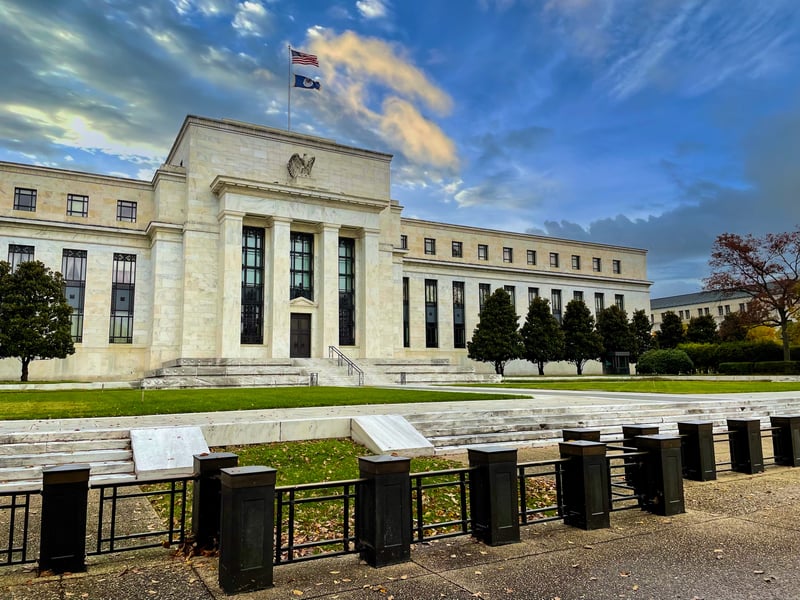
The Federal Reserve held interest rates steady at its October meeting. But that doesn't mean mortgage rates will stay the same through the end of 2026.
Fixed mortgage rates move based on long-term bond markets, which are in turn affected by broad economic factors like inflation, energy prices, artificial intelligence investments and heavy government borrowing.
That means how mortgage rates move for the rest of this year will depend on a broad set of economic conditions beyond the Fed.
Where Mortgage Rates Stand After the Fed's October Meeting
Mortgage rates saw some brief relief over the past week. According to Freddie Mac's Primary Mortgage Market Survey (PMMS), the average 30-year fixed mortgage rate was 7.32% on Oct. 22, down from 7.40% a week earlier.
That was the first weekly decline since August and came after a rapid increase in mortgage rates between September and early October.
But the Fed's September rate increase wasn't the main reason rates increased. Investors were demanding higher yields on long-term Treasury bonds over concerns about inflation, economic growth and the supply of government and corporate debt.
Yields have been on a roller coaster ride in recent months. According to U.S. Treasury data, the 10-year yield (a particularly important benchmark for rates) reached 5.31% on Oct. 5 before falling to 4.96% on Oct. 22.
That decline helped ease pressure on mortgage rates. But whether it'll continue will depend on several different factors over the next two months.
What's Most Likely to Happen to Mortgage Rates Before 2027?
Mortgage rates could move slightly lower if Treasury yields stabilize or decline further.
But inflation is still elevated, and the Fed hasn't put additional rate increases off the table. That means a major drop in rates before the end of the year isn't likely.
Expect a period of uneven rate movements near recent levels rather than a fast return to lower rates. And another rapid increase in Treasury yields could quickly erase recent mortgage rate improvements,.
AI Investment Concerns Could Keep Treasury Yields Lower
Artificial intelligence has become an unexpected influence on mortgage rates.
Concerns about financing for AI infrastructure have recently prompted some investors to move money out of riskier investments and into U.S. Treasury bonds, according to an Oct. 27 Reuters analysis.
That increased demand has helped drive the 10-year Treasury yield lower in recent weeks, which in turn relieved some of the pressure on fixed mortgage rates.
But again, that trend isn't guaranteed to continue. If confidence in AI investment rebounds, some investors may move money back into riskier assets. Continued corporate borrowing to finance data centers and other AI infrastructure could also put upward pressure on bond yields.
Inflation and Energy Prices Remain the Biggest Obstacles
Inflation is still a major worry. The Consumer Price Index rose 3.7% over the 12 months ending in September, with prices increasing 0.6% in September alone.
Higher energy prices amid the war with Iran are a major cause of that increased inflation. Gas prices rose 9.1% in September, making up more than half of the monthly increase in consumer prices.
If energy prices stabilize and inflation starts to cool, investors could become more comfortable accepting lower Treasury yields. That would improve the outlook for mortgage rates.
But an unexpectedly hot inflation report could drive yields back up. Persistent inflation could also increase the odds o additional Fed rate hikes.
The November and December inflation reports will be particularly important for determining whether mortgage rates have room to decline further.
Government Borrowing Could Keep Long-Term Rates Elevated
Heavy federal borrowing is yet another obstacle to lower mortgage rates.
The Treasury Department previously estimated $628 billion in privately held net marketable borrowing for the final three months of 2026.
When the government issues large amounts of debt, investors might want higher yields to purchase additional Treasury securities. That situaton could keep mortgage rates elevated even if inflation begins improving.
Large corporate borrowing needs (like paying for AI infrastructure) add to the competition for investment capital.
The Labor Market and December Fed Meeting Could Change The Picture
The Fed's October decision left the door open to another rate increase before 2026 is over.
Two policymakers voted against holding rates steady, preferring another quarter-point increase. The Fed said economic growth was strong, but warned that inflation remains elevated.
Investors will be watching employment reports, consumer spending and inflation data ahead of the Fed's Dec. 8-9 meeting.
Signs of slowing job growth or weakening consumer demand could help bring Treasury yields lower. Stronger-than-expected economic data, particularly alongside persistent inflation, could strengthen expectations for another rate hike.
A December increase wouldn't automatically push fixed mortgage rates higher. Our analysis of previous Fed hikes found that markets frequently adjust before policymakers act.
But the economic conditions behind another hike could make it harder for mortgage rates to fall significantly.
What Does the Fed's October Hold Mean for HELOC Rates?
A home equity line of credit (HELOC) responds differently to Fed moves than a fixed mortgage.
Many variable-rate HELOCs use the prime rate as their benchmark, which tends to move closely with the Fed's federal funds rate.
Because the Fed held rates steady in October, borrowers with prime-linked HELOCs generally shouldn't expect an index-driven rate change solely because of this meeting.
Another Fed hike in December could lead to higher HELOC rates, depending on the loan's index and adjustment terms. A decline in the 10-year Treasury yield wouldn't necessarily reduce the rate on an existing HELOC.
Borrowers with adjustable-rate mortgages face different rules because their rates change according to scheduled adjustments.
The Bottom Line
The Fed's October hold gives financial markets more time to assess inflation and economic conditions, but it offers little certainty about where mortgage rates will finish 2026.
The recent decline in Treasury yields offers some hope for additional mortgage rate relief. However, inflation, energy prices and heavy borrowing remain significant obstacles.
For now, modest improvements appear more plausible than a substantial sustained decline. Borrowers should also be prepared for renewed increases if inflation surprises investors or the Treasury market reverses course.
Mortgage rates could finish the year below today's levels, but the economic data over the next several weeks will determine whether the recent improvement has staying power.
Frequently Asked Questions
Will Mortgage Rates Fall Before the End of 2026?
They could. Recent declines in Treasury yields have created room for mortgage rates to ease, but inflation and government borrowing remain obstacles. Modest declines appear more plausible than a sustained, substantial drop without further improvement in economic data.
Could Mortgage Rates Rise Again After the Fed Held Rates Steady?
Yes. Fixed mortgage rates can increase even when the Fed does nothing. Higher inflation, rising Treasury yields or weaker investor demand for mortgage-backed securities could push rates higher before the end of 2026.
Will the Fed Raise Interest Rates Again in December?
Another increase is possible but not certain. Two Fed policymakers favored raising rates in October, and inflation remains elevated. The next decision will depend in part on incoming inflation, employment and economic growth data.