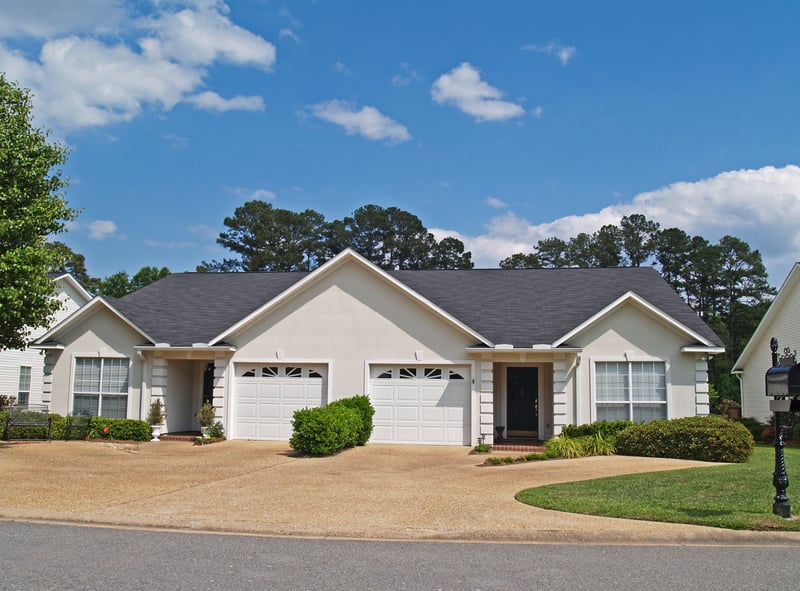
A bigger house usually means a bigger price tag. But the difference buyers actually feel is the monthly payment. In some cities, another bedroom increases an estimated monthly housing payment by just $16. In others, it could add more than $20,000.
To understand what an extra bedroom really costs, Lower analyzed more than 1 million active single-family listings from Movoto, the real estate portal owned by Lower, across 255 U.S. cities with populations of 100,000 or more. The analysis compares median list prices for 2-, 3-, 4-, and 5-bedroom homes within the same markets, then translates those price differences into an estimated monthly mortgage payment using a 30-year fixed mortgage, current property taxes, and homeowners insurance.
Nationally, moving from two bedrooms to three adds an estimated $648 to a monthly housing payment. The jump from three to four adds about $764, while moving from four to five adds roughly $812. Those monthly figures answer the question buyers ask: not what a bigger home costs at closing, but what it costs every month.
|
Bedroom Transition
|
Typical $ Premium
|
Typical Est. Monthly Payment Increase
|
Typical % Premium
|
|
2 → 3 bedrooms
|
$98,950
|
$648
|
35.3%
|
|
3 → 4 bedrooms
|
$115,100
|
$764
|
30.4%
|
|
4 → 5 bedrooms
|
$123,005
|
$812
|
25.0%
|
Purchase-price and percentage figures are based on the median across 255 U.S. cities with a population of 100,000 or more and at least 10 active listings in each bedroom tier. Estimated monthly payment figures are based on the median across the 251 of those cities with complete property tax and homeowners insurance data (see Methodology).
The Move to Two to Three Bedrooms is the Biggest Leap
The first move up from a starter home asks for the biggest percentage stretch. Every move after that adds more dollars, just a smaller share of them. Local market conditions account for the remaining differences. Home prices, property tax rates, and insurance costs differ enough by city that the same upgrade can cost next to nothing in one market and a small fortune in another.
Moving from a four-bedroom home to a five-bedroom home carries the largest premium of the three, $123,005, and the largest monthly increase, $812. But relative to what a buyer is already paying, the move from two bedrooms to three bedrooms is the steeper climb: a median 35.3% increase, compared with 30.4% for three bedrooms to four bedrooms and 25.0% for the move from four bedrooms to five bedrooms. Rankings
Where Another Bedroom Comes With the Biggest Monthly Bill
|
Transition
|
City
|
Price (Smaller)
|
Price (Larger)
|
Premium
|
Est. Monthly Increase
|
|
2→3
|
Carlsbad, CA
|
$625,000
|
$1,525,000
|
+$900,000
|
+$5,662
|
|
2→3
|
Boulder, CO
|
$499,000
|
$1,249,000
|
+$750,000
|
+$4,731
|
|
2→3
|
Bellevue, WA
|
$824,975
|
$1,525,000
|
+$700,025
|
+$4,480
|
|
3→4
|
Irvine, CA
|
$1,512,444
|
$2,554,000
|
+$1,041,556
|
+$6,665
|
|
3→4
|
Los Angeles, CA
|
$1,299,995
|
$2,249,000
|
+$949,005
|
+$6,065
|
|
3→4
|
Fort Lauderdale, FL
|
$729,000
|
$1,624,450
|
+$895,450
|
+$6,014
|
|
4→5
|
Fort Lauderdale, FL
|
$1,624,450
|
$4,750,000
|
+$3,125,550
|
+$20,991
|
|
4→5
|
Pompano Beach, FL
|
$775,000
|
$2,199,999
|
+$1,424,999
|
+$9,463
|
|
4→5
|
Boca Raton, FL
|
$1,512,500
|
$2,936,950
|
+$1,424,450
|
+$9,246
|
Estimated monthly figures use a 30-year fixed mortgage at 6.250% with 5% down, plus each city's property tax rate and homeowners insurance cost. See Methodology.
High-cost coastal markets dominate the rankings, where moving up one bedroom often means purchasing an entirely different tier of home.
Fort Lauderdale tops them all. Its 4-to-5 bedroom premium, $3.1 million at the purchase-price level, is the largest of any city and upgrade in the study. Monthly, that's an estimated $20,991, more than many buyers pay for an entire mortgage elsewhere in the country.
How the Math Works: Carlsbad, CA
Carlsbad, CA shows what happens when home prices, taxes, and insurance all stack on top of one another. The median jump from a two-bedroom home to a three-bedroom home is $900,000, which translates to an estimated $5,662 more every month.
| Cost |
2-bedroom home
|
3-bedroom home
|
|
Median list price
|
$625,000
|
$1,525,000
|
|
Est. principal & interest
|
$3,656
|
$8,920
|
|
Est. monthly property tax
|
$276
|
$674
|
|
Est. monthly homeowners insurance
|
$159
|
$159
|
|
Est. total monthly payment
|
$4,090
|
$9,752
|
Figures are rounded to the nearest dollar. See Methodology for full mortgage, tax, and insurance assumptions.
Where an Extra Bedroom Has the Smallest Monthly Impact
|
Transition
|
City
|
Price (Smaller)
|
Price (Larger)
|
Premium
|
Est. Monthly Increase
|
|
2→3
|
Tracy, CA
|
$659,995
|
$664,999.50
|
+$5,005
|
+$33
|
|
2→3
|
Palm Coast, FL
|
$359,000
|
$365,000
|
+$6,000
|
+$39
|
|
3→4
|
Milwaukee, WI
|
$206,450
|
$210,000
|
+$3,550
|
+$26
|
|
3→4
|
West Jordan, UT
|
$604,900
|
$609,900
|
+$5,000
|
+$31
|
|
4→5
|
Peoria, IL
|
$215,000
|
$217,000
|
+$2,000
|
+$16
|
|
4→5
|
Lehigh Acres, FL
|
$359,999.50
|
$364,000
|
+$4,000.50
|
+$26
|
Estimated monthly figures use a 30-year fixed mortgage at 6.250% with 5% down, plus each city's property tax rate and homeowners insurance cost. See Methodology.
In several Midwestern markets, home prices stay low across every bedroom tier, so the gap between them stays low too. Adding a bedroom here costs $16 to $39 a month. For buyers in these markets, going bigger is a matter of preference, not budget.
One Bedroom, Two Wildly Different Budgets
In Peoria, IL, adding a fifth bedroom raises the monthly payment by about $16. In Fort Lauderdale, FL, the same upgrade adds an estimated $20,991 a month, more than most people's entire mortgage payment anywhere else in the country.
Across the cities in this study, the cost of the exact same bedroom upgrade ranges from pocket change to a payment that could carry a mortgage of its own, depending on where you're shopping.
Location Matters
The gap between Peoria, Illinois and Fort Lauderdale, Florida is extreme, but it points to something true almost everywhere: where you shop changes the math as much as which bedroom you're adding.
|
Region
|
2 → 3 premium
|
3 → 4 premium
|
4 → 5 premium
|
|
South
|
$91,950 (41%)
|
$120,050 (38%)
|
$148,857 (33%)
|
|
Midwest
|
$76,550 (46%)
|
$92,651 (35%)
|
$87,339 (27%)
|
|
West
|
$119,542 (27%)
|
$117,991 (22%)
|
$124,001 (19%)
|
|
Northeast
|
$70,000 (23%)
|
$42,437 (10%)
|
$58,587 (18%)
|
Northeast figures are based on only 8 qualifying cities and should be read as directional rather than representative.
Where Three Bedrooms Cost Less Than Two
Sometimes another bedroom is actually cheaper. In 19, the typical 3-bedroom home is listed below the median price of a two-bedroom home.
That's not a sign that an extra bedroom subtracts value. It's a sign of what's on the market: in these cities, the 2-bedroom listings skew toward pricier properties, different neighborhoods, different lot sizes and ages, than the 3-bedroom homes listed alongside them.
|
City
|
Median 2BR price
|
Median 3BR price
|
Difference
|
Est. Monthly Difference
|
|
Arlington, TX
|
$474,990
|
$320,000
|
-$154,990
|
-$1,077
|
|
Murfreesboro, TN
|
$574,480
|
$444,000
|
-$130,480
|
-$824
|
|
Denton, TX
|
$449,500
|
$365,000
|
-$84,500
|
-$595
|
|
Buckeye, AZ
|
$469,000
|
$394,895
|
-$74,105
|
-$461
|
|
New Braunfels, TX
|
$379,085
|
$329,350
|
-$49,735
|
-$338
|
Five of the 19 cities with a lower 3-bedroom median are shown; the remainder are smaller in magnitude. Estimated monthly figures use a 30-year fixed mortgage at 6.250% with 5% down, plus each city's property tax rate and homeowners insurance cost.
It's the Payment, Not the Price
A bigger home comes with a bigger price tag, but the monthly payment is what buyers ultimately have to budget for. While national averages provide a useful benchmark, this analysis shows that where you buy matters just as much as how much space you're adding.
While national averages provide useful context, this analysis shows that local market conditions ultimately determine how much another bedroom will cost. In some cities, it adds just a few dollars to a monthly payment. In others, it can reshape a household budget entirely.
DATA & METHODOLOGY
Lower analyzed more than 1 million active single-family home listings from Movoto by Lower, captured on July 15, 2026, to measure the typical cost of moving from a two-bedroom home to a three-bedroom home, from three bedrooms to four, and from four bedrooms to five across U.S. cities.
The analysis included 255 cities with populations of at least 100,000 and a minimum of 10 active listings in each bedroom tier. One-bedroom homes were excluded because many markets did not have enough listings for meaningful comparison.
For each city, Lower compared the median list price of each bedroom tier to calculate both the dollar and percentage premium for adding one bedroom.
Estimated monthly housing payments assume a 30-year conventional fixed-rate mortgage at 6.250% with a 5% down payment and include principal and interest, property taxes, and homeowners insurance. Property tax estimates are based on effective tax rates from the U.S. Census Bureau's 2024 American Community Survey. Homeowners insurance estimates are based on average annual premiums from The Zebra.
Monthly payment estimates were calculated for the 251 cities with complete property tax and homeowners insurance data.
This analysis reflects current listing prices rather than final sale prices and does not account for differences in square footage, lot size, age, condition, or other property characteristics.
This analysis is for informational purposes only. Estimated monthly payments are based on standardized assumptions and will vary depending on the borrower, property, mortgage rate, taxes, insurance costs, and loan terms. Contact a Lower loan expert for a personalized rate and payment estimate.



































.jpg?quality=80&width=800)












































































































































































































.jpg?quality=80&width=800)






















.jpg?quality=80&width=800)